
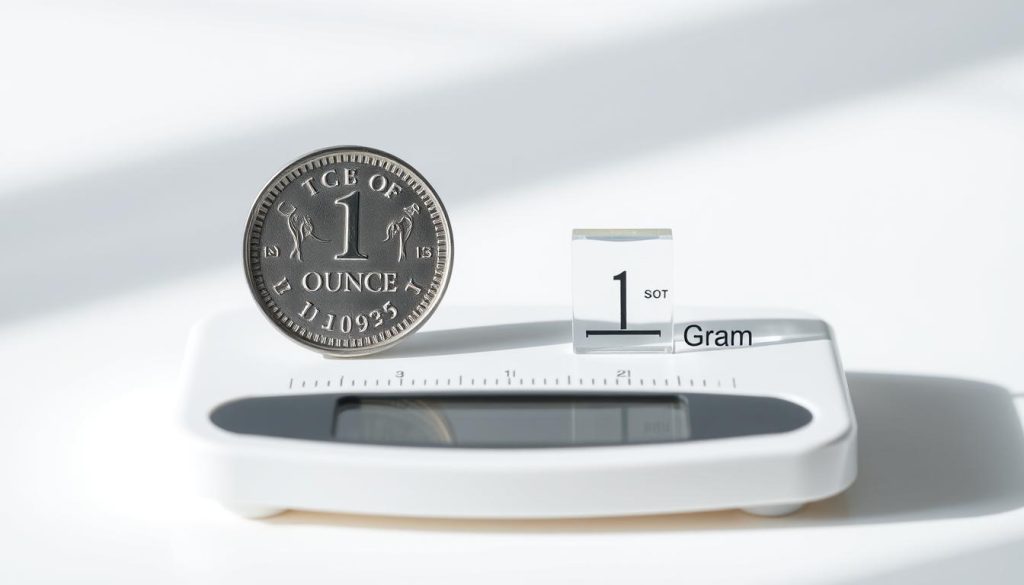
Weight measurement units play a vital role in various aspects of life. Ounces and grams are two distinct units used worldwide1. The ounce belongs to the Imperial system, while the gram is part of the Metric system2.
One standard ounce equals about 28.3495 grams, serving as a key conversion reference1. Precise measurements are crucial for ingredients and small quantities2.
Different regions prefer specific measurement units. The U.S. still uses the Imperial system widely2. However, most countries opt for the Metric system’s simplicity and consistency2.
Key Takeaways
- Ounces and grams are different weight measurement units
- 1 ounce equals approximately 28.3495 grams
- Imperial and Metric systems use different weight standards
- Precision is crucial in weight measurements
- Global industries prefer different measurement systems
Understanding the Basics of Weight Measurement Systems
Weight measurement has changed a lot over time. Different systems help people measure mass and volume. These systems show our global need for precision and standardization3.
The Imperial System’s Historical Roots
The Imperial system began in medieval England. It spread to British colonies. Today, it remains primarily used in the United States for everyday measurements4.
This system has some key features:
- Measuring mass in pounds and ounces
- Utilizing complex conversion ratios
- Maintaining traditional measurement practices
The Metric System: A Global Measurement Standard
The metric system started in France in the late 1700s. It’s now the world standard for weights and measures3.
The metric system offers these benefits:
- Decimal-based calculations
- Consistent unit relationships
- Simplified conversions between mass, volume, and density
Why Multiple Systems Persist
Different measurement systems still exist for various reasons. These include history, culture, and practical use. The metric system is precise for science.
Some places keep using traditional measurements. The U.S. mostly uses the Imperial system daily. This is despite the global shift to metric5.
Measurements are not just numbers—they’re a reflection of cultural identity and technological progress.
Converting Between Ounces and Grams Made Simple
Weight measurement and conversion are vital for cooking, baking, and professional tasks. Converting ounces to grams is easier than you think. Just multiply ounce values by 28.34952 to get accurate gram measurements6.
Digital tech has changed weight conversion. Modern kitchen scales now have built-in conversion functions. This makes precise measurement a breeze6.
Online calculators offer instant conversions. They help cooks and pros quickly translate measurements across different units7.
Examples can help you grasp weight units better. For instance, 4 ounces equals about 113 grams8. 8 ounces is the same as 227 grams6.
Chefs often use these conversions for international recipes. They also help when scaling ingredient amounts7.
Precise measurement matters in cooking, nutrition tracking, and science. It ensures reliable results when measuring food or chemicals6.
FAQ
What is the basic difference between an ounce and a gram?
Ounces are Imperial units used mainly in the US. Grams are Metric units used worldwide. One ounce equals about 28.35 grams, making grams smaller and more precise.
Why do different countries use different measurement systems?
History and culture influence measurement system choices. The US uses Imperial, while most countries prefer Metric. Metric is simpler and easier for calculations.
How do I convert ounces to grams quickly?
Multiply ounces by 28.35 to get grams. For example, 4 ounces equals 113.4 grams. Digital tools and apps can help with instant conversions.
Are ounces and grams used differently in cooking and baking?
Chefs and bakers often prefer grams for precise measurements. This is especially true in baking, where accuracy is crucial. Recipe units vary based on country of origin.
What’s the most accurate way to measure weight in cooking?
A digital kitchen scale offers the most accuracy. These scales can switch between ounces and grams. They provide precise measurements for consistent recipe results.
Why is the metric system considered more scientific?
The Metric system uses a decimal base, making calculations easier. Its units are directly related, creating a logical system. This makes it ideal for scientific and international use.
How do temperature and density affect weight measurements?
Temperature and density can slightly change weight measurements. This is especially true for ingredients like flour or sugar. Chefs often use weight instead of volume for consistency.
What common items can help me understand ounce and gram measurements?
A standard paperclip weighs about 1 gram. A AA battery is close to 1 ounce. These items can help you grasp weight measurements intuitively.
Source Links
- How Many Grams in an Ounce? (Conversion Guide + Chart) – https://simple-veganista.com/how-many-grams-in-an-ounce/
- Troy Ounce: Definition, History, and Conversion Table – https://www.investopedia.com/terms/t/troyounce.asp
- Units of Measurement Guide – https://adamequipment.com/content/post/units-of-measurement-guide/
- What is a Weight Measurement? Definition, Units, Examples, Facts – https://www.splashlearn.com/math-vocabulary/measurements/weight
- Measurement system – English, US Customary, Weights & Measures | Britannica – https://www.britannica.com/science/measurement-system/The-English-and-United-States-Customary-systems-of-weights-and-measures
- How Many Grams in an Ounce? (With Conversion Chart) – https://www.100daysofrealfood.com/how-many-grams-in-an-ounce-with-conversion-chart/
- Understanding the Conversion: How Many Grams are in an Ounce? – https://www.collectpure.com/blog/how-many-grams-in-an-ounce
- How Many Grams are in an Ounce? Converting grams to ounces. – https://becomingachef.co.uk/how-many-grams-are-in-an-ounce/

