
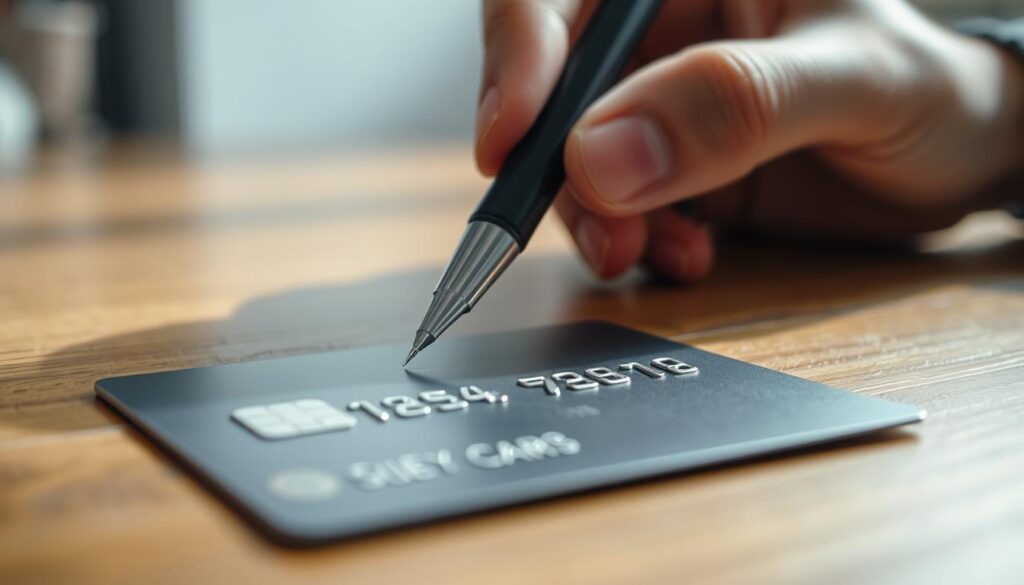
Signing your credit card is a crucial step in protecting your financial identity. The white signature panel on the back isn’t just for show. It plays a vital role in safeguarding your finances.
Credit cards now have advanced security features like EMV chips. These chips have changed how we make payments. While signature checks are less common, signing your card still adds protection.
Your credit card signature is more than just a formality. It helps confirm who you are. Some stores might still ask to see your signature.
Key Takeaways
- Signing your credit card is an essential security step
- EMV chips have transformed payment authentication methods
- Additional security measures can help protect your financial information
- Merchants may still occasionally request signature verification
- Always monitor your credit card statements regularly
Why Signing Your Credit Card is Essential
Your credit card signature is key to protecting your financial identity. It’s a crucial step in credit card approval and financial safety. Modern tech has changed payment security, but signing remains important3.
Protecting Yourself from Fraud
Your signature is a first defense against unauthorized use. It adds protection to your credit card. Here are ways to keep your card safe:
- Check transactions regularly3
- Report unfamiliar transactions immediately3
- Avoid sharing your card with others3
Agreeing to Terms and Conditions
Signing your card means you agree to the issuer’s rules. Some issuers may still need a signature, even as authentication methods change3.
Modern security goes beyond a simple signature – it’s about staying vigilant and informed about your financial transactions.
It’s smart to ask your credit card company about their current rules. They might have specific requirements you need to follow4.
How to Properly Sign Your Credit Card
Signing your new credit card is crucial for its security. It’s a simple task, but there are important details to consider. A properly signed card protects you from fraud and ensures its validity56.
Selecting the Perfect Pen
Choose your writing tool carefully. Use a black or blue felt-tipped pen that won’t smear or fade quickly6. Avoid ballpoint pens, as they may not create a clear signature on plastic5.
Signature Placement and Best Practices
Find the signature panel on the back of your credit card. It’s usually a white or gray strip. Sign within this area, matching the name on your account5.
- Sign immediately upon receiving your card5
- Allow 30 minutes for the signature to dry completely
- Ensure your signature is consistent across documents
Pro Tip: A valid signature is crucial for secure credit card application and preventing potential transaction issues6.
Writing “See ID” on the signature line doesn’t meet the signing requirement5. Merchants may decline transactions if your card remains unsigned6.
Following these steps will boost your credit card security. It also ensures your card’s eligibility for use56.
Tips for Keeping Your Signature Secure
Protecting your credit card signature is crucial in today’s digital world. Securing your application goes beyond a simple signature. Fraudsters constantly develop new methods to steal your financial information7.
Vigilance is key for secure credit card applications. Here are some essential strategies to protect your signature and financial details:
- Regularly monitor your bank statements for any suspicious activity1
- Enable two-factor authentication for added security1
- Use unique passwords for your online banking accounts1
Advanced Signature Protection Techniques
Modern credit card security goes beyond traditional methods. Writing “See ID” on cards may not provide complete protection5. Consider these advanced techniques instead:
| Security Method | Effectiveness |
|---|---|
| RFID Blocking Sleeves | Prevents remote card information scanning7 |
| Transaction Alerts | Immediate notification of suspicious activities1 |
Protecting Your Physical Card
Physical card protection is equally important. Always shred old cards to prevent potential identity theft7. A micro-cut shredder provides the most thorough destruction method.
Your signature is your financial fingerprint – protect it wisely.
Stay proactive to defend against credit card fraud. Check your credit reports regularly. Subscribe to credit-monitoring services for extra protection1.
What to Do if Your Signature Gets Compromised
Quick action is vital if your credit card signature is compromised. Credit card fraud is a major threat to your financial security. It can affect your credit card approval and overall financial health.
Contact your credit card issuer right away. Most banks offer strong protection, limiting your liability to $50 if reported promptly8. Many companies now provide “zero liability” cards for enhanced security.
When you call, ask for a complete account freeze. This will stop any unauthorized purchases from happening.
Reporting to Your Credit Card Issuer
Be ready to give details about suspicious activities when you report the issue. Banks track transactions closely, knowing that 80% of merchants don’t check signatures9.
Keep an eye on your account regularly. Use secure banking platforms to review recent transactions10. Look for any fraudulent charges linked to your compromised signature.
Requesting a Replacement Card
Ask for a replacement card with better security features. New credit cards have microchips that make them harder to copy8.
Make sure your new card has updated protection. Set up extra security measures like transaction alerts. This will help guard against future fraud attempts.
FAQ
Why do I need to sign the back of my credit card?
Signing your credit card protects against fraud and shows you accept the issuer’s terms. It’s required by many credit card companies and the United States Postal Service. Some merchants may still ask for a signature to verify your identity.
What should I use to sign my credit card?
Use a felt-tipped pen or Sharpie marker for your credit card signature. Regular ink doesn’t absorb well on plastic surfaces. Sign consistently, matching your signature on other official documents.
Let the signature dry for about 30 minutes before putting the card in your wallet. This prevents smearing and ensures a clear signature.
Where exactly do I sign my credit card?
Look for the light gray or white signature panel on the back of your card. Sign within this designated strip. Make sure your signature is clear and matches your other official signatures.
Is it safe to sign my credit card?
Yes, signing your credit card doesn’t increase fraud risk. It actually makes it harder for fraudsters to forge your signature. Still, take extra steps to protect your card.
Monitor your statements, use online banking with fraud alerts, and guard your card from unauthorized use. These actions add layers of security.
What should I do if I suspect my card’s signature has been compromised?
Contact your credit card issuer right away if you suspect signature compromise. They can freeze your card and help you get a replacement with a new account number.
Check your credit reports with major bureaus for any suspicious activity. This helps catch potential fraud early on.
Can I write “See ID” instead of signing my card?
Writing “See ID” isn’t recommended, even though some cardholders do it. Many merchants won’t accept this method. It doesn’t fulfill the card issuer’s requirement for a signature.
Credit card companies expect you to sign the actual panel on the back. This is the best way to comply with their rules.
How does modern technology impact credit card signatures?
Credit card companies now use more secure methods like EMV chip cards. These provide better security than traditional magnetic strips. While signatures are less critical, they’re still important for card activation and verification.
Source Links
- Should You Sign The Back Of Your Credit Card? | Bankrate – https://www.bankrate.com/credit-cards/advice/sign-back-of-credit-card/
- Should You Sign Your Credit Card or Write ‘See ID’? – https://credit.org/blogs/blog-posts/should-i-sign-my-credit-card-or-write-see-id
- Should You Sign Your Credit Card? | Chase – https://www.chase.com/personal/credit-cards/education/basics/should-you-sign-your-credit-card
- Should I Sign the Back of My Credit Card? Is It Safe to Sign? – NerdWallet – https://www.nerdwallet.com/article/credit-cards/unsafe-sign-credit-card
- Should I Sign My Credit Card? – https://www.discover.com/credit-cards/card-smarts/should-i-sign-my-credit-card/
- Should I Sign My Credit Card? | Capital One – https://www.capitalone.com/learn-grow/money-management/should-i-sign-my-credit-card/
- 5 useful tips to bulletproof your credit cards against identity theft | blog post – https://elie.net/blog/security/how-to-physically-secure-your-credit-card
- How to Keep Your Credit Card Accounts Safe from Hackers – https://www.neamb.com/personal-finance/how-to-keep-your-credit-card-accounts-safe-from-hackers
- How to fix the signature on a debit card. – https://ask.metafilter.com/13285/How-to-fix-the-signature-on-a-debit-card
- Isn’t it safer to NOT sign Credit card? – https://www.bogleheads.org/forum/viewtopic.php?t=232017

