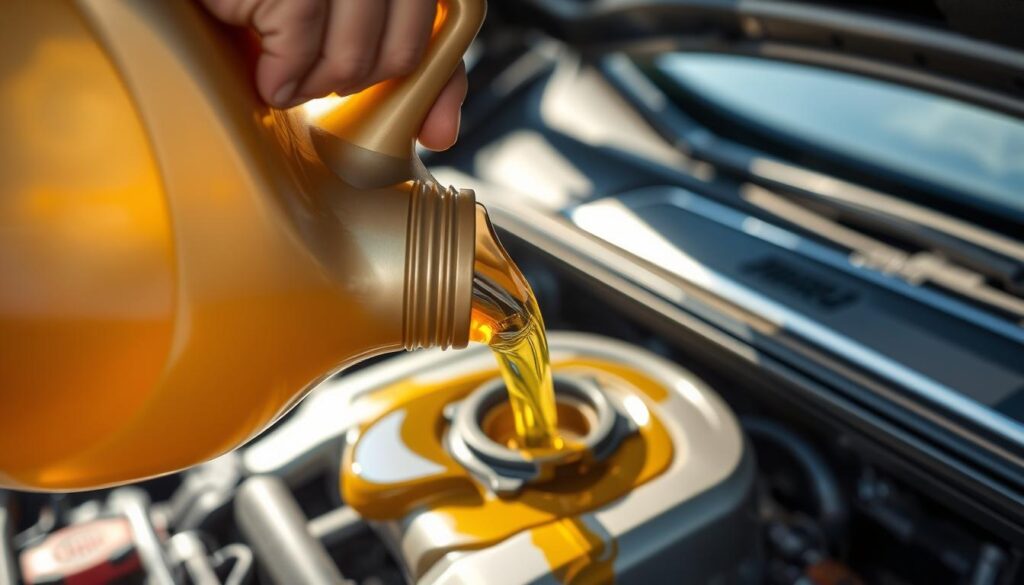
Proper oil management is vital for your car’s health. It ensures smooth engine operation and prevents costly repairs. Learning to add oil can save you time and money.
Engine oil lubricates moving parts and reduces friction. Low oil levels can harm your engine’s performance. It may also increase vehicle emissions.
Watch for signs that your car needs oil. These include engine noise and illuminated oil pressure lights. Reduced performance might also signal it’s time for an oil check.
Different cars need varying amounts of oil. A Ford F-150 requires 7.75 quarts. A Honda Civic needs 4.4 quarts of engine oil1.
Engine oil costs between $5 and $15 per quart. An average oil change runs about $130 to $1451.
Key Takeaways
- Regular oil checks prevent engine damage
- Different vehicles have unique oil capacity requirements
- Watch for warning signs of low oil levels
- Oil changes are crucial for vehicle performance
- Proper oil maintenance can save on costly repairs
Why Regular Oil Changes Matter
Vehicle lubrication keeps your car running smoothly. Your engine needs motor oil to protect its critical components. Regular oil changes help maintain your car’s performance and longevity.
Understanding Engine Oil’s Role
Engine oil has many important jobs. It reduces friction between moving parts and disperses heat. This protection prevents premature engine wear2.
A clean, well-lubricated engine can last much longer. Regular oil changes are key to maintaining your car’s health.
- Reduces engine friction
- Helps dissipate heat
- Prevents premature wear
Signs Your Car Needs Oil
Knowing when your car needs oil is crucial. Look out for these warning signs:
- Unusual engine noise
- Reduced engine performance
- Oil pressure warning light
- Engine overheating
- Burning oil smell
Benefits of Using High-Quality Oil
High-quality motor oil replacement offers many advantages2. It provides better protection and performance for your engine.
| Oil Type | Change Interval | Performance Benefits |
|---|---|---|
| Synthetic Oil | 6,000-7,500 miles | Enhanced engine protection |
| Semi-Synthetic | 5,000 miles | Balanced performance |
| Conventional | 3,000 miles | Basic engine protection |
“Regular oil changes are the heartbeat of your vehicle’s maintenance routine.”
Sticking to recommended oil change schedules can save you money. It helps prevent costly engine repairs3. Your car will run efficiently and perform at its best4.
Choosing the Right Oil for Your Vehicle
The perfect engine oil is vital for your vehicle’s performance and longevity. It protects your engine, boosts fuel efficiency, and prevents costly repairs.
Understanding Engine Oil Types
Modern vehicles offer various oil options. About 80% of new vehicles now come with synthetic oil5.
Your choice depends on vehicle age, driving conditions, manufacturer recommendations, and budget.
- Vehicle age
- Driving conditions
- Manufacturer recommendations
- Budget constraints
Synthetic vs. Conventional Oil Comparison
Consider these key differences when picking between synthetic and conventional oil:
| Oil Type | Performance | Cost |
|---|---|---|
| Synthetic Oil | Superior protection | Three times more expensive6 |
| Conventional Oil | Standard protection | Most affordable option6 |
Manufacturer Recommendations Matter
Some car makers have specific oil requirements. Mercedes-Benz and BMW, for instance, recommend only synthetic oil in their vehicles6.
Always check your owner’s manual for correct viscosity and oil type recommendations.
“The right oil is like a good doctor for your engine – it keeps everything running smoothly.”
For high-mileage vehicles over 75,000 miles, try specialized oils. These include seal conditioners to maintain engine health56.
Step-by-Step Guide to Adding Oil
Proper oil maintenance is vital for your car’s performance. It prevents costly repairs and extends your vehicle’s life. This guide will help you add oil to your car confidently.
Preparing for Oil Refill
Gather these essential tools before adding oil to your car:
- Correct type of engine oil
- Funnel
- Clean rags or paper towels
- Gloves (optional)
Locating the Oil Filler Cap
Park your vehicle on a flat surface for an accurate oil level check. Open the hood and find the oil filler cap. It’s usually marked with an oil can icon.
Most cars need manual dipstick checks, though some have electronic oil monitors7.
Adding and Checking Oil Levels
Follow these steps for a successful car oil refill:
- Pull out the dipstick and wipe it clean
- Reinsert the dipstick and remove to check oil level
- If oil is low, use a funnel to add oil slowly
- Check levels frequently to avoid overfilling7
Pro Tip: Check and top up engine oil every few weeks for proper lubrication7.
| Oil Level Indication | Action Required |
|---|---|
| Below minimum mark | Add approximately 1 liter of oil7 |
| Halfway down | Add about 0.5 liters8 |
| Dark, gritty oil | Consider full oil change |
Remember: Using the correct oil type is crucial to avoid engine damage7.
Maintenance Tips After Adding Oil
After an oil change, focus on responsible disposal and ongoing care. Check local guidelines before discarding old oil. Some states have specific regulations for used engine oil disposal.
Monitoring oil levels is crucial for optimal performance. Regular oil level checks help prevent potential engine damage. Inspect your motor oil levels every few weeks or before long trips.
Pay attention to dashboard indicators that alert you about low oil levels. Schedule routine maintenance checks for your vehicle’s longevity. Consider changing your oil every 5,000-7,000 miles for passenger cars.
Professional maintenance can help catch potential issues early. Consult your vehicle’s manual for specific recommendations tailored to your car’s make and model.
Responsible Oil Disposal
Always use authorized recycling centers or auto parts stores when disposing of used motor oil. Many locations offer free disposal services for automotive fluids. This helps maintain environmental responsibility while keeping your vehicle in top condition9.
FAQ
How often should I check my car’s oil level?
Check your car’s oil every few weeks or before long trips. This prevents engine damage and ensures top performance. Park on a flat surface and use the dipstick for accurate readings.
What are the signs that my car needs an oil change?
Look out for engine noise, reduced performance, and an illuminated oil pressure warning light. Engine overheating, burning oil smell, and a check engine light are also key signs.
If you notice these symptoms, it’s time to check and possibly change your engine oil.
How do I know which type of oil to use for my car?
Check your vehicle’s owner’s manual for the recommended oil type and viscosity. Consider climate, driving conditions, and engine age when choosing between synthetic and conventional oils.
Synthetic oils offer better performance but cost more than conventional options.
How much oil should I add to my car?
Most cars need 4 to 8 quarts of oil, depending on engine size. Check your owner’s manual for the exact amount.
Add oil slowly with a funnel, checking the level often to avoid overfilling.
How often should I change my car’s oil?
Change your oil every 3,000 to 7,500 miles, based on your car model and driving conditions. Regular oil changes prevent engine damage and maintain optimal performance.
This practice can save you from costly repairs in the long run.
What’s the difference between synthetic and conventional oil?
Synthetic oil provides better performance and longer-lasting protection than conventional oil. It offers superior lubrication, especially in extreme temperatures and challenging driving conditions.
While pricier, synthetic oils improve engine efficiency and overall performance.
How do I properly dispose of used motor oil?
Always take used motor oil to authorized recycling centers or auto parts stores. Never pour oil down drains, on the ground, or in regular trash.
Proper disposal protects the environment and prevents potential contamination.
What happens if I run my car with low oil?
Low oil levels can cause serious engine damage. It leads to increased friction, reduced engine power, and higher emissions.
This can potentially result in catastrophic engine failure. Always maintain proper oil levels to protect your engine.
Source Links
- How To Add Oil To A Car In 4 Easy Steps – https://carbuzz.com/how-to-add-oil-to-a-car-easy-steps/
- A Surprising Link Between Oil Changes & Fuel Efficiency | FL Mechanic – https://www.icecoldair.com/news/oil-changes-fuel-efficiency
- 5 Things to Know About Oil Changes for Your Car – Consumer Reports – https://www.consumerreports.org/cars/car-maintenance/things-to-know-about-oil-changes-for-your-car-a9532249359/
- How Important Is an Oil Change? – https://www.progressive.com/lifelanes/importance-of-oil-changes/
- How to Pick the Best Motor Oil for Your Car or Truck – https://www.firestonecompleteautocare.com/blog/oil-change/how-to-pick-the-best-motor-oil/
- How to Choose the Right Oil for Your Car or Truck – https://auto.howstuffworks.com/how-to-choose-the-right-oil-for-your-car-or-truck2.htm
- How to check and top up your car engine oil – https://www.theaa.com/breakdown-cover/advice/how-to-check-and-change-your-car-oil
- How to check and top up your engine oil level – https://www.arnoldclark.com/newsroom/687-how-to-check-and-top-up-your-engine-oil-level
- 10 Tips for a Successful Oil Change | Christian Brothers Automotive – https://www.cbac.com/media-center/blog/2020/july/10-tips-for-a-successful-oil-change/