
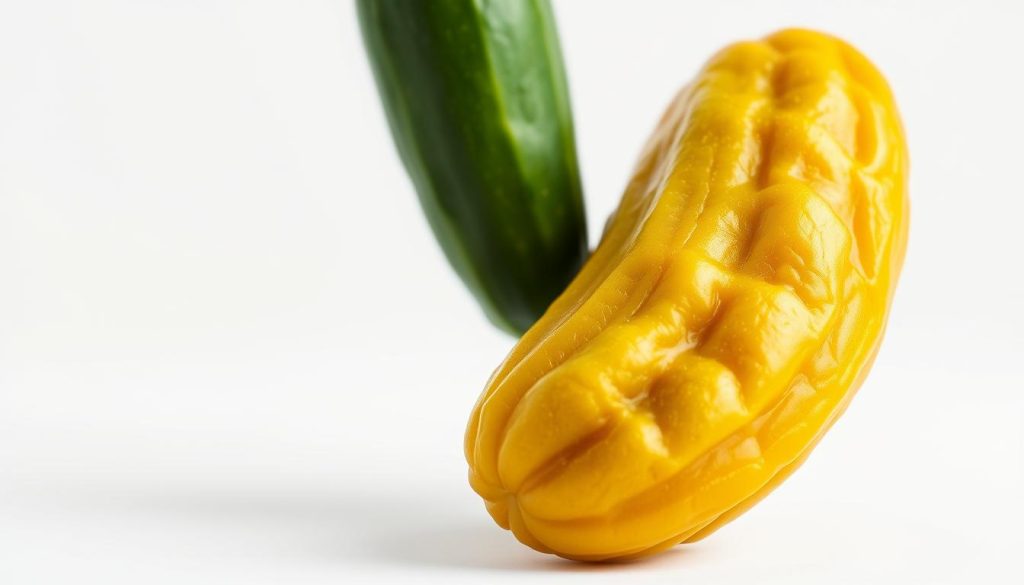
Cucumbers and pickles are distinct foods with unique traits. Pickling transforms fresh cucumbers into tangy, preserved delicacies1. Some cucumber varieties are grown specifically for pickling1.
The cucumber-to-pickle journey is fascinating. Pickling changes the vegetable’s taste, texture, and nutritional profile1. This process involves soaking cucumbers in saltwater brine or vinegar solution2.
Nutritionally, cucumbers and pickles differ slightly. Cucumbers have about 15 calories per 100 grams1. Pickles contain around 20 calories for the same amount1.
Pickling affects vitamin content and sugar levels in cucumbers1. This ancient preservation technique has been used for centuries.
Key Takeaways
- Pickles are cucumbers transformed through fermentation
- Different cucumber varieties are used for pickling
- Pickling changes nutritional content and flavor
- Cucumbers originate from India over 3,000 years ago
- Pickling is an ancient preservation technique
Understanding Cucumber vs Pickle: Basic Differences
Cucumbers and pickles are different foods with unique traits. Fresh cucumbers transform into pickles through a flavorful journey. This process changes both taste and nutrition3.
Fresh cucumbers are crisp, mild veggies from the gourd family. They’re bright green and packed with nutrients. These versatile veggies offer a refreshing taste and many health perks3.
Fresh Cucumber Characteristics
Cucumbers are low in calories and high in water content. They’re best eaten within 24 hours of picking. This keeps their flavor and quality at their peak4.
- High water content
- Mild, refreshing taste
- Crisp texture
- Nutrient-dense
What Makes a Pickle Different
Pickles are made by fermenting cucumbers. This process creates a unique flavor profile. Pickling uses a saltwater brine with 95% water and 5% salt4.
Different pickle types come from various pickling methods:
- Dill pickles: Made with fresh dill weed or dill seed3
- Bread and butter pickles: Created with a mixture of vinegar, sugar, and spices3
- Kosher pickles: Traditionally fermented in saltwater brine3
Pickle fermentation can take days to months. The time depends on temperature and humidity. During this process, cucumbers develop a bold, salty flavor4.
Pickling is an ancient preservation technique that transforms ordinary cucumbers into flavorful, long-lasting fermented foods.
The Science Behind Pickling Process
Pickling turns cucumbers into tangy treats through a scientific process. The science of pickling creates the perfect environment for fermentation and preservation5.
Pickling magic starts with vinegar brines and controlled conditions. Lactic acid bacteria convert cucumber sugars into lactic acid, creating sour flavors5. The ideal temperature ranges between 70°F and 75°F6.
- Salt concentration is critical for successful pickling6
- Osmosis helps extract water from cucumbers6
- Proper pH levels ensure food safety7
Canning recipes need precise measurements for perfect pickles. The ideal salt concentration is 3.5% salinity, or 35 grams per liter of water7. This balance provides probiotic benefits and prevents harmful bacteria growth6.
| Pickling Parameter | Optimal Range |
|---|---|
| Fermentation Temperature | 70°F – 75°F |
| Salt Concentration | 3.5% |
| Fermentation Time | 4-6 weeks |
The pickling process is a delicate balance of science and art. Oxygen exposure must be minimized to prevent spoilage. Fermentation time typically ranges from 4 to 6 weeks for lacto-fermented pickles7.
Fresh cucumbers, no more than 24 hours old, work best for crunchy, flavorful pickles7.
Pickling is more than a preservation method – it’s a delicious science that transforms ordinary cucumbers into extraordinary treats!
Best Cucumber Types for Pickling
Choosing the right cucumbers is key for tasty dill pickles. Pickling cucumbers differ from table varieties. They’re specially bred for the best pickling results8.
Kirby cucumbers are top-notch, measuring 5 to 6 inches long9. National Pickling cucumbers are great too, with 5-inch fruits maturing in 52 days8.
Bush cucumbers are another solid option. They mature in 50 days and produce 4 to 5-inch fruits8.
The best pickling cucumbers have thin skin for easy brine penetration. They should be 1-1/2 to 6 inches long8.
H-19 Little Leaf is popular among home gardeners. It yields 3 to 4-inch fruits and matures in 58 days98.
Always pick cucumbers when small for the best flavor and texture. Overripe ones can turn bitter and develop hard seeds8.
Find fresh pickling cucumbers at local farmers markets. Or try growing your own selection of these special varieties.
FAQ
What’s the difference between a cucumber and a pickle?
Cucumbers are fresh veggies. Pickles are cucumbers preserved in salt brine or vinegar. Pickling changes the cucumber’s flavor, texture, and nutrients through fermentation or acidification.
Are all pickles made from cucumbers?
Not all pickles come from cucumbers. Other veggies like carrots, cauliflower, onions, and peppers can be pickled too. But most people mean cucumber pickles when they say “pickle.”
What are the best cucumbers for pickling?
Kirby cucumbers are great for pickling. They have thick skin, fewer seeds, and firm flesh. These traits help them stay crunchy during pickling.
Boston Pickling and National Pickling cucumbers are popular with home canners. They’re specially bred for pickling.
What’s the difference between fermented and vinegar pickles?
Fermented pickles use salt brine and lactic acid bacteria. They’re probiotic-rich with complex flavors. Vinegar pickles use a vinegar solution for quick preservation.
They have a sharper, more acidic taste. Fermented pickles offer more potential health benefits due to probiotics.
Are pickles healthy?
Fermented pickles can be healthy. They’re low in calories and contain good bacteria. But store-bought pickles can be high in sodium.
Homemade fermented pickles typically offer the most health benefits. Enjoy pickles in moderation for the best results.
How long do homemade pickles last?
Properly canned fermented pickles can last up to a year. Store them in a cool, dark place. Refrigerator pickles usually last 4-6 weeks.
Always check for spoilage signs before eating. Look for unusual smells, mold, or texture changes.
Can I make pickles at home?
Yes, you can make pickles at home! It’s easy and fun. You’ll need cucumbers, salt, water, and spices like dill or garlic.
Try quick refrigerator pickles or traditional canning methods. Choose based on your preference and storage needs.
Source Links
- What’s The Difference Between Cucumbers and Pickles? – https://thekitchencommunity.org/cucumbers-vs-pickles/
- Know Your Pickles – https://www.artofmanliness.com/living/food-drink/know-your-pickles/
- Are pickles and cucumbers the same thing? – https://justpickling.com/are-pickles-and-cucumbers-the-same-thing
- Are Pickles Cucumbers? Here’s What You Need to Know About the Pickling Process – https://www.marthastewart.com/8230287/are-pickles-cucumbers
- How Pickling Works: The Science Behind The Process – Chowhound – https://www.chowhound.com/1744291/how-does-pickling-work-science/
- Science of Pickles: The Race of Microorganisms | Exploratorium – https://annex.exploratorium.edu/cooking/pickles/salt.html
- Pickle Science: How to Master the Preserving Power of Acids – https://www.seriouseats.com/preserving-pickle-cucumber-science-acidity
- The Best Cucumbers for Pickling – https://www.tasteofhome.com/article/best-cucumbers-for-pickling/?srsltid=AfmBOoosf3PzQMVOLciOvtY5MwKtweCP9kFYBhAHpQ9htJYsrt8sb86h
- What Are The Best Cucumbers to Pickle? – Great Lakes Pickling Company – https://greatlakespickling.com/what-are-the-best-pickles-to-pickle/

