
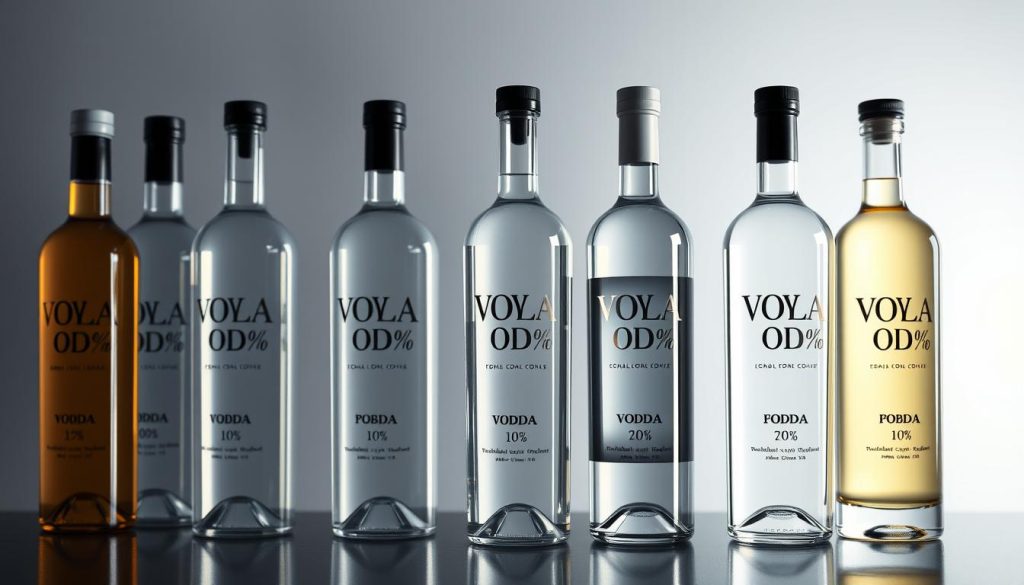
Vodka lovers often argue about the perfect alcohol content. The standard in the U.S. is 80 proof, or 40% Alcohol by Volume (ABV)1. This ensures consistency across most vodka brands2.
Most spirits have an alcohol range of 40% to 90% ABV. The proof system shows a drink’s strength. Vodka makers aim for a balanced flavor without overpowering alcohol intensity.
Vodka can range from 80 to 180 proof, offering many choices. Some brands make high-proof vodkas like Spirytus, reaching 192 proof or 96% ABV1.
However, “good” vodka isn’t just about alcohol content. Smoothness and production quality matter too. The best vodkas balance flavor and strength.
Key Takeaways
- Standard vodka is 80 proof (40% ABV)
- Vodka can range from 80 to 180 proof
- Alcohol content affects taste and mixability
- Quality depends on more than just proof
- U.S. regulations require minimum 80 proof vodka
Understanding Vodka’s Quality Standards
Vodka craftsmanship blends alcohol content with production methods to create exceptional spirits. The journey from raw ingredients to refined spirit involves intricate processes. These processes define the ultimate quality of vodka3.
Traditional Production Methods
Vodka production starts with choosing premium base ingredients. Tito’s and Smirnoff often use corn, while Absolut and Ketel One prefer wheat3.
Vodka alcohol by volume typically ranges between 30-40%. However, production can reach much higher concentrations4.
- Corn-based vodkas: Popular for smooth flavor
- Wheat-based vodkas: Traditional European approach
- Grape-based vodkas: Unique, like Ciroc
The Role of Base Ingredients
Each ingredient brings unique characteristics to vodka. Grains create different flavor profiles, while fruits can introduce subtle nuances.
The base ingredient choice impacts the vodka’s alcoholic strength and overall taste. It’s a crucial factor in the vodka-making process3.
Distillation Process Impact
The distillation process is key in determining vodka’s quality. Most premium vodkas undergo at least three distillations, creating a rectified spirit3.
Over-distillation can strip away flavor. Master distillers carefully balance the process to maintain the vodka’s character4.
“Quality vodka is not just about alcohol percentage, but the artistry behind its creation.”
Some vodkas like Everclear can reach 96% ABV during production. However, most are diluted to 40% for consumption4.
The final vodka alcoholic strength balances purity and drinkability. It’s a delicate process that requires skill and expertise.
Vodka Alcohol Percentage: Global Standards and Regulations
Vodka’s alcohol levels vary worldwide due to different regulations. In the U.S., vodka must contain at least 40% ABV (80 proof)5. This standard has been in place since the 1890s5.
The European Union requires a minimum of 37.5% ABV for vodka5. Recently, the TTB updated regulations to allow more flexibility in vodka production6. U.S. flavored vodkas can have 30% ABV, offering more variety6.
Modern distillation can produce spirits with up to 95-96% ethanol. These are then diluted to create the ideal vodka profile5. Premium brands often offer higher proof options for unique experiences.
The ‘Vodka Belt’ countries, including Poland and Finland, are known for strict vodka standards6. They’ve shaped global perceptions of high-quality vodka. These nations ensure each bottle meets stringent criteria for alcohol content and production methods.
FAQ
What is the standard alcohol percentage for vodka?
Vodka typically contains 40% alcohol by volume (ABV), equal to 80 proof. This is the common standard in the United States and many other countries. Some vodkas range from 37.5% to 50% ABV, depending on brand and regional rules.
Does a higher alcohol percentage mean better vodka?
Not always. Alcohol content isn’t the only quality factor. The distillation process, ingredients, and craftsmanship are crucial in determining vodka’s quality. Some premium vodkas have higher proof, but that doesn’t automatically make them better.
How do different base ingredients affect vodka’s alcohol content?
Base ingredients like wheat, rye, corn, or potatoes can affect vodka’s flavor and smoothness. However, the distillation process aims to create a neutral spirit. The alcohol percentage usually stays around 40% ABV, regardless of the base ingredients.
What are the alcohol percentage standards in different countries?
Global standards vary slightly. The European Union requires a minimum of 37.5% ABV. The United States standard is 40% ABV. Some premium vodkas from Russia or Poland might have higher proofs, ranging from 45% to 50% ABV.
Are there vodkas with extremely high alcohol percentages?
Yes, some specialized vodkas can reach up to 95% ABV (190 proof). These are typically used for scientific or industrial purposes. For drinking, most high-proof vodkas range between 50-60% ABV (100-120 proof).
How does alcohol percentage affect vodka’s mixability?
Vodkas with 40% ABV work well in most cocktails, providing balanced alcohol content. Higher-proof vodkas (45-50% ABV) can add more “punch” to mixed drinks. Lower-proof options might result in less intense cocktails.
What should I look for when choosing a quality vodka?
Consider the distillation process, number of distillations, and base ingredients. Multiple distillations often indicate a smoother, purer vodka. Taste, smoothness, and production methods are more important than alcohol content alone.
Brand reputation can also be a helpful guide. Remember, quality isn’t just about alcohol percentage. It’s about the overall experience and craftsmanship.
Source Links
- Vodka Proof – What is Vodka Proof – A Complete Guide – https://khor.com/blog/vodka-proof
- What Does the Proof on Alcohol Mean? Examples, Low vs. High – https://www.healthline.com/health/what-does-the-proof-on-alcohol-mean
- All About Vodka – https://abcfws.com/all-about-vodka?srsltid=AfmBOoqnpXMzKvsmazhsCgZQG77wwPsnT1kNZj_-MAXF0xX4NunKEdK1
- The Chemistry of Vodka – Structure, Additives, and Impurities – https://www.compoundchem.com/2016/06/08/vodka/
- Vodka – https://en.wikipedia.org/wiki/Vodka
- The definition of vodka – https://www.diffordsguide.com/g/1171/vodka/definition

