
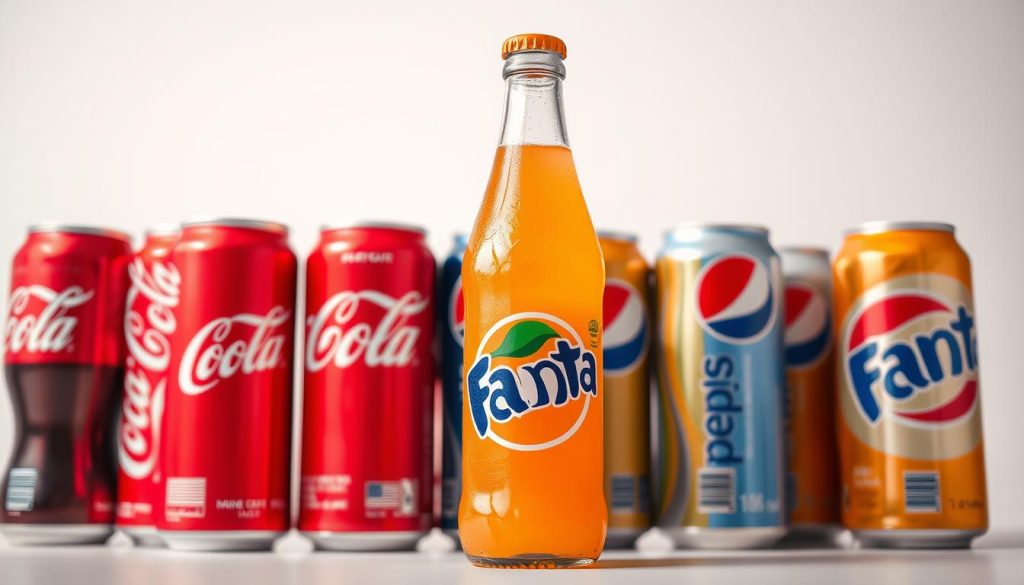
Fanta Orange, a popular Coca-Cola soda, raises questions about its health effects. This orange soda has a unique origin story from World War II Germany1. To compare Fanta and Coke, we need to examine their ingredients and health impacts2.
Soda drinking is common in America. Almost half of Americans drink sugary beverages daily2. Fanta Orange is caffeine-free, but its sugar content remains a concern for health-conscious people1.
Key Takeaways
- Fanta Orange originated during World War II in Germany
- Caffeine-free does not automatically mean healthy
- Sugar content is a major health consideration for soda drinkers
- Coca-Cola Company produces Fanta as a global beverage brand
- Consumers should carefully examine nutritional information
Understanding Fanta’s Caffeine-Free Nature
Fanta is a unique soft drink in the cola market. This vibrant orange soda offers a caffeine-free alternative. It stands out among other beverage options3.
The Extraordinary Origins of Fanta
Fanta’s story began during World War II in Germany. Coca-Cola’s local division created a new drink using available ingredients. In 1955, Fanta was reborn in Italy and became a global hit4.
Ingredient Breakdown and Nutritional Profile
Fanta’s composition reveals interesting nutritional insights:
- Caffeine-free drink suitable for all ages3
- Per 100ml serving contains 45 kcal3
- 12.5g of carbohydrates per 100ml3
| Nutrient | Amount in 16 fl oz | % Daily Value |
|---|---|---|
| Calories | 238 | N/A |
| Total Carbohydrates | 61g | 22% |
| Sodium | 60mg | 3% |
Exploring Fanta’s Flavor Universe
Competition has driven Fanta to create many flavors. Besides orange, consumers can enjoy grape, strawberry, pineapple, and peach.
- Grape
- Strawberry
- Pineapple
- Peach
Each flavor shows Fanta’s dedication to innovation. The brand aims to delight consumers in the soft drink market3.
Fanta vs Coke: A Comprehensive Comparison
Fanta and Coca-Cola differ in taste, nutrition, and marketing strategies. A 12-ounce serving reveals distinctive characteristics. These differences impact consumer loyalty56.
Let’s explore some key nutritional insights:
- Fanta contains 32g of sugar per serving5
- Coca-Cola Classic has 28g of sugar per serving5
- Fanta provides 120 kcal per serving5
- Coca-Cola Classic offers 100 kcal per serving5
Caffeine content creates another interesting contrast. Coca-Cola Classic contains 23 mg of caffeine per serving. Fanta remains completely caffeine-free5.
This unique trait appeals to consumers seeking alternative soft drinks. Many are exploring different beverage choices in the market.
Brand strategies play a crucial role in market positioning. Coca-Cola’s brand value hit 66.48 billion US dollars in 2017. Fanta ranked seventh among soft drink brands6.
These figures show powerful marketing drives consumer loyalty. The competitive beverage landscape demands effective branding approaches.
Both drinks offer varying levels of natural ingredients. Fanta contains about 50% juice, while Coca-Cola has 28%5.
Health Implications of Choosing Caffeine-Free Sodas
Knowing the health impact of sodas like Fanta vs Coke is key for smart dietary choices. The American Heart Association warns about health risks from too much sugar. Studies show soft drinks increase energy intake, with an average effect size of 0.16.
Caffeine-free doesn’t mean healthier. The sugar content in these drinks is still a big worry. Caffeine-free options aren’t necessarily better. People drinking soft drinks often don’t make up for the extra calories.
Soft drink intake can boost energy intake by 17% above normal eating patterns7. Research shows a significant effect size of 0.30 linking soft drinks to overall energy intake7.
Soft drinks can make weight management harder. Studies consistently link these drinks to body weight across different research methods7.
Caffeine-free Fanta might seem good, but watch its nutritional impact. The American Heart Association suggests limiting daily sugar intake. Men should have 36 grams max, women 25 grams.
FAQ
Is Fanta Orange completely caffeine-free?
Yes, Fanta Orange contains no caffeine. This sets it apart from many other fizzy drinks. It’s a hit with folks who want a sweet, fruity soda without the caffeine kick.
How did Fanta originate?
Fanta’s story began in World War II Germany. Coca-Cola’s local branch couldn’t import syrup due to trade bans. So, they created a new drink with available ingredients.
This new creation eventually became Fanta. It’s a tale of innovation born from necessity.
What flavors of Fanta are available?
Fanta offers more than just orange. You can find grape, strawberry, pineapple, and fruit punch flavors. They also make unique regional varieties to suit local tastes worldwide.
The brand is known for its diverse and creative flavor options.
How does Fanta compare to Coca-Cola in terms of nutrition?
Fanta and Coca-Cola have similar calorie and sugar content. Being caffeine-free doesn’t make Fanta healthier. Both should be enjoyed in moderation as part of a balanced diet.
Does Fanta have any health benefits?
Fanta is mainly a sugary drink without significant health perks. It’s caffeine-free but high in sugar and empty calories. Enjoy it as an occasional treat, not a health drink.
How does Fanta impact dental health?
Like other sugary sodas, Fanta can harm teeth. Its high sugar content feeds harmful mouth bacteria. This can lead to cavities and wear down tooth enamel if consumed often.
Is Fanta popular worldwide?
Fanta is a global hit, available in over 190 countries. It adapts flavors to local tastes. This makes it a truly international brand owned by the Coca-Cola Company.
Can Fanta be part of a weight management diet?
Fanta isn’t good for weight management due to its high sugar content. A typical can has about 160 calories and 41 grams of sugar. Regular consumption can lead to weight gain.
Source Links
- What Happens to Your Body When You Drink Soda Every Day – https://www.eatingwell.com/article/8049673/what-soda-does-to-your-body/
- Does Soda Count as Fluid? – https://www.everydayhealth.com/diet-nutrition/does-soda-count-as-fluid/
- Does Fanta Have Caffeine? Find Out The Secret In 2024 – https://grandlakecoffee.com/blog/does-fanta-have-caffeine/
- The pH of beverages available to the American consumer – https://pmc.ncbi.nlm.nih.gov/articles/PMC4808596/
- PDF – https://www.sugarydrinkfacts.org/resources/SugaryDrinkFACTS_Ranking_Nutrition.pdf
- How Much Sugar is in that Drink? A Look at 13 Brands – https://hawaiifamilydental.com/news/how-much-sugar-are-in-your-drinks-13-beverage-brands-and-their-sugar-content/
- Effects of Soft Drink Consumption on Nutrition and Health: A Systematic Review and Meta-Analysis – https://pmc.ncbi.nlm.nih.gov/articles/PMC1829363/

