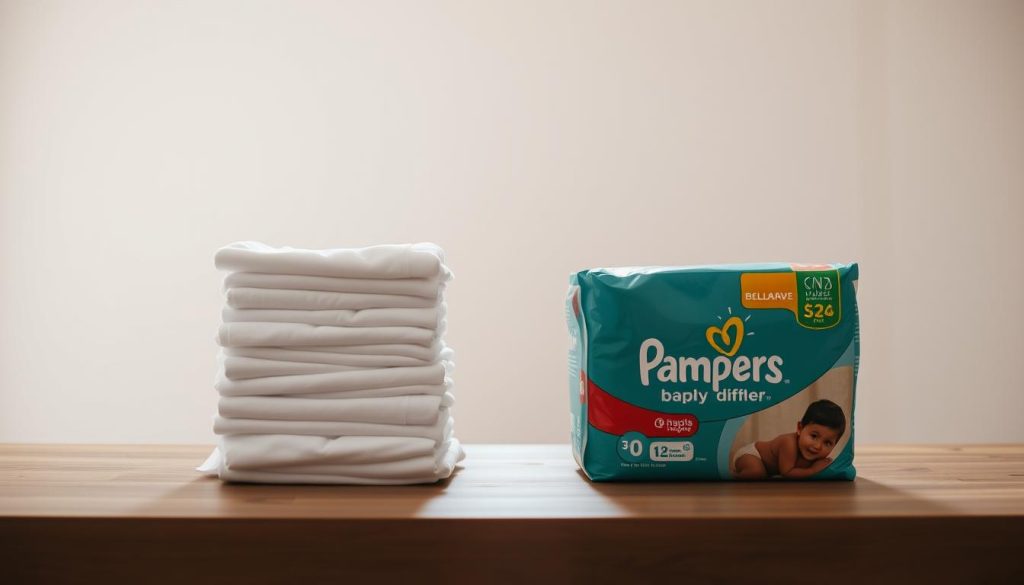
Many parents mix up “diaper” and “Pampers” when talking about baby care. These words aren’t the same, though. Pampers is a brand of disposable diapers, not a catch-all term1.
“Diaper” means any absorbent garment for babies. Pampers is a specific brand made by Procter & Gamble1. In some places, like Singapore, people say “pampers” for any diaper, like saying “Kleenex” for tissue.
Pampers has led the diaper industry since 19611. They’ve come a long way from bulky designs to modern baby care solutions. The brand now offers several product lines for different baby needs1.
These include Swaddlers, Cruisers, and Baby Dry1. Each type caters to specific stages of a baby’s growth and development.
Key Takeaways
- Diaper is a generic term for baby underwear
- Pampers is a specific diaper brand, not a universal term
- 95% of U.S. parents use disposable diapers
- Pampers was founded in 1961
- Diaper brands vary in features and pricing
Understanding Basic Diaper Terminology
Diapers are crucial for infant care. They have a rich history of innovation and design. Parents can choose between reusable and disposable diapers, each with unique benefits.
Traditional Diaper Landscape
Traditional diapers have changed a lot over time. Cloth diapers were once the only choice for parents. They needed frequent washing and careful upkeep.
Pampers changed diaper technology by introducing disposable options. These new diapers offer greater convenience for parents2.
Exploring Reusable Diaper Varieties
Reusable diapers come in several distinctive styles:
- Flat cloth diapers
- Rectangle diapers
- Fitted diapers
- Contour cloth diapers
- Hybrid diapers
- Pocket diapers
Modern Diaper Innovation
New diaper technology has transformed baby care. Pampers offers many diaper styles for different needs2:
| Diaper Style | Available Sizes | Special Features |
|---|---|---|
| Swaddlers | Newborn to Size 8 | Soft, sensitive skin protection |
| Baby Dry | Newborn to Size 7 | Extended wetness protection |
| Pure Protection | Newborn to Size 7 | Plant-based materials |
| Cruisers | Size 3 to 7 | Flexible fit for active babies |
Diaper sizes match baby weight ranges. Proper fit is crucial for comfort and preventing leaks3. Parents should follow weight guidelines and watch for size change signs.
Choosing the right diaper involves understanding your baby’s unique needs and developmental stage.
Diaper vs Pamper Difference: Breaking Down the Key Features
Pampers diapers keep babies comfy and dry with unique features. They’re hypoallergenic and free from parabens. These diapers are a top pick for parents worried about skin sensitivity4.
Pampers Swaddlers offer great overnight protection. They keep skin up to 3 times drier than other brands4. This helps prevent diaper rash and ensures baby comfort all night.
Huggies fit babies from Preemie to Size 6. Pampers extends from Newborn to Size 84. Both brands cater to different stages of growth.
Potty training diapers need special thought. Prices vary widely across brands, from budget-friendly to premium. Diaper choices depend on family needs, balancing absorbency, comfort, and cost.
Huggies Snug & Dry diapers topped absorbency tests5. Pampers is the #1 Pediatrician recommended brand in North America4. Both offer quality options for parents.
Choose diapers based on your baby’s needs. Consider skin sensitivity, activity level, and budget. Each brand uses unique tech to manage moisture and prevent leaks.
FAQ
What’s the difference between a diaper and a Pamper?
Pampers is a brand of disposable diapers. “Diaper” is the general term for baby’s absorbent underwear. Many folks use “Pamper” as a generic term, but it’s a brand owned by Procter & Gamble.
What types of cloth diapers are available?
Cloth diapers come in various types. These include flat, fitted, pocket, and all-in-one diapers. Each type offers different benefits for parents and babies.
Flat diapers are traditional rectangular cloths. Fitted diapers are shaped to fit a baby’s body. Pocket diapers have an insertable absorbent layer.
How do I choose between cloth and disposable diapers?
Think about convenience, cost, and environmental impact. Disposables like Pampers are more convenient. Cloth diapers are eco-friendly and can save money long-term.
Some parents use both types. Consider your lifestyle and baby’s needs when deciding.
What should I look for when selecting diapers?
Focus on size, absorbency, fit, and skin sensitivity. Look for wetness indicators and hypoallergenic materials. Choose diapers designed for your baby’s age and stage.
How can I prevent diaper rash?
Change diapers often and keep the area clean and dry. Use barrier creams and pick diapers with good moisture-wicking properties. Some diapers are made to reduce rash risk.
What are the main Pampers diaper lines?
Pampers offers several popular diaper lines. These include Swaddlers for newborns and Cruisers for active babies. Baby Dry provides overnight protection, while Easy Ups help with potty training.
Are there eco-friendly diaper options?
Yes, eco-friendly options exist. These include cloth diapers and biodegradable disposables. Some brands use sustainable materials to reduce environmental impact.
How often should I change my baby’s diaper?
Change diapers every 2-3 hours or when soiled. Newborns may need more frequent changes. Older babies might need fewer changes.
Always check for wetness and signs of discomfort. Timely changes help prevent rashes and keep baby happy.
Source Links
- What Is The Difference Between Diapers And Pamper – https://diaperwiki.com/blogs/news/what-is-the-difference-between-diapers-and-pamper
- What’s the Difference Between all the Pampers Diapers? – https://www.diaperdabbler.com/blogs/behind-the-store/difference-between-pampers-diapers?srsltid=AfmBOopDDD-XXc3E4aWivgDkX7_EtlJrW7qjhPP73267EMXgjFkVuR1Q
- Pampers Size Chart: Find the Perfect Fit for Your Baby | Pampers – https://www.pampers.com/en-us/baby/diapering/article/diaper-size-and-weight-chart
- Huggies vs. Pampers: Which Brand of Diaper is Best? – https://www.trulymama.com/baby-products/huggies-vs-pampers-which-brand-of-diaper-is-best/
- The Best Diaper Brands That Will Keep Your Baby Comfy and Dry – https://www.goodhousekeeping.com/childrens-products/diaper-reviews/g19502261/best-diapers/