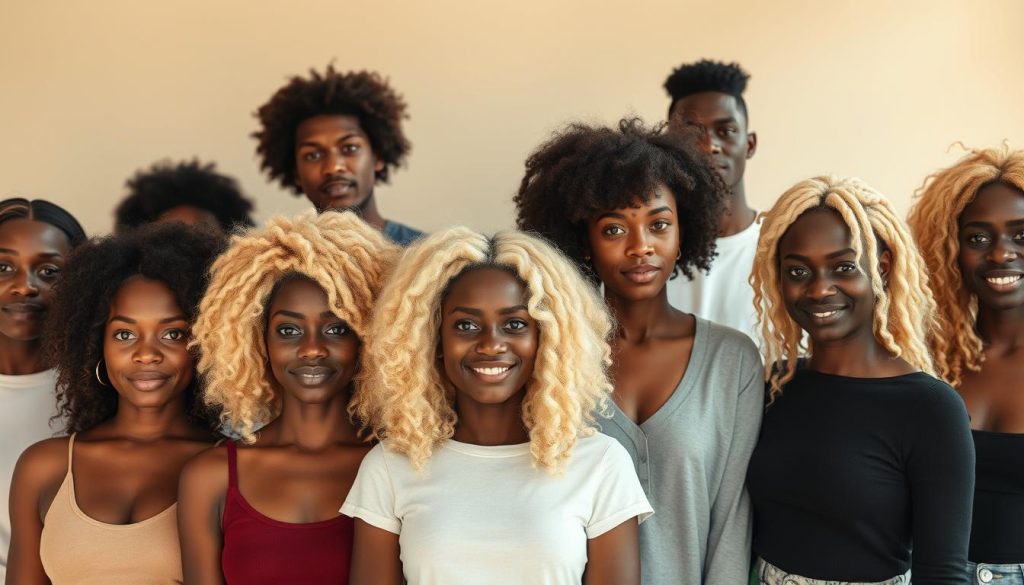
Natural hair diversity is more complex than most people think. Only 2% of the world’s population has naturally blonde hair. Yet, some remarkable exceptions challenge traditional assumptions about hair color1.
Black people with blonde hair are a genetic reality. This is especially true among Melanesian populations. In these communities, 5-10% of individuals have naturally blonde hair2.
This natural hair diversity shows incredible genetic variations within human populations. African Americans and other Black populations prove that hair color isn’t simple.
The genetic mechanisms behind blonde hair are complex. They involve specific mutations and inheritance patterns. These can lead to unexpected results in hair pigmentation.
Key Takeaways
- Natural blonde hair occurs in less than 2% of the global population
- Melanesian populations have a higher percentage of naturally blonde individuals
- Genetic mutations can produce unexpected hair colors
- Hair color is a complex genetic trait
- Natural hair diversity extends far beyond common stereotypes
The Science Behind Natural Blonde Hair in Black People
Hair color genetics are fascinating, especially in people of color with blonde hair. Blonde hair isn’t limited to one racial group. This reveals complex genetic mechanisms that surprise researchers3.
Hair pigmentation involves genetic inheritance and melanin production. In some ethnic minorities with blonde hair, unique genetic mutations determine hair color.
For biracial individuals with blonde hair, specific gene mutations create unexpected results4.
Melanin and Genetic Variations
Melanin production determines hair color, but genetic variations can alter this process. The TYRP1 gene mutation causes natural blonde hair in certain populations.
About 5-10% of Solomon Islanders have naturally blonde hair3. This genetic variation is separate from European blonde hair genes4.
- The TYRP1 gene mutation is responsible for natural blonde hair in certain populations
- Approximately 5-10% of Solomon Islanders have naturally blonde hair3
- This genetic variation occurs independently from European blonde hair genes4
Gene Mutation Insights
Research has revealed remarkable details about blonde hair genetics. The R93C mutation in the TYRP1 gene is a breakthrough in understanding hair color diversity4.
| Genetic Characteristic | Details |
|---|---|
| TYRP1 Mutation Frequency | 26% in Solomon Islands population4 |
| Hair Color Variance | 46.4% explained by R93C mutation4 |
| Geographic Distribution | Mutation absent outside Oceania3 |
Genetic inheritance is a complex dance of mutations and variations, revealing that human diversity extends far beyond traditional expectations.
Nature’s genetic palette is more diverse and surprising than we often imagine.
Black People with Blonde Hair: The Melanesian People
The Melanesian people of the Solomon Islands have a unique genetic trait. They’re Black with naturally blonde hair. This challenges our usual ideas about hair color56.
About 5-10% of Melanesians have blonde afro hair. This rare trait comes from a mutation in the TYRP1 gene. It’s different from the gene for blonde hair in Europeans567.
- The blonde hair trait is present in 26% of Solomon Islanders
- The gene mutation likely originated from a single individual
- Blonde hair is most common in children, often darkening with age
The blonde hair trait is inherited through a recessive gene. Both parents must carry this specific genetic variation. Scientists studied over 1,000 DNA samples to understand this uniqueness567.
They compared 43 blonde islanders with 42 dark-haired individuals. This research helped them uncover the genetic secrets behind this trait.
The Melanesian people represent a powerful testament to the incredible diversity of human genetic expression.
This genetic phenomenon highlights the rich complexity of human diversity, challenging narrow perceptions about hair color and racial characteristics.
Conclusion
Blonde hair in Black individuals reveals a fascinating genetic landscape. It challenges our traditional understanding of human diversity. This unique trait showcases the complexity of genetic variations worldwide.
Only 2% of people have naturally blonde hair. This small percentage represents an incredible range of genetic diversity. It invites us to broaden our perspectives on human appearance.
Hair diversity reflects our rich genetic tapestry. Scientific research shows hair color isn’t a simple concept. It’s a complex interplay of genetic factors.
Black individuals with blonde hair represent more than physical appearance. Their stories speak to resilience and genetic complexity. They challenge stereotypes and celebrate authentic human diversity.
Melanesian populations showcase remarkable genetic heritage. Individual stories highlight unique genetic expression. These examples remind us of the beautiful spectrum of human traits.
Our genetic journey proves beauty has no single definition. Embracing hair diversity deepens our understanding of human variation. It reveals incredible stories written in our DNA2.
FAQ
Is it possible for Black people to have naturally blonde hair?
Yes, Black individuals can have naturally blonde hair due to genetic variations. This trait is common among Melanesians, who have a unique genetic mutation.
What causes blonde hair in Black individuals?
Genetic mutations in the TYRP1 gene cause blonde hair in Black people. These mutations affect melanin production, resulting in lighter hair colors.
Hair shades can range from golden to strawberry blonde.
Are there specific populations known for natural blonde hair?
Melanesians, from the southwestern Pacific Ocean, are known for their natural blonde hair. Their genetic variation challenges conventional understanding of hair color.
Is blonde hair in Black people extremely rare?
Natural blonde hair in Black people isn’t as rare as many believe. It showcases the incredible genetic diversity within Black populations worldwide.
How does the genetics of blonde hair work in Black individuals?
Blonde hair stems from genetic mutations affecting melanin production. The TYRP1 gene plays a crucial role in determining hair color.
Variations in this gene can result in lighter hair colors, even in typically darker-haired populations.
Can blonde hair be natural in African American individuals?
Yes, African Americans can have natural blonde hair, though it’s less common. Genetic inheritance patterns and gene mutations can cause light-colored hair in this population.
Does blonde hair in Black people look different from blonde hair in other races?
Blonde hair texture and appearance can vary among different racial groups. In Black individuals, it might have a unique texture and sheen.
Are there any health implications related to this genetic variation?
The genetic mutation causing blonde hair is typically harmless. It’s a fascinating example of human genetic diversity without specific health implications.
Source Links
- Meet the Melanasians: Black People with Naturally Blonde Hair — Blk Girl Culture – https://www.blkgirlculture.com/blog-2/meet-the-melanasians-black-people-with-naturally-blonde-hair
- The Phenomenon Of Black People With Blonde Hair – https://www.yahoo.com/lifestyle/phenomenon-black-people-blonde-hair-155816831.html
- Black people with natural blonde hair – Everything is possible in genetics – https://thasso.com/black-people-with-natural-blonde-hair-everything-is-possible-in-genetics/
- Melanesians blond hair is caused by an amino acid change in TYRP1 – https://pmc.ncbi.nlm.nih.gov/articles/PMC3481182/
- The History Of Black People With Blonde Hair – https://newsone.com/4487980/black-people-with-blonde-hair-explained/
- The History Of The Blond-Haired Black Inhabitants Of The Solomon Islands – https://travelnoire.com/blond-haired-black-inhabitants-solomon-islands
- The Fascinating History Of Black People With Naturally Blonde Hair – https://medium.com/history-street/the-fascinating-history-of-black-people-with-naturally-blonde-hair-c36b0b58d99e