
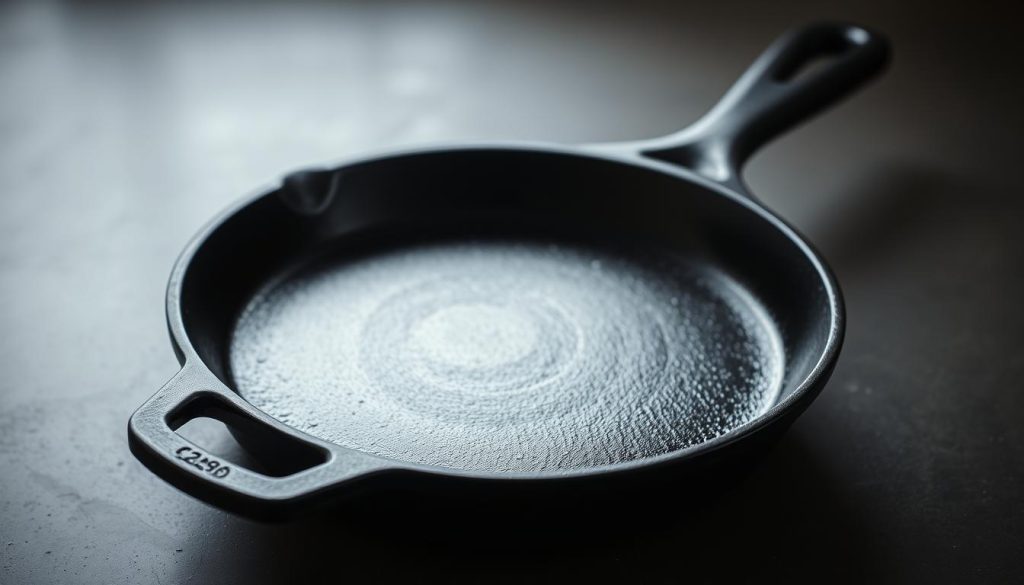
Cast iron cookware transforms ordinary cooking into an exceptional culinary experience. Seasoning a cast iron skillet enhances cooking performance and creates a non-stick surface1. It’s an art form that goes beyond simple maintenance.
Seasoning involves applying oil and heat to create a protective layer. This layer prevents rust and improves cooking results. Lodge, a renowned cookware manufacturer, professionally seasons cast iron cookware using specialized techniques1.
Cast iron care requires balancing oil, heat, and metal. The ideal baking temperature for seasoning is between 450-500 degrees Fahrenheit1. This allows the oil to bond with the metal surface.
Proper maintenance can make cast iron cookware last for generations. Chefs and home cooks recognize the value of well-maintained cast iron pieces.
Regular seasoning turns your skillet into a cherished kitchen asset. Consistent care develops a smooth, non-stick surface that improves over time2.
Key Takeaways
- Seasoning creates a protective, non-stick surface on cast iron skillets
- Proper maintenance prevents rust and extends cookware life
- Temperature and oil selection are crucial for effective seasoning
- Cast iron improves with consistent use and care
- Regular oiling helps maintain the skillet’s protective layer
Understanding Cast Iron Seasoning: What It Is and Why It Matters
Cast iron cooking starts with proper skillet preparation. Seasoning transforms raw metal into a culinary gem with amazing cooking qualities. This process creates a protective layer on your cookware.
Seasoning involves a fascinating chemical change. Oil heated to high temperatures undergoes polymerization. Fat molecules bond to the metal and each other3. This forms a hard, protective coating on the cast iron.
The result is incredibly durable and naturally non-stick cookware. It’s a remarkable transformation that enhances your cooking experience.
The Science of Seasoning
Seasoning is a unique chemical process. At 450°F (230°C), oils form a protective layer on the metal3. This shields it from moisture and creates a smooth surface.
The initial seasoning typically involves three steps. First, apply a thin oil layer. Then, heat it in the oven for 30 minutes. Finally, repeat this process 3-4 times3.
- Applying a thin layer of oil
- Heating in the oven for 30 minutes
- Repeating the process 3-4 times for optimal results3
Benefits of Well-Seasoned Cast Iron
Well-seasoned skillets offer many advantages. Cooking with fat reinforces the seasoning, improving its nonstick properties3. The protective coating prevents rust and gets better with use.
Your cookware becomes more valuable over time. It’s an investment that pays off in delicious meals and long-lasting durability.
Choosing the Right Oils for Seasoning
Not all oils work equally well for seasoning. Flaxseed oil is popular but may flake off3. Unsaturated oils like vegetable, canola, and corn oil give more stable results4.
Avocado oil is excellent for high-temperature cooking. Its high smoke point of 520°F makes it a top choice4.
Pro tip: A well-used cast iron skillet develops better seasoning over time, reducing the need for complex reseasoning processes3.
Seasoning a cast iron skillet: Step-by-Step Process
Seasoning is crucial for cast iron skillet restoration. It creates a non-stick surface through careful oil application and baking. The ideal temperature for seasoning is between 450-500 degrees Fahrenheit5.
Here’s a guide for seasoning your cast iron skillet:
- Clean the skillet thoroughly with warm water
- Dry completely to prevent rust formation
- Apply a very thin layer of oil5
- Bake upside down in a preheated oven
Use minimal oil when seasoning your skillet. Too much oil can create a sticky surface. This prevents proper seasoning5.
The seasoning process creates a natural non-stick cooking surface6. Regular cooking with oil builds additional seasoning layers5.
Remember: Patience is key in creating the perfect cast iron seasoning!
Be careful with acidic foods. They can break down new seasoning5. With proper care, your skillet will develop a smooth cooking surface. It gets better with each use6.
Maintaining Your Seasoned Cast Iron
Cast iron skillet care is vital to keep your cookware a kitchen gem. Proper maintenance transforms a simple pan into a trusted cooking partner. With good care, cast iron can last over 100 years.
Clean your skillet gently each day. Use warm water and a soft brush to remove food bits. Skip harsh soaps that can harm the seasoning. Dry the skillet well to stop rust7.
Apply a thin layer of cooking oil after each use. This keeps the non-stick surface and guards against moisture8.
Reseason when your skillet looks dull or food sticks. Experts suggest seasoning 3 to 4 times for best results7. The seasoning process creates a protective layer that improves with use8.
Consistent care is key for cast iron skillet upkeep. Follow these tips to develop a natural non-stick surface. Your cast iron will reward you with years of great cooking.
FAQ
What exactly is seasoning a cast iron skillet?
Seasoning creates a protective layer on your cast iron skillet by baking oil onto the surface. This process forms a natural non-stick coating through polymerization. The oil bonds with the iron, creating a hard layer that prevents rust and improves cooking.
Why is seasoning important for cast iron cookware?
Seasoning shields your cast iron skillet from rust and creates a non-stick surface. It enhances flavor and makes the skillet more non-stick with each use. A well-seasoned skillet develops a beautiful patina and can last for generations.
What type of oil works best for seasoning a cast iron skillet?
Oils with high smoke points are ideal, such as vegetable, canola, grapeseed, or flaxseed oil. These oils create a durable seasoning layer through effective polymerization. Avoid low smoke point oils like olive oil, which can become sticky.
How often should I season my cast iron skillet?
New skillets need initial seasoning, then maintenance through regular cooking and proper care. Reseasoning may be needed every few months to a year, depending on use. Look for signs like food sticking, visible rust, or a dull surface.
Can I use soap to clean my seasoned cast iron skillet?
Modern mild dish soaps are generally safe for seasoned cast iron. Use a soft sponge and avoid harsh scrubbing. Dry the skillet thoroughly right after cleaning to prevent rust from forming.
What should I do if my cast iron skillet gets rusty?
Don’t worry! You can remove rust with steel wool or a metal scraper. Clean the skillet thoroughly and reseason it. Apply a thin layer of oil and bake the skillet to restore its protective coating.
Can I cook acidic foods in a cast iron skillet?
It’s best to avoid acidic foods until your skillet is well-seasoned. Acidic ingredients can damage the seasoning and give food a metallic taste. A well-seasoned skillet becomes more resistant to acidic foods over time.
How do I prevent food from sticking to my cast iron skillet?
Ensure your skillet is well-seasoned and preheat it properly. Use enough cooking oil or fat when cooking. Avoid moving food too quickly in the pan. Consistent cooking and proper maintenance will improve the skillet’s non-stick properties.
Source Links
- All About Seasoning – https://www.lodgecastiron.com/discover/cleaning-and-care/cast-iron/all-about-seasoning?srsltid=AfmBOoo3nEM2oKK4H0jDhw1DTZFD-04wqMv66vGI6j6pTYFVp8uza8G6
- How To Season A Cast-Iron Skillet – https://www.southernliving.com/food/how-to/how-t0-season-a-cast-iron-skillet?srsltid=AfmBOopIqjabKAZlGAWmrh2IOIwz_Sm4DIrxaypGy7GaLC2qQ7azIKAC
- How to Season a Cast Iron Pan (It’s Easier Than You Think!) – https://www.seriouseats.com/how-to-season-cast-iron-pans-skillets-cookware
- Chemistry of Cast Iron Seasoning: A Science-Based How-To – https://sherylcanter.com/wordpress/2010/01/a-science-based-technique-for-seasoning-cast-iron/
- All About Seasoning – https://www.lodgecastiron.com/discover/cleaning-and-care/cast-iron/all-about-seasoning?srsltid=AfmBOoqiLp_pGDWsX-eRfHXB4P76Ljq_SN0Cnu2MfgC7SwkLCNbtc5Vr
- I Wrote a Cast-Iron Cookbook—Here’s the Right Way to Season a Cast-Iron Skillet – https://www.eatingwell.com/how-to-season-a-cast-iron-skillet-8734258
- Your Cast Iron Isn’t as Delicate as You Think It Is – https://www.allrecipes.com/article/how-to-care-for-cast-iron/
- All About Seasoning – https://www.lodgecastiron.com/discover/cleaning-and-care/cast-iron/all-about-seasoning?srsltid=AfmBOorE7IfMMzh7C2ByZ0plhjNZTLOHM7tdmNNYY55Nkcboah2eSb91

