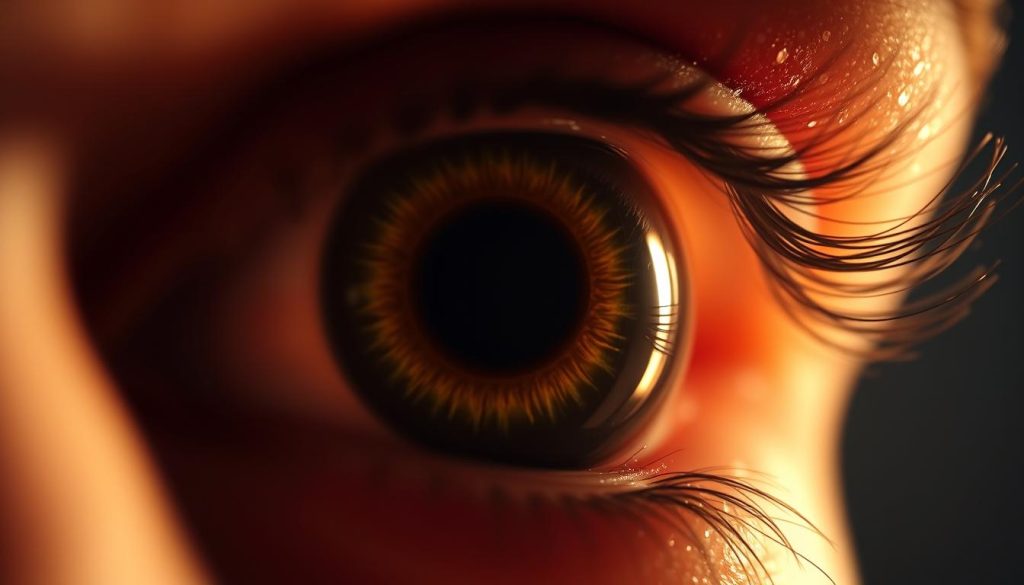
Solar eclipses are awe-inspiring, but gazing at them without protection is dangerous. It can cause permanent eye damage in seconds12. Half of those who view eclipses unprotected may suffer eye damage1.
Solar eclipses happen when the moon blocks the sun. This rare event draws millions of viewers. The urge to look directly at it can harm your vision2.
Eclipse-related eye damage may not show up right away. Vision changes can develop hours or days after exposure1. Signs include loss of central vision, distorted sight, and altered color perception1.
Key Takeaways
- Looking directly at a solar eclipse can cause permanent eye damage
- 50% of unprotected viewers risk eye injury
- Symptoms may not appear immediately after exposure
- Proper eye protection is essential during solar eclipses
- Solar eclipse safety requires specialized protective eyewear
Understanding Solar Eclipse Eye Damage
Solar eclipses are awe-inspiring events that draw millions of viewers. But watching without proper eye protection can be dangerous. It’s crucial to safeguard your vision to avoid severe and lasting damage.
What is Solar Retinopathy?
Solar retinopathy happens when the sun’s rays burn your retina. Even a quick glance can cause major harm. This condition is tricky because you won’t feel pain right away.
Immediate and Long-term Vision Effects
Sun exposure can hurt your eyes in several ways:
- Temporary vision disruption3
- Potential permanent vision loss4
- Gradual symptom development over hours or days5
Signs of Eclipse-Related Eye Damage
Knowing the symptoms is key to protecting your eyes during an eclipse. Be alert for these warning signs:
| Symptom | Potential Impact |
|---|---|
| Blurred vision | Temporary or permanent vision distortion3 |
| Dark spots | Potential permanent visual impairment4 |
| Color perception changes | Reduced visual clarity5 |
Interestingly, fewer than 100 eye problems were recorded during the 2017 solar eclipse, but each case represents a significant risk5.
Remember: No amount of sun observation is safe without proper eye protection.
Looking at a Solar Eclipse: Essential Safety Guidelines
Eclipse viewing demands strict safety measures to shield your eyes from harm. The Moon only blocks the Sun’s bright face briefly during a total solar eclipse6. Safety is paramount when observing this celestial event.
- Always use ISO 12312-2 certified eclipse glasses7
- Inspect protective eyewear for any damage before use8
- Supervise children during eclipse viewing6
- Never use regular sunglasses for solar observation7
Proper protection is essential for viewing a partial solar eclipse6. Special solar filters are needed for optical devices to prevent instant eye injury7.
| Eclipse Type | Viewing Safety |
|---|---|
| Partial Solar Eclipse | Never view without ISO-certified protection |
| Total Solar Eclipse | Safe only during brief totality phase |
Try pinhole projectors if eclipse glasses aren’t available8. Safeguarding your vision during this rare astronomical event is vital6.
Safe Methods for Eclipse Viewing
Protecting your eyes during a solar eclipse is vital to prevent permanent vision damage. The right eclipse glasses and viewing techniques ensure safe enjoyment of this celestial spectacle9.
ISO-Certified Eclipse Glasses: Your Primary Protection
Eclipse glasses are the most reliable method for direct solar viewing. They must meet the ISO 12312-2 international safety standard for maximum eye protection10.
Check that your glasses aren’t damaged or scratched. Verify their authentic ISO certification. Replace them if you notice any signs of wear.
- Ensure glasses are not damaged or scratched
- Check for authentic ISO certification
- Replace glasses if they show any signs of wear
Alternative Viewing Techniques
When direct viewing isn’t possible, try these safe alternatives for eclipse observation:
- Pinhole Projection: Make a simple projector using cardboard with a small pinhole9. Calculate the projected image diameter by multiplying box length by 0.019.
- Colander Method: Hold a colander about 20 inches above the ground to create multiple sun images9.
- NASA Live Streams: Watch eclipse events safely online10.
Dangerous Viewing Methods to Avoid
Some viewing techniques can cause serious eye damage. Never use these unsafe methods:
- Regular sunglasses
- Unfiltered cameras or telescopes
- Homemade filters
- Polaroid filters
- Smoked glass
Just a few seconds of unprotected solar viewing can lead to permanent retinal damage10. Safeguard your vision and enjoy the eclipse responsibly!
Conclusion
Solar eclipse viewing requires careful eye protection. These astronomical events are fascinating, but your vision’s safety comes first. Use proper techniques to enjoy the spectacle without risking your eye health11.
Watch for unusual vision changes after seeing a solar eclipse. Seek medical help right away if you notice any issues. Eye damage symptoms may take hours or days to appear12.
Recovery from solar retinopathy can last 3 to 6 months. There’s a chance your vision might not fully return to normal12.
Eclipse safety matters for both short-term viewing and long-term eye health. Follow expert advice and use safe viewing methods. This turns a risky experience into a safe, unforgettable event11.
Approach solar eclipses with knowledge and respect for your eyes. Proper preparation ensures you can marvel at this cosmic wonder safely.
FAQ
What is a solar eclipse, and why is it dangerous to view without proper protection?
A solar eclipse happens when the moon blocks the sun’s light. Viewing it without proper eye protection can cause permanent eye damage. This is due to intense ultraviolet and infrared radiation that can burn the retina.
How quickly can solar eclipse exposure damage my eyes?
Eye damage can occur in seconds without immediate pain. The retina has no pain receptors, so damage can happen silently. Proper eye protection is crucial during any solar eclipse viewing.
What are the symptoms of solar retinopathy?
Solar retinopathy symptoms include blurred vision and dark spots in central vision. Other signs are distorted vision, altered color perception, and difficulty seeing details. These symptoms might develop hours or days after sun exposure.
Are eclipse glasses really necessary for viewing?
Yes, eclipse glasses are essential for safe viewing. Only ISO 12312-2 certified glasses provide adequate protection. Regular sunglasses, homemade filters, or unfiltered optical devices are NOT SAFE.
Can I look directly at a total solar eclipse?
You can only view the sun without protection during total eclipse totality. This moment is brief and must be timed precisely. Put protective glasses back on immediately when the sun reappears.
What should I do if I think I’ve damaged my eyes during an eclipse?
Seek professional medical attention right away if you suspect eye damage. An ophthalmologist can assess potential retinal damage and recommend appropriate treatment or monitoring.
Are there safe alternative ways to view a solar eclipse?
Yes, safe alternatives exist for viewing solar eclipses. These include pinhole projectors, watching live streams, and viewing projected images. Using professionally manufactured solar filters for telescopes or cameras is also safe.
How long can solar eclipse damage last?
Solar eclipse eye damage can range from temporary to permanent vision loss. Some people may experience long-term changes in central vision. Prevention through proper eye protection is crucial.
Can children view solar eclipses?
Children can view solar eclipses with adult supervision and certified ISO 12312-2 glasses. Adults must ensure kids understand and follow strict safety guidelines to prevent accidental eye exposure.
How do I know if eclipse glasses are genuine?
Look for ISO 12312-2 certification and buy from reputable manufacturers. Check for scratches or damage. Avoid using glasses over three years old or improperly stored.
Source Links
- Solar Eclipses Eye Safety: Protect Your Eyes from the Sun! – https://www.schoolhealthny.com/site/default.aspx?PageType=3&ModuleInstanceID=169&ViewID=7b97f7ed-8e5e-4120-848f-a8b4987d588f&RenderLoc=0&FlexDataID=8863&PageID=1
- Why is looking at a solar eclipse dangerous without special glasses? Eye doctors explain. – https://www.cbsnews.com/news/why-solar-eclipse-dangerous-2024/
- Did you look at the solar eclipse too long? Doctors explain signs of eye damage – https://www.cbsnews.com/news/solar-eclipse-eye-damage-symptoms/
- How to watch an eclipse, safely – https://www.nei.nih.gov/about/news-and-events/news/how-watch-eclipse-safely
- How to tell if you damaged your eyes looking at the solar eclipse – https://nypost.com/2024/04/08/health/solar-eclipse-2024-signs-of-eye-damage-from-looking-at-sun/
- Eclipse Viewing Safety – NASA Science – https://science.nasa.gov/eclipses/safety/
- Total Solar Eclipse Safety – NASA Science – https://science.nasa.gov/eclipses/future-eclipses/eclipse-2024/safety/
- How to View a Solar Eclipse Safely – https://eclipse.aas.org/eye-safety
- How to safely view a solar eclipse. | Exploratorium – https://www.exploratorium.edu/eclipse/how-to-view-eclipse
- How to Safely View a Solar Eclipse – https://aapos.org/glossary/how-to-safely-view-a-solar-eclipse
- How to Safely View the Solar Eclipse – https://www.lvhn.org/news/how-safely-view-solar-eclipse
- Keeping an Eye on Your Vision During the Solar Eclipse – https://uthealthaustin.org/blog/keeping-an-eye-on-your-vision-during-the-solar-eclipse