
Keeping pool water chemistry balanced can be tricky. Baking soda is a simple solution for this problem. It helps stabilize pH levels and improves overall water quality1.
Sodium bicarbonate is key in pool water chemistry. With a pH of 8.3, it’s great for adjusting water balance1. It raises both pH and alkalinity in pools, creating a stable swimming environment2.
The ideal pH range for pools is 7.2 to 7.81. This range prevents metal corrosion and scale buildup. These issues can damage pool equipment if left unchecked3.
Balanced pool water benefits swimmers. It prevents water from turning green or growing algae2. Using baking soda wisely creates a safer, more comfortable swimming environment.
Key Takeaways
- Baking soda helps balance pool water pH and alkalinity
- The ideal pH range is between 7.2 and 7.8
- Sodium bicarbonate prevents metal corrosion and scale buildup
- Pool water chemistry impacts swimmer comfort and safety
- Regular water testing is essential for proper pool maintenance
Understanding Pool Water Chemistry and Baking Soda
Pool water chemistry is vital for swimmer comfort and equipment longevity. Proper pH balance ensures a safe and enjoyable swimming environment. Regular maintenance is key to achieving this balance4.
What Is Pool Water pH and Alkalinity?
Pool water chemistry focuses on pH and alkalinity. The ideal pH range for pools is 7.2 to 7.8, with optimal levels around 7.4 to 7.65.
Alkalinity acts as a buffer that stabilizes pH levels. It prevents sudden changes in the water’s acidity or basicity5.
- pH measures water acidity or basicity
- Alkalinity helps maintain stable pH levels
- Balanced chemistry prevents pool damage
The Role of Sodium Bicarbonate in Pool Maintenance
Baking soda is a key player in natural pool cleaning. It raises both pH and alkalinity effectively. This makes it a cost-effective solution for pool maintenance6.
| Chemical Property | Baking Soda Impact |
|---|---|
| pH Adjustment | Raises pH levels gradually |
| Alkalinity Boost | Increases total alkalinity |
| Equipment Protection | Prevents corrosion |
Ideal pH and Alkalinity Levels for Swimming Pools
Proper chemical balance is crucial for pool health. Alkalinity should be between 80 and 120 parts per million (ppm)6.
Low alkalinity can cause problems for your pool. It may damage equipment and create uncomfortable swimming conditions5.
Regular testing and careful use of baking soda help maintain optimal water chemistry. This ensures a safe and enjoyable pool experience4.
Benefits of Baking Soda in Pool Water
Baking soda is a powerful tool for DIY pool maintenance. It efficiently tackles various water chemistry issues. Your pool’s health and appearance can improve dramatically with baking soda74.
The primary benefits of using baking soda for swimming pools include:
- Water Clarity Improvement: Baking soda helps clear cloudy water by stabilizing pH levels6
- Corrosion Prevention on Pool Equipment
- Algae and Scale Buildup Reduction
- pH and Alkalinity Balancing
Baking soda is crucial when pool water pH is outside 7.2 to 7.8. It gently raises alkalinity levels, protecting pool surfaces and equipment74.
Experts recommend using baking soda for cost-effective, natural pool maintenance. It’s essential for addressing cloudiness and preventing corrosion6.
How to Add Baking Soda to Your Pool Water
Pool water treatment with baking soda needs careful prep and precise application. Test your pool water before adding any chemicals. This ensures you’re making the right adjustments8.
Use this rule: add 1.5 pounds of sodium bicarbonate per 10,000 gallons. This raises alkalinity by 10 ppm8. The Taylor K-2006 pool test kit helps measure chemical levels accurately8.
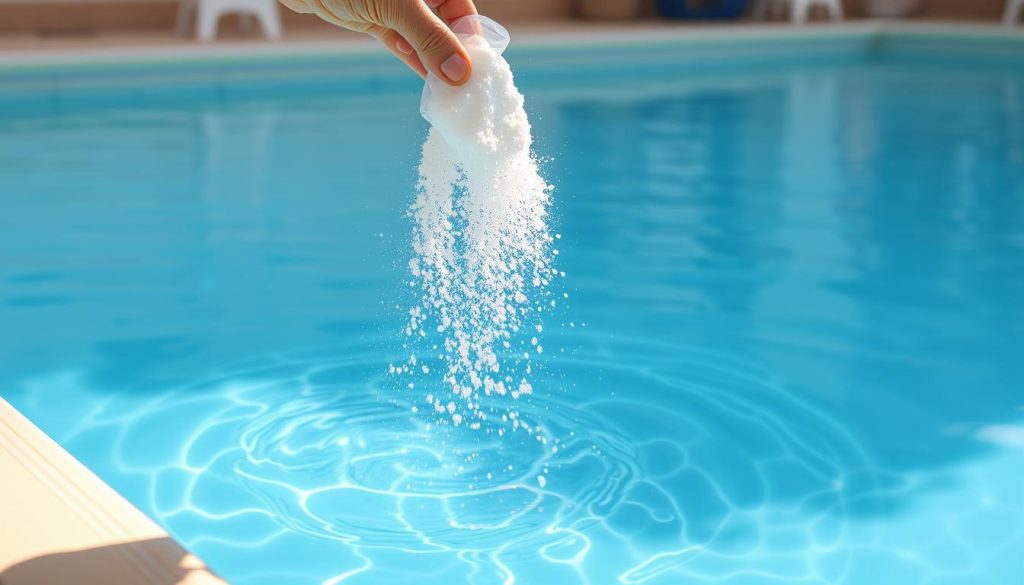
Aim for optimal pool chemistry between 80 and 120 parts per million9. Sprinkle the powder in wide arcs across the pool’s surface. This ensures even coverage.
Run your pool’s pump and filter for 8 to 10 hours. This helps circulate the chemicals thoroughly8. Wait for a complete water turnover before retesting8.
Check pH and alkalinity levels twice a week to maintain water quality9. If alkalinity drops below 80 ppm, pH levels may fluctuate9. Consistent treatment keeps your swimming environment safe and balanced.
FAQ
What is the primary role of baking soda in pool maintenance?
Baking soda balances pool water chemistry by stabilizing pH and alkalinity levels. It’s a natural, cost-effective solution that improves water quality. This method reduces corrosion and prevents scale buildup in swimming pools.
How does baking soda affect pool water pH?
Baking soda acts as a pH buffer, raising low pH levels. It maintains stable alkalinity between 80-120 parts per million (ppm). This prevents water from becoming too acidic, protecting pool equipment and swimmers.
How much baking soda should I add to my pool?
The amount depends on your pool’s size and current water chemistry. Typically, use 1.5 pounds per 10,000 gallons to raise alkalinity by 10 ppm. Always test your water first before adding baking soda.
Add baking soda gradually to avoid overcorrection. This ensures proper balance and prevents potential issues.
Can baking soda help with cloudy pool water?
Yes, baking soda can help clear cloudy water by balancing pH and alkalinity. Proper water chemistry reduces mineral buildup and improves filtration. This results in clearer, more inviting pool water.
Is baking soda a safe alternative to commercial pool chemicals?
Baking soda is a natural and safe pool treatment option. It’s less harsh than many commercial chemicals and environmentally friendly. However, use it alongside proper pool maintenance practices for best results.
How often should I test my pool water when using baking soda?
Test your pool water at least once a week during swimming season. After adding baking soda, wait 6-24 hours before retesting. This ensures pH and alkalinity levels have stabilized to the desired range.
Can baking soda prevent algae growth in pools?
Baking soda isn’t a direct algaecide, but it creates unfavorable conditions for algae growth. Maintaining proper pH and alkalinity levels reduces the likelihood of algae developing. This makes your pool less hospitable to these unwanted organisms.
What are the signs that my pool needs baking soda?
Look for low pH (below 7.2), corrosion on pool equipment, and skin irritation. Scale buildup and cloudy water are also indicators. These signs suggest your pool might benefit from a baking soda treatment.
Source Links
- 6 Ways Baking Soda Can Clean Your Pool – https://www.familyhandyman.com/article/use-baking-soda-to-clean-pool/?srsltid=AfmBOooOWa0ojXCyR0y6ecfFJxz36wJ7pprd8KFcUDgf-PyOyFZvbvD7
- How to Use Baking Soda Effectively for a Clean, Clear Pool – https://www.thespruce.com/baking-soda-in-pool-8652737
- How to Use Baking Soda in a Pool? — Use this Inexpensive Compound to Instantly Tidy Your Pool (2021) – https://www.robotcleanerstore.com/blogs/news/baking-soda-in-pool?srsltid=AfmBOopW2tLagYbXLimzF9DgzQES_EF6dJIAnugCP3mERBbe1ylI3gyC
- Maintain Your Pool with Baking Soda | Arm & Hammer – https://www.armandhammer.com/articles/diy-pool-maintenance-tips
- How To Raise Your Pool’s Alkalinity with Baking Soda – https://www.swimuniversity.com/baking-soda-in-pool/
- 3 Ways Baking Soda Can Help Maintain Your Swimming Pool – https://www.bobvila.com/articles/what-does-baking-soda-do-for-a-pool/
- 6 Ways Baking Soda Can Clean Your Pool – https://www.familyhandyman.com/article/use-baking-soda-to-clean-pool/?srsltid=AfmBOoqw9g7W72lM9nwq0bLUjB2Y5IUmgjiXTT_cOMKR3IiMCD0-g6F0
- How To Raise Your Pool Alkalinity With Baking Soda – https://www.clean-pool-and-spa.com/baking-soda-in-pool.html
- Using Baking Soda to Raise Alkalinity in a Pool – https://greatbackyard.com/blogs/news/using-baking-soda-to-raise-alkalinity-in-a-pool?srsltid=AfmBOopqRR6yLzQ6isMCxgi4tdKeM2UIffcyfX0iUrOznSS4mi2dMvsw

