
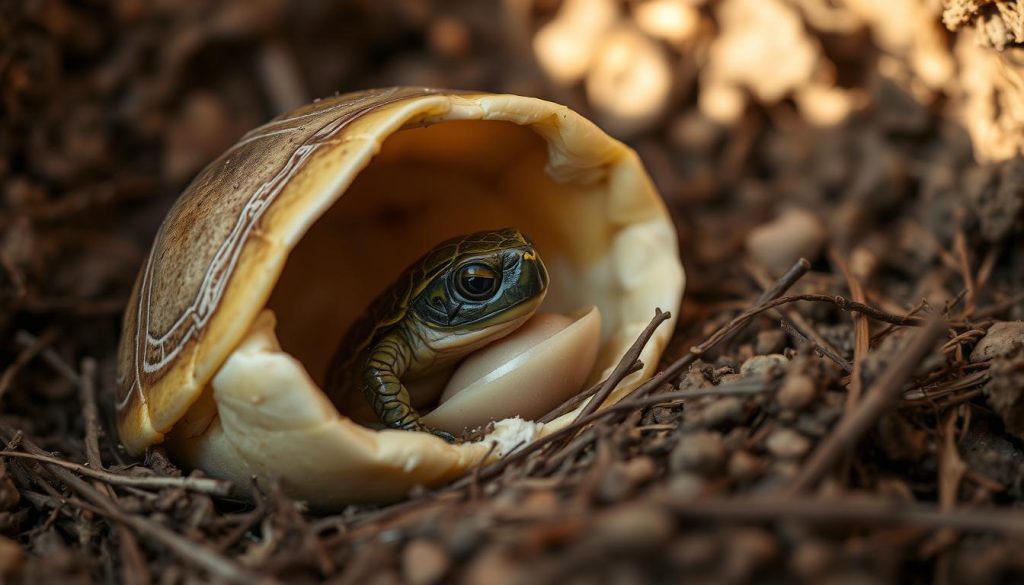
Turtle egg hatching is a captivating natural event. Most turtle species’ eggs take 45 to 75 days to hatch. Amazingly, scorpion mud turtles can extend their incubation to 12 months1.
Egg sizes and numbers vary greatly among turtle species. Leatherback sea turtles lay 50 to 90 eggs per clutch. Hawksbill sea turtles produce 140 to 160 eggs1.
Smaller turtles, like Suwanee cooters, typically lay 15 to 20 eggs1. Temperature is crucial for hatching time and hatchling gender. The critical temperature is 28°C (82°F)1.
Higher temperatures produce more female turtles. Lower temperatures result in more male hatchlings1. This temperature-dependent process is fascinating to researchers and nature enthusiasts alike.
Key Takeaways
- Most turtle species have an incubation period of 45-75 days
- Egg clutch sizes vary widely between turtle species
- Sand temperature determines hatchling gender
- Some turtles can extend incubation up to 12 months
- Hatchling survival rates are extremely low
Understanding the Turtle Nesting Process
Sea turtles have an amazing nesting process. They carefully pick sites and use complex egg-laying methods. Female turtles return to their birth beaches, showing off their incredible navigation skills.
Selecting the Perfect Nesting Location
Choosing the right nesting spot is key for turtle babies to survive. Female turtles seek specific beach features for ideal egg incubation.
The perfect spot must have:
- Soft, sandy terrain
- Minimal human disturbance
- Appropriate temperature for egg development
- Protection from predators
Nest Construction and Egg Laying
The egg-laying process is precise and vital for turtle reproduction. Female sea turtles usually lay 80-120 eggs each time they nest2.
Egg temperature is crucial. It determines the sex of future hatchlings. Warmer temps produce more females3.
| Nesting Characteristic | Details |
|---|---|
| Eggs per Nest | 80-120 |
| Nesting Frequency | Every 2-3 years |
| Incubation Period | Approximately 2 months |
Natural Nest Protection Methods
Nest monitoring is crucial to protect these fragile eggs. Only one in 1,000 turtle hatchlings survive to adulthood2. This makes each nest extremely valuable.
Female turtles use several natural protection strategies:
- Camouflaging the nest
- Choosing hidden locations
- Creating deep nest chambers
- Laying eggs during less active predator times
Knowing these nesting processes helps protect these amazing sea creatures. It allows us to safeguard their delicate reproductive cycle.
The Journey from Egg to Hatchling
Baby sea turtles are born through a fascinating process on sandy beaches. These tiny fighters break free from their shells at night. This smart move helps them avoid daytime predators4.
Newly hatched turtles are only about 4 centimeters long5. They start with a wild 24-hour swim after reaching the ocean. Conservation efforts are vital to help these little ones survive tough challenges.
Young turtles can spend years or even decades in the ocean4. Their growth depends on food and living conditions. Sadly, these little swimmers face many dangers during their “lost years”5.
Plastic trash, fishing nets, and hungry predators all pose threats. Scientists and conservationists work hard to protect these amazing creatures. They study turtle habitats and life cycles to better understand them.
Volunteer groups around the world play a key role in keeping hatchlings safe. Their efforts help ensure more turtles survive to adulthood.
FAQ
How long does it take for turtle eggs to hatch?
Turtle eggs usually hatch in 45 to 70 days. The exact time depends on the species and environment. Sand temperature affects both hatching time and the gender of baby turtles.
How many eggs do turtles usually lay?
Turtle egg counts vary by species. Some turtles lay up to 100 eggs in one nest. Sea turtles typically lay between 50-200 eggs per clutch.
What is a “turtle boil”?
A “turtle boil” happens when many baby turtles emerge from the sand at once. It looks like the sand is boiling. This group emergence helps some babies survive by overwhelming predators.
How big are turtle eggs?
Turtle egg size varies by species. Sea turtle eggs are about the size of ping-pong balls. They’re usually white or cream-colored with soft, leathery shells.
Do all turtle hatchlings survive?
Sadly, most turtle hatchlings don’t survive. Only about 1 in 1,000 to 1 in 10,000 make it to adulthood. They face many dangers on the beach and in the water.
How do female turtles choose their nesting sites?
Female turtles often return to their birth beaches to lay eggs. They look for good sand temperature, beach slope, and moisture levels. They also seek protection from predators.
Turtles use magnetic field sensing and memory to find these spots. This amazing skill helps them navigate back to their birthplace.
What determines the gender of turtle hatchlings?
The sand temperature during incubation determines turtle gender. Warmer temperatures usually produce more females. Cooler temperatures typically result in more males. This makes turtles vulnerable to climate change.
How quickly do turtle hatchlings grow?
Baby turtles grow fast in their first few years. Sea turtle hatchlings may grow several inches in year one. Growth rates depend on food, habitat, and species.
Source Links
- Turtle – Egg-laying, Lifespan, Adaptations | Britannica – https://www.britannica.com/animal/turtle-reptile/Reproduction
- Sea Turtle FAQ – https://myfwc.com/research/wildlife/sea-turtles/florida/faq/
- Life Cycle of Sea Turtles — SEE Turtles — SEE Turtles – https://www.seeturtles.org/sea-turtle-life-cycle
- The Sea Turtle Life Cycle — The State of the World’s Sea Turtles | SWOT – https://www.seaturtlestatus.org/sea-turtle-lifecycle
- The journey of a baby sea turtle (and how volunteers help with its survival) – https://medium.com/proofofimpact/the-journey-of-a-baby-sea-turtle-and-how-volunteers-help-with-its-survival-cbc3d54b410d

