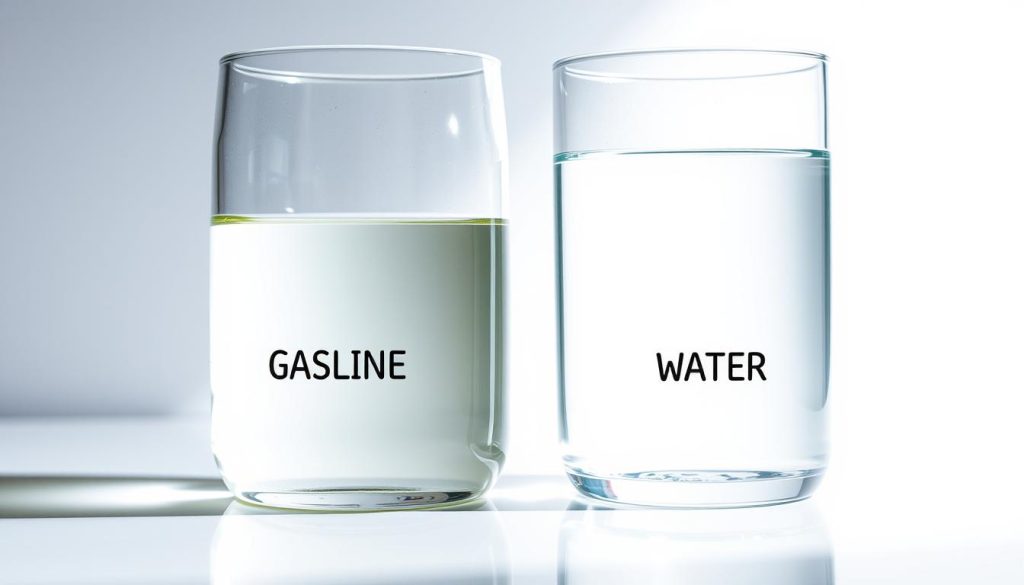
Gasoline weight matters for drivers and car fans. A gallon of gas weighs about 6 pounds, much lighter than water12. This difference affects how cars perform and use fuel.
Water weighs 8.34 pounds per gallon, making it heavier than gas1. Gas density impacts your car’s performance and fuel use.
Different gas grades vary in weight. Regular gas weighs about 6 pounds per gallon. Premium 93-octane fuel ranges from 5.93 to 6.42 pounds13.
These small differences in gas density can change your car’s weight and efficiency.
Key Takeaways
- Gasoline is lighter than water by approximately 2-3 pounds per gallon
- Fuel weight varies slightly between different gasoline grades
- A typical car’s fuel tank adds 71.52 to 102.72 pounds when full
- Fuel weight impacts vehicle performance and efficiency
- Temperature can slightly affect gasoline weight
Understanding Gasoline Weight Per Gallon
Gasoline’s unique properties fascinate fuel experts and everyday drivers alike. This combustible liquid has specific weight characteristics that affect how we use and move it. Knowing gasoline’s mass per gallon helps people make smart choices about fuel.
A gallon of gasoline typically weighs about 6 pounds. That’s lighter than water, which is key to how fuel behaves. This weight difference matters for moving and storing fuel efficiently.
Basic Weight Measurements
Different types of gasoline have slight weight differences. These variations can affect how well the fuel performs.
- Regular unleaded gasoline: Approximately 6 pounds per gallon4
- Diesel fuel: Around 7.1 pounds per gallon4
- Ethanol-blended fuel: Slightly under 6 pounds per gallon4
Common Misconceptions About Fuel Weight
Not all liquids weigh the same. Water is much heavier than gasoline at 8.34 pounds per gallon. This weight difference affects how we use and move fuel.
| Liquid Type | Weight per Gallon |
|---|---|
| Gasoline | 6.0 pounds |
| Water | 8.34 pounds |
| Diesel | 7.1 pounds |
Knowing these weight differences helps people manage fuel better. It improves how we store and transport gasoline. This knowledge is crucial for both industry pros and regular drivers.
Factors That Influence Gasoline Weight
Gasoline weight varies due to several factors. Vehicle fuel weight changes based on important elements5. Understanding these factors helps grasp the complexities of automotive fuel weight.
Temperature greatly affects gasoline weight. Fuel density shifts with environmental conditions. At 60°F, temperature changes can alter the weight by about 0.06 pounds per gallon12.
- Chemical composition impacts fuel density
- Pressure inside storage containers affects weight
- Performance additives create weight variations
Gasoline density ranges from 0.71 kg/L to 0.77 kg/L5. This range directly influences the weight of gasoline. Different grades of gasoline show slight weight differences.
- Regular gas: Approximately 6 pounds per gallon
- Mid-grade gas: Around 6.2 pounds per gallon
- Premium gas: About 6.3 pounds per gallon
These small variations show how complex vehicle fuel weight can be. Environmental and chemical factors play crucial roles in determining gasoline weight1.
Conclusion
A gallon of gasoline weighs about 6.3 pounds in the US. This seemingly small detail greatly affects vehicle performance and fuel efficiency. Understanding fuel weight offers valuable insights for vehicle owners and consumers.
Gasoline weight impacts many aspects of transportation. It’s especially important since transportation uses 68% of the US’s total oil consumption6. This knowledge helps drivers make smart choices about fuel economy and vehicle management.
Vehicle owners can use this info to improve their driving experience. Factors like ethanol content and temperature can change fuel weight. These small changes add up over long distances.
Knowing fuel weight helps drivers boost efficiency and cut fuel use. It allows them to make eco-friendly choices in their daily travel. This knowledge empowers drivers to optimize their vehicles and reduce environmental impact.
FAQ
How much does a gallon of gasoline weigh?
A gallon of gasoline weighs about 6 to 6.5 pounds. It’s lighter than water. The weight varies based on the fuel’s composition and temperature.
Is gasoline lighter or heavier than water?
Gasoline is lighter than water. A gallon of water weighs 8.34 pounds. A gallon of gasoline weighs 6 to 6.5 pounds. This difference comes from gasoline’s hydrocarbon makeup.
Do different types of gasoline have different weights?
Yes, gasoline types can have slight weight differences. Octane rating, additives, and refining processes can change the fuel’s weight per gallon.
How does temperature affect gasoline weight?
Temperature greatly impacts gasoline density. Warm temps make fuel expand and become lighter. Cold temps make fuel more compact and slightly heavier.
Why is knowing the weight of gasoline important?
Gasoline weight matters for fuel efficiency and vehicle performance. It’s key for fuel storage and transportation planning. This info helps drivers and pros make smart fuel choices.
Can the weight of gasoline impact vehicle performance?
Yes, gasoline weight can affect engine performance and fuel economy. It influences how fuel is measured and used by a vehicle’s engine.
How do gasoline weights compare across different regions?
Gasoline weights may vary slightly by region. This is due to different fuel standards and refining methods. However, the range usually stays between 6 to 6.5 pounds per gallon.
Source Links
- How Much Does A Gallon Of Gasoline Weigh? Fully explained – https://rexenergycorporation.com/gasoline-weight-per-gallon/
- What’s The Weight Of Gasoline Per Gallon? Everything You Need To Know – https://www.copilotsearch.com/posts/whats-the-weight-of-gasoline-per-gallon/
- How Much Does a Gallon of Gas Weigh? – https://stories.simplyioa.com/how-much-does-a-gallon-of-gas-weigh
- How Much Does a Gallon Weigh and Why It Matters – https://alexcar.com/blogs/car-news/how-much-does-a-gallon-weigh?srsltid=AfmBOooD2F53DJ4aw4q86j3YxgI-BUWp1aUF5rOtOjqbjflGfpdJ4CRh
- How Much Does Gasoline Weigh? – https://www.worldatlas.com/articles/how-much-does-gasoline-weigh.html
- Reforming Fuel Economy Standards Could Help Reduce Oil Consumption by Cars and Light Trucks, and Other Options Could Complement These Standards – https://www.govinfo.gov/content/pkg/GAOREPORTS-GAO-07-921/html/GAOREPORTS-GAO-07-921.htm