
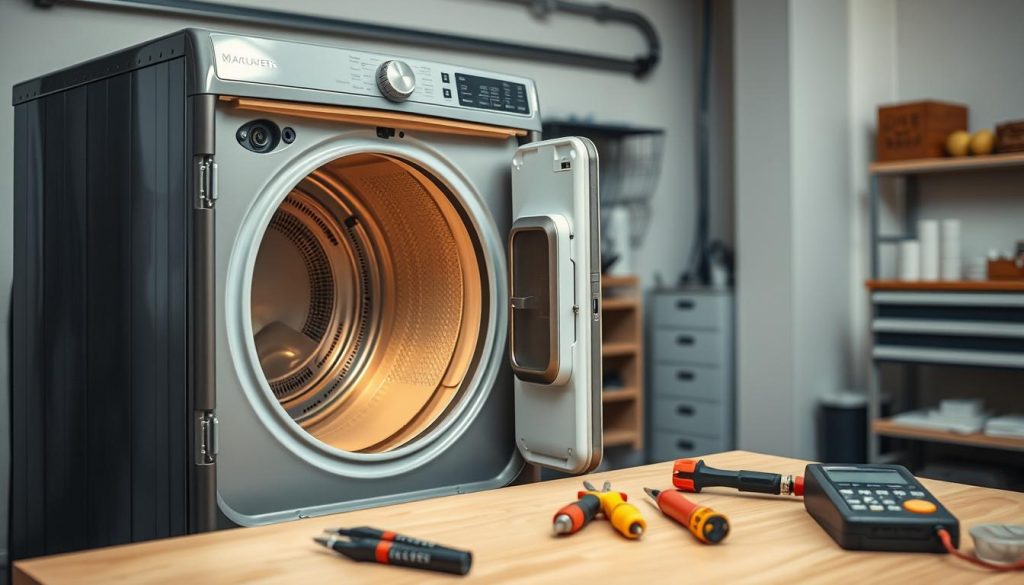
Is your dryer running without heating? This common issue can be maddening. Older appliances often face heating problems1. Various factors can stop your dryer from generating enough heat.
Modern dryers are complex machines with interconnected systems. A single malfunctioning part can disrupt the entire drying process. Electric dryers have specific voltage needs that can cause problems2.
Understanding these issues helps diagnose and possibly fix the problem. Knowing the root causes is key to troubleshooting your dryer effectively.
Key Takeaways
- Dryer heating issues can stem from multiple technical problems
- Power supply and ventilation are critical for proper dryer function
- Some issues can be resolved through DIY troubleshooting
- Regular maintenance can prevent most dryer heating problems
- Professional repair might be necessary for complex malfunctions
Common Causes of dryer not heating issue
Several factors can cause your dryer to stop heating properly. Knowing these issues can help you fix problems before calling a repair service3.
Dryer repair often involves checking three main areas: power supply, ventilation, and load-related issues. These factors can greatly affect your dryer’s heating and efficiency.
Power Supply Challenges
Electric dryers need a 240-volt power supply to work correctly. Electrical problems can make your dryer run without heat4.
Common power issues include tripped breakers, faulty connections, damaged cords, and broken heating elements.
Ventilation System Obstacles
Good airflow is vital for dryers. Clogged vents can reduce efficiency and increase drying time by up to 50%3.
Lint buildup is a major concern. About 80% of dryer problems come from poor venting4.
Load-Related Performance Problems
How you load your dryer affects its heating. Overloading can cut drying efficiency by 30% or more3.
Good dryer care includes avoiding overloads, cleaning the lint screen, and sorting clothes by weight.
- Avoiding overloaded cycles
- Cleaning lint screen after each use5
- Sorting clothes by fabric weight
- Ensuring clothes aren’t excessively wet
Professional tip: Regular dryer maintenance can prevent most heating issues and extend your appliance’s lifespan.
Critical Internal Component Failures
Your dryer may run but not heat due to internal component issues. The heating element generates warmth, while the dryer thermal fuse acts as a safety device6. About 20% of dryer failures come from faulty control boards or power supply parts6.
Electric dryers need a working heating element for heat. Gas dryers rely on an igniter and flame sensor. A good heating element should have about 15 ohms of resistance7.
If these parts fail, your dryer drum might not spin. This can lead to more problems7.
- Dryer thermostat regulates temperature
- Thermal fuse prevents overheating
- Heating element generates warmth
About 15% of non-working dryers have a blown thermal fuse from overheating6. Diagnostic precision is key – careful checks can cut unnecessary part swaps by 40%6.
Professional diagnosis often reveals complex internal failures that DIY repairs might miss.
In the past decade, advanced electronics have made dryer problems 25% more complex6. DIY fixes fail over 50% of the time. Knowing these parts helps homeowners make smart repair choices6.
Conclusion
Dryer troubleshooting requires a systematic approach. Understanding potential heating problems can save homeowners time and money. Regular maintenance prevents unexpected breakdowns8. Clean the lint screen after each use to avoid issues8.
For a non-heating dryer, check power connections and clean lint filters. If these steps don’t work, seek professional help. Dryers typically last 10-15 years before component failures increase8. Appliance repair visits usually cost $100 to $2008.
Replace your dryer if repairs become too costly. New energy-efficient models can improve performance and lower bills. Home warranty plans may help with repair costs. However, only 40% cover dryer component repairs8.
Always prioritize safety with dryer issues. Consult professionals for electrical or gas-related problems. They have the expertise to handle complex repairs safely and effectively.
FAQ
Why is my dryer running but not producing heat?
Several issues can cause a dryer to run without heat. These include power supply problems, ventilation blockages, faulty heating elements, or thermostat malfunctions. Common culprits are clogged lint screens, blocked exhaust vents, tripped circuit breakers, or failed internal heating components.
How can I tell if my dryer’s heating element is bad?
A faulty heating element leaves clothes damp after a full cycle. The dryer might run without generating heat or take longer to dry clothes. You may notice a burning smell or hear unusual noises during operation.
How often should I clean my dryer’s lint screen and exhaust vent?
Clean the lint screen after every load. Deep clean the exhaust vent at least once a year. For frequent laundry users, clean the exhaust vent every six months.
Can overloading my dryer cause heating problems?
Yes, overloading prevents proper air circulation in your dryer. This can make it hard for the dryer to heat and dry clothes well. Always leave space for clothes to tumble freely.
What’s the difference between electric and gas dryer heating issues?
Electric dryers use a heating element, while gas dryers rely on a gas burner. Both can have similar symptoms like lack of heat. Electric dryers may have heating element or electrical connection issues.
Gas dryers might have problems with the gas valve, igniter, or flame sensor. Troubleshooting methods differ for each type.
How do I know if my dryer’s thermal fuse is blown?
A blown thermal fuse usually stops the dryer from heating. The dryer might run without heat or not start at all. This safety device prevents overheating and often needs replacement by a pro.
Are dryer heating problems dangerous?
Some heating issues can be risky, especially with electrical or gas components. Lint buildup can create fire hazards. Electrical problems might cause short circuits.
If you’re unsure about the cause, consult a professional appliance repair technician.
How much does it typically cost to repair a dryer that’s not heating?
Repair costs vary based on the specific issue. Simple fixes like cleaning might be free. Replacing a heating element can cost 0 to 0.
Complex repairs involving internal parts could cost 0 to 0. For older dryers, replacement might be more economical.
Can I fix a dryer not heating myself?
Some issues like cleaning and checking connections can be DIY fixes. However, repairs involving electrical or gas components are best left to professionals. This ensures safety and prevents further damage.
How long should a typical dryer last before experiencing heating problems?
Most dryers last 10-13 years with proper care. Regular cleaning and avoiding overloads can extend your dryer’s life. After 10 years, consider replacement if repairs become frequent or costly.
Source Links
- Dryer Not Heating: Troubleshooting Guide | Whirlpool – https://www.whirlpool.com/blog/washers-and-dryers/dryer-not-heating.html
- Dryer Not Heating Up? Here’s What to Do | Mr. Appliance – https://www.mrappliance.com/blog/2019/april/dryer-not-heating-up-here-s-what-to-do/
- Why Is My Dryer Not Heating? | Maytag – https://www.maytag.com/blog/washers-and-dryers/dryer-not-heating.html
- Dryer Not Heating [Troubleshooting Guide] | Quality Comfort – https://www.myqualitycomfort.com/how-to-fix/dryer-not-heating/
- How to fix a dryer that’s not getting hot | Asurion – https://www.asurion.com/connect/tech-tips/repair-dryer-not-getting-hot/
- Whirlpool dryer not turning on? Discover solutions & easy fixes today! – https://www.searshomeservices.com/symptom/whirlpool-dryer-not-turning-on
- Whirlpool dryer not heating? Discover Easy Fixes & Expert Tips! – https://www.searshomeservices.com/symptom/whirlpool-dryer-not-heating
- Dryer not heating up? Here’s how to fix it. – https://www.cinchhomeservices.com/view-blog/-/blogs/dryer-not-heating-up-here-s-how-to-fix-it-1

