
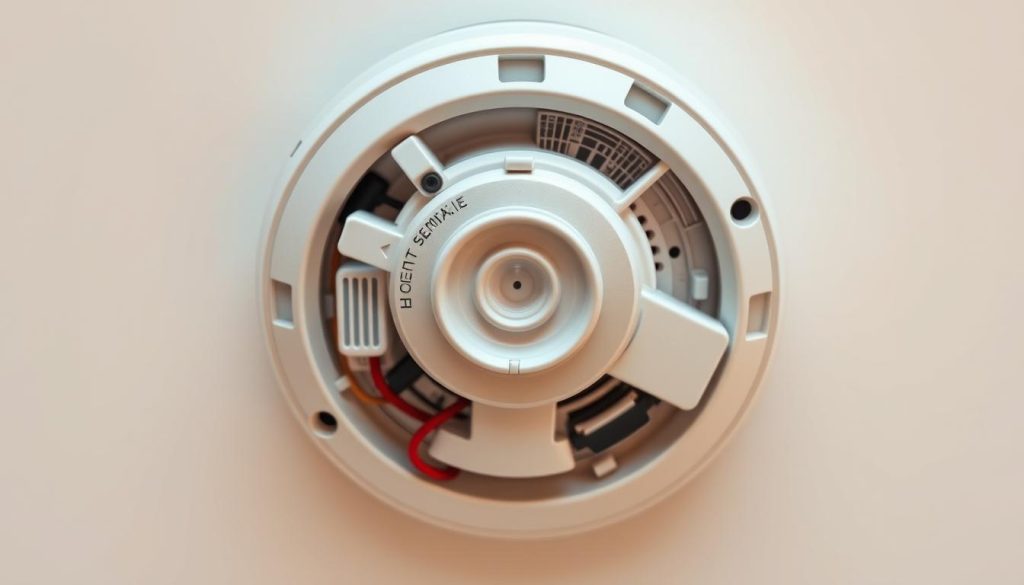
A beeping smoke detector can be a real headache. Often, a low battery causes those annoying chirps every 30 seconds. Regular upkeep is key for these crucial safety devices to work right1.
A single beep every 30 to 60 seconds usually means low battery or device trouble1. Knowing these signs helps keep your home safe2.
Smoke alarms have built-in warnings for various issues. The chirping isn’t just annoying; it’s how your safety device talks to you3.
Key Takeaways
- Smoke detector beeping every 30 seconds usually indicates a battery issue
- Regular maintenance prevents false alarms and ensures device functionality
- Chirping can signal low battery, dirt, or end of device life
- Most smoke detectors have a 10-year lifespan1
- Prompt attention to beeping can prevent potential safety risks
Understanding Common Smoke Detector Beeping Issues
Smoke detectors are vital for home safety. They use beeping patterns to signal different issues. Knowing these signals helps homeowners address problems quickly4.
Distinct sound patterns alert residents about potential problems. Understanding these signals prevents false alarms. It also keeps your home’s safety system working well.
Low Battery Warning Signals
A single beep every 30-60 seconds means it’s time to change batteries5. This chirping is how the device tells you about low power. Replace batteries right away to avoid safety risks4.
- Listen for intermittent beeping every minute
- Check battery age and replacement recommendations
- Use manufacturer-specified battery types
End of Life Indicators
Smoke detectors usually last 7-10 years. As they get older, they show signs that they need replacing4.
| Detector Age | Recommended Action |
|---|---|
| 0-5 years | Regular maintenance |
| 5-7 years | Begin planning replacement |
| 7-10 years | Replace entire unit |
Environmental Factors Causing Beeps
Environmental conditions can set off false alarms. Dust, humidity, and temperature changes might make detectors beep unexpectedly4.
- Clean detectors regularly to prevent dust interference
- Avoid placing units near heating/cooling sources
- Check for proper installation away from drafty areas
Knowing these beeping issues keeps your home safe. It helps make sure your safety system works well5.
How to Troubleshoot and Fix Beeping Smoke Alarms
A constantly beeping smoke alarm can be annoying, but most issues are easy to fix. Smoke detectors usually chirp when they need attention6. Find out why it’s beeping to stop the noise.
First, check the batteries. Linked alarms and hardwired detectors often beep when batteries are low7. Here are key steps to fix the problem:
- Replace batteries annually or when chirping begins
- Clean the sensing chamber carefully to remove dust or insects
- Check for environmental factors like humidity or temperature changes
- Verify the detector’s age – replace if older than 7-10 years6
Knowing about photoelectric vs ionization sensors can help solve specific alarm issues. Photoelectric sensors spot smoldering fires. Ionization sensors react to flaming fires.
Each type may act differently in various conditions. This knowledge can guide your troubleshooting efforts.
| Troubleshooting Step | Action |
|---|---|
| Battery Replacement | Use fresh batteries, ensure proper installation |
| Sensor Cleaning | Gently vacuum or use compressed air to remove debris |
| Reset Smoke Alarm | Press and hold the test button for 10-15 seconds |
If beeping continues after these steps, try to reset smoke alarm completely. You might need professional help6. Always prioritize safety when dealing with smoke detectors.
Conclusion
Smoke detector maintenance is vital for home and family protection. It requires proactive engagement and consistent attention. These devices can cut the risk of fire-related deaths by half8.
Regular checks and timely replacements are crucial for fire safety. Experts suggest replacing smoke detectors every 10 years for peak performance9. Homes need at least three detectors in key areas9.
Using the tips in this article can boost your home’s fire safety. Note that 60% of fire deaths happen in homes without working alarms9. Regular testing and upkeep can save lives.
Act now: check your detectors, change batteries, and ensure all systems work. Your watchfulness is crucial in safeguarding what’s important to you.
FAQ
Why is my smoke detector chirping every 30 seconds?
Smoke detectors chirp every 30 seconds for various reasons. Low battery, end of life, or environmental factors can cause this issue. Check the battery, clean the device, or replace it if it’s over 10 years old.
How often should I replace smoke detector batteries?
Replace 9-volt batteries in smoke detectors yearly. Pick a memorable date like New Year’s Day or your birthday. This ensures your detectors always have fresh batteries.
How do I know if my smoke detector needs to be completely replaced?
Smoke detectors usually last 10 years. Check the manufacture date on the back of the device. Replace the entire unit if it’s older than 10 years for optimal fire safety.
Can dust and humidity cause smoke detector beeping?
Dust and high humidity can trigger false alarms or beeping. Clean your smoke detector regularly with a soft brush or compressed air. This helps prevent these annoying issues.
How do I reset a hardwired smoke detector?
First, turn off the power at the circuit breaker. Remove the detector and disconnect the power plug. Take out the batteries and press the test button for 15-20 seconds.
Finally, reconnect everything and restore power to reset the device. This process should resolve any lingering issues with your hardwired smoke detector.
What’s the difference between photoelectric and ionization smoke sensors?
Photoelectric sensors detect slow, smoldering fires better. Ionization sensors respond quickly to fast, flaming fires. Many modern detectors use both technologies for comprehensive fire detection.
How can I prevent false alarms from my smoke detector?
Keep your smoke detector clean to prevent false alarms. Avoid placing it near bathrooms, kitchens, or air vents. Make sure it’s not exposed to extreme temperatures or high humidity.
Do all smoke detectors in my home need to be replaced at the same time?
It’s not absolutely necessary, but replacing interconnected smoke detectors together is recommended. This ensures consistent protection and performance across your home’s fire safety system.
Source Links
- What Do I Do When the Smoke Alarm Is Beeping in the Middle of the Night? – https://expresselectricalservices.com/what-do-i-do-when-the-smoke-alarm-is-beeping-in-the-middle-of-the-night/
- Is Your Smoke Detector Beeping? Four Things to Check First – https://www.interstatebatteries.com/blog/smoke-detector-beeping
- How to Stop a Smoke Alarm From Chirping & Beeping – https://www.security.org/home-security-systems/smoke-alarm-chirping/
- Why Is My Smoke Alarm Beeping? Fixes & Tips | Foothill Fire – https://ffprotection.com/blog/smoke-alarm-beeping/
- Guide to Decoding Beeps and Sound – https://www.x-sense.com/blogs/tips/understanding-smoke-detector-alerts-guide-to-decoding-beeps-and-sounds?srsltid=AfmBOorFSmqdBmwhesKv9aHA5qU9JvhOW2yeyqj12ytixMtd19LmJauW
- Why Your Fire Alarm Beeps Randomly at Night and How to Fix It – https://www.belfor.com/us/en/resources/fire-alarm-beeps-randomly-at-night/
- Smoke Detector Beeping? Find Out Why And Fix The Problem | Networx – https://www.networx.com/article/smoke-detector-beeping
- Why Is My Smoke Detector Beeping? Troubleshooting Tips to Silence Fals – https://www.x-sense.com/blogs/tips/why-is-my-smoke-detector-beeping-troubleshooting-tips-to-silence-false-alarms?srsltid=AfmBOooRDzcZlxGXQH2PKvQvGcgkTif7edkMegRP6QCeAxC5UovkdM8Z
- Smoke Alarm chirping or beeping? Why and how to stop – https://www.electricalfaultsfixed.com/blog/smoke-alarm-chirping-or-beeping-why-and-how-stop

