
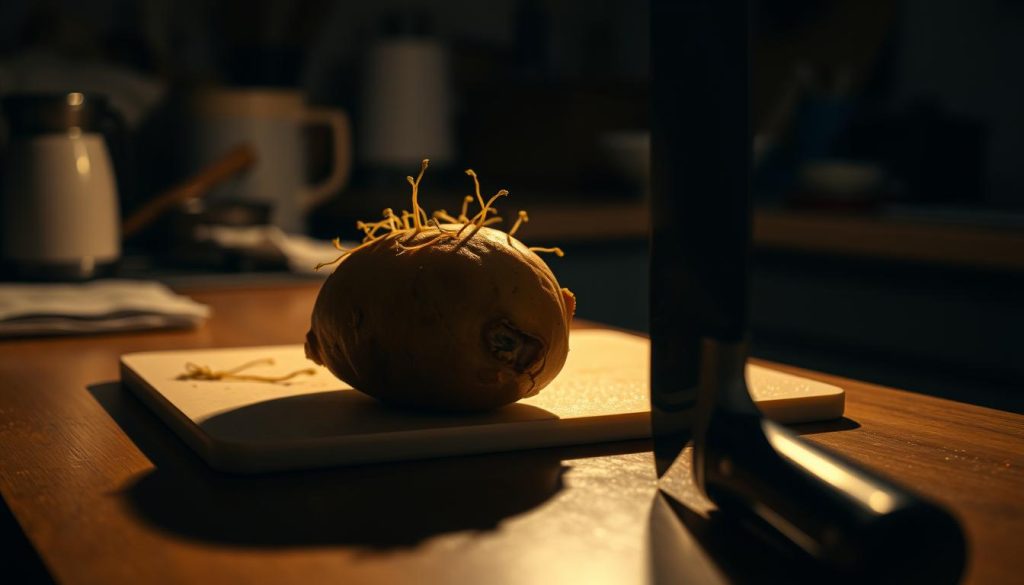
Sprouted potatoes can be a hidden danger in your kitchen. They contain high levels of glycoalkaloids, which become toxic in large amounts1. These sprouts harbor compounds that could lead to serious health issues2.
Potato safety is vital to avoid potential poisoning. The toxic compounds, solanine and chaconine, can cause various health problems2. Symptoms may include fever, headache, and stomach pain1.
Knowing the risks of sprouted potatoes is crucial for your health. Small amounts may not harm you right away. However, extensive sprouting and green color indicate higher toxicity1.
Proper storage and careful inspection can reduce these health risks2. Always check your potatoes before cooking and eating them.
Key Takeaways
- Sprouted potatoes contain potentially toxic glycoalkaloids
- Symptoms of potato toxicity can range from mild to severe
- Green or extensively sprouted potatoes pose the highest risk
- Proper storage can prevent potato sprouting
- Always inspect potatoes before cooking and consuming
Understanding Potato Sprouting and Toxicity
Potatoes can change from nutritious food to a health hazard. Sprouting reveals insights into potato glycoalkaloids and their impact on health3.
What Triggers Potato Sprouting
Light and temperature are key factors in potato sprouting. Warm, bright spaces make potatoes sprout faster4.
Best storage conditions include cool temps (45-50°F), dark spaces, and low humidity.
- Cool temperatures between 45-50°F
- Dark environments
- Low humidity settings
Glycoalkaloids: The Hidden Danger
Sprouted potatoes have more toxic compounds called glycoalkaloids. These include solanine and chaconine. High amounts of these substances can pose serious health risks3.
| Glycoalkaloid Location | Concentration Level |
|---|---|
| Potato Sprouts | Highest Concentration |
| Potato Skin | Moderate Concentration |
| Potato Eyes | High Concentration |
Identifying Toxic Potato Development
Spotting dangerous potatoes is vital to avoid poisoning. Look for green color, long sprouts, and a bitter taste.
- Green discoloration
- Long, well-developed sprouts
- Bitter taste
Solanine toxicity symptoms can start within hours. They range from mild stomach issues to severe problems like fever and confusion5.
The National Capital Poison Center advises throwing away sprouted or green potatoes. Understanding these risks helps people make smart choices about potato use and storage3.
The Health Risks of Eating Sprouted Potatoes
Sprouted potatoes pose serious health risks. They contain toxic compounds called glycoalkaloids, mainly solanine and chaconine. These toxins concentrate in potato sprouts, green skin, and eyes6.
Eating sprouted potatoes can cause various symptoms. These may signal potential poisoning.
- Vomiting
- Abdominal pain
- Diarrhea
- Headaches
- Confusion
- Fever
The amount of glycoalkaloids consumed determines symptom severity6. Extreme cases can lead to low blood pressure and rapid pulse. In rare instances, it may even be fatal6.
Symptoms can appear within hours or up to a day after eating6. Always check potatoes carefully before use.
Discard potatoes with long sprouts, green skin, or mushy texture7. Cooking doesn’t eliminate these harmful toxins6.
Pregnant women and those with weak immune systems should be extra careful8. Store potatoes in cool, dark places to prevent sprouting8.
Conclusion
Proper potato storage is vital for preventing sprouting and ensuring food safety. By understanding the risks, you can protect your family from potential health hazards. Cool, dark places with temperatures between 45-50°F can greatly reduce sprouting and toxin development.
Carefully inspect potatoes for sprouts, green patches, or damage before buying. Choose ones stored in breathable containers like paper or mesh bags. This helps prevent moisture buildup that can cause sprouting.
If you spot small sprouts, remove them before cooking. It’s best to buy potatoes shortly before use and avoid storing them for long periods.
Large sprouts and green potatoes may contain higher levels of solanine, a natural toxin. This can cause digestive issues. Follow these storage guidelines to enjoy potatoes safely and minimize health risks91011.
FAQ
Are sprouted potatoes dangerous to eat?
Sprouted potatoes can be harmful. They develop toxic compounds called glycoalkaloids as they sprout. Small sprouts can be removed, but discard potatoes with significant sprouting.
What symptoms might occur from eating sprouted potatoes?
Eating sprouted potatoes can cause nausea, vomiting, and stomach cramps. More severe cases may lead to headaches, fever, and neurological issues. Symptom severity depends on consumption amount and toxin levels.
How can I prevent potatoes from sprouting?
Store potatoes in a cool, dark, and dry place. Keep them at 45-50°F (7-10°C) with good air flow. Avoid storing near onions and use ventilated containers.
Can I cut off the sprouts and still eat the potato?
Removing small sprouts is possible, but not always safe. Discard potatoes with lots of sprouts or green, shriveled appearance. Toxins can spread throughout the potato, making it potentially harmful.
Are some people more at risk from sprouted potatoes?
Yes, certain groups are more vulnerable. Pregnant women, children, and elderly individuals may experience worse symptoms. People with weak immune systems are also at higher risk.
How do I know if a potato has become toxic?
Look for green coloration and extensive sprouting. Check for wrinkled appearance and bitter taste. Green areas indicate higher solanine levels, which can be harmful.
When in doubt, it’s best to throw the potato away.
How long can potatoes be stored before they start to sprout?
Properly stored potatoes usually last 2-3 months before sprouting. Temperature, humidity, and potato variety affect sprouting time. Optimal storage conditions help extend shelf life and prevent early sprouting.
What should I do if I accidentally eat a sprouted potato?
Monitor your condition if you experience nausea, vomiting, or diarrhea. For mild symptoms, stay hydrated and rest. Seek medical help if symptoms are severe or persist.
Source Links
- Can You Eat Sprouted Potatoes? – https://www.bonappetit.com/story/can-you-eat-sprouted-potatoes?srsltid=AfmBOoqCzxX74MmdbNH0uOwQxvfU29smd6xaExkOz-3rOH4kLieEo9dV
- Are Sprouted Potatoes Safe to Eat? – https://www.poison.org/articles/are-green-potatoes-safe-to-eat-191
- Sprouted Potatoes: Are They Safe to Eat? – https://www.healthline.com/nutrition/sprouted-potato
- Is It Safe To Eat Sprouted Potatoes? Here’s What the Experts Say – https://www.simplyrecipes.com/is-it-safe-to-eat-sprouted-potatoes-experts-8732303
- Can You Eat Sprouted Potatoes? – https://www.bonappetit.com/story/can-you-eat-sprouted-potatoes?srsltid=AfmBOorfI3Qc9bE7P5Unp1WsT8uQsgHf2B1fJvCeT0YDQiizPAqcf261
- Is It Safe to Eat Sprouted Potatoes? Here’s What Experts Say – https://www.eatingwell.com/article/7951433/is-it-safe-to-eat-sprouted-potatoes/
- Can You Eat Sprouted Potatoes? – https://www.allrecipes.com/article/can-you-eat-sprouted-potatoes/
- Can You Safely Eat Sprouted Potatoes? Here’s What An Expert Says – https://www.southernliving.com/food/kitchen-assistant/can-you-eat-sprouted-potatoes?srsltid=AfmBOopo7LYvyHCLenm5xK4VBn0R5U8KENN3A3tpmCmJFkUdt86JzaWa
- Can You Eat Sprouted Potatoes? Everything You Need to Know – https://thewonderfulworldofsprouts.com/can-you-eat-sprouted-potatoes/
- Is It Safe To Eat Sprouted Potatoes? Here’s What the Experts Say – https://news.yahoo.com/safe-eat-sprouted-potatoes-experts-100000942.html
- Are sprouted potatoes safe to eat? Here’s everything you need to know – http://cooktopcove.com/2023/10/31/are-sprouted-potatoes-safe-to-eat-heres-everything-you-need-to-know/

