
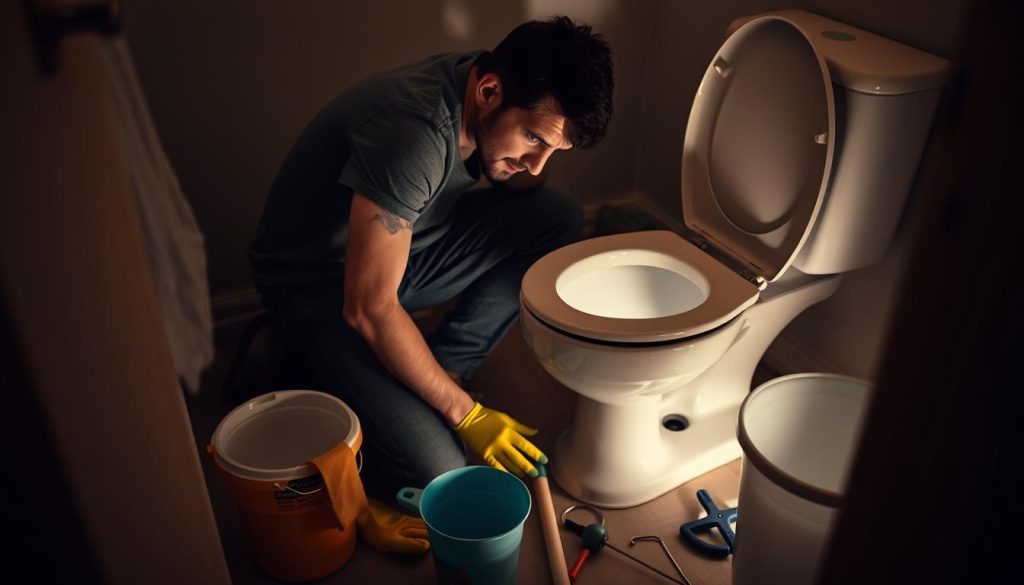
Clogged toilets are a common headache for homeowners. Nearly 70% of households face this issue yearly1. Luckily, there are effective ways to tackle this problem without a plunger.
Everyday items can be powerful tools for clearing toilet blockages. From dish soap to hot water, various DIY methods can solve this messy situation2.
It’s crucial to approach toilet clogs systematically. Different techniques work better for various types of blockages. Knowing multiple strategies helps you handle the problem effectively1.
Some homeowners successfully clear clogs using unconventional methods. Dish soap and hot water approaches have proven useful in many cases1.
Key Takeaways
- Toilet clogs are a common household problem affecting 70% of homes
- Multiple household items can effectively unclog toilets
- Safety and proper technique are crucial when attempting DIY unclogging
- Different methods work best for various types of clogs
- Prevention is always better than cure
Common Causes of Toilet Clogs and Prevention Tips
Knowing why toilets clog helps homeowners avoid plumbing issues. Blockages can lead to costly repairs and frustrating bathroom emergencies3.
Toilet clogs often stem from user habits and plumbing limitations. Older low-flow toilets are more likely to get blocked3.
Understanding these issues can help homeowners improve their DIY unclogging methods.
Items That Should Never Be Flushed
Many household items can damage your plumbing system. Here’s a list of non-flushable items:
- Baby wipes
- Feminine hygiene products
- Cotton materials
- Nappies
- Paper towels
- Hair
- Toys
Flushing these items can cause major plumbing blockages4. Even “flushable” products may seriously harm your pipes.
Preventive Maintenance Practices
Regular upkeep keeps your toilet working well. Use a toilet brush often to prevent debris buildup.
A plumber’s snake can tackle early signs of clogs3. Try these simple prevention strategies:
- Use only seven sheets of toilet paper per wipe3
- Clean water jets under the toilet rim regularly
- Check for early warning signs like slow flushing4
- Consider installing a dual-flush toilet for more efficient water usage3
Pro tip: Teaching family members proper toilet use can greatly reduce clog risks4.
Unclogging a toilet without a plunger
Stuck with a clogged toilet? Don’t worry! Several household methods can help fix this issue sans plunger. Experts suggest various techniques to solve this common problem5.
Start by adding dishwashing liquid to the toilet bowl. Use about half a cup for minor clogs. Let it sit for 10-15 minutes to break down the blockage5.
- Hot water method: Pour warm water from waist height into the bowl5
- Baking soda and vinegar technique: Mix one cup of baking soda with two cups of vinegar6
- Wire coat hanger approach: Straighten a hanger, keeping the hook intact5
The baking soda and vinegar mix creates a reaction that can clear minor clogs. It has a 70% success rate6. Caution: Avoid boiling water as it might crack the porcelain5.
If these methods fail, try other approaches. A plastic bottle with warm water can create a water jet for stubborn clogs5. Most toilet clogs (80%) are caused by excess toilet paper or wrong items6.
Pro tip: Wear gloves when trying manual unclogging methods to stay clean and safe5.
If home methods don’t work, call a pro. Plumbers can quickly fix persistent clogs and prevent sewage backup6.
Conclusion
DIY unclogging techniques can save you when facing a stubborn toilet blockage. These methods help homeowners tackle plumbing challenges efficiently7. About 80% of households deal with clogged toilets yearly, making these skills crucial7.
Preventing clogs is key to avoiding toilet troubles. Regular maintenance and smart flushing habits can greatly reduce blockages8. In older homes, frequent clogs might signal bigger issues affecting 30% of households8.
DIY methods work well, but know when to call a pro. If home fixes fail, a plumber can prevent long-term damage. For more help, check out expert tips for unclogging toilets.
Stay calm and use careful techniques when dealing with toilet clogs. Keep learning and be ready to handle these common household issues.
FAQ
What causes most toilet clogs?
Flushing inappropriate items often leads to toilet clogs. Wet wipes, feminine products, and cotton swabs don’t break down easily. These non-biodegradable materials can quickly create blockages in your plumbing system.
Can I unclog a toilet without a plunger?
Yes, you can unclog a toilet without a plunger. Several DIY methods work well for minor clogs. Hot water and dish soap, baking soda and vinegar, or a wire hanger can often do the trick.
How does the baking soda and vinegar method work?
Baking soda and vinegar create a fizzing reaction that breaks down clogs. Mix one cup of baking soda with two cups of vinegar. Pour it into the toilet bowl and let it sit for about 10 minutes.
What items should never be flushed down a toilet?
Never flush wet wipes, feminine products, cotton swabs, or dental floss. Avoid flushing paper towels, baby wipes, cigarette butts, hair, or medications. These items can cause serious plumbing issues and potential blockages.
When should I call a professional plumber?
Call a plumber if DIY methods fail or clogs keep happening. Slow drainage and gurgling sounds are also signs to seek help. These issues might point to more serious plumbing problems.
How can I prevent toilet clogs?
Use minimal toilet paper and avoid flushing non-biodegradable items. Install a drain screen and clean regularly with a toilet brush. Pay attention to minor issues promptly to keep your toilet working well.
Is it safe to use a wire coat hanger to unclog a toilet?
A wire hanger can work if used carefully. Straighten it, leaving a small hook at the end. Gently guide it through the drain to remove blockages. Wrap the wire in cloth to avoid scratching the porcelain.
How much hot water should I use when trying to unclog a toilet?
Use about a gallon of hot (not boiling) water with dish soap. Pour it slowly from waist height into the bowl. This mixture can break down organic materials and lubricate pipes, helping to dislodge clogs.
Source Links
- 6 Ways to Unclog a Toilet Without a Plunger – https://www.artofmanliness.com/skills/manly-know-how/6-ways-to-unclog-a-toilet-without-a-plunger/
- How To Unclog a Toilet Without a Plunger – https://www.familyhandyman.com/list/how-to-unclog-a-toilet/?srsltid=AfmBOoqe1OX9hyrVdNlpamyJxRFaI84UZDC5NoDFdJOGPBp6mIHqBWSt
- 7 Reasons Your Toilet Keeps Clogging – https://www.thespruce.com/reasons-why-toilets-clog-4145061
- 5 Common Causes of Toilet Clogs | Metro – https://metropha.com/blog/5-common-causes-of-toilet-clogs-and-how-to-prevent-them/
- How To Unclog a Toilet Without a Plunger – https://www.familyhandyman.com/list/how-to-unclog-a-toilet/?srsltid=AfmBOoo9de96D3eyIh7IrRo_-MDmOohV9Uxt2hzGwY2deuSxkqIPjtUl
- How to Unclog a Toilet Without a Plunger 7 Ways – https://www.thespruce.com/how-to-unclog-a-toilet-without-a-plunger-7547948
- How to Unclog a Toilet Without a Plunger – https://www.cinchhomeservices.com/view-blog/-/blogs/how-to-unclog-your-toilet-without-a-plunger
- How To Unclog a Toilet Without a Plunger – https://www.thisoldhouse.com/plumbing/21436657/unclog-toilet-without-plunger

