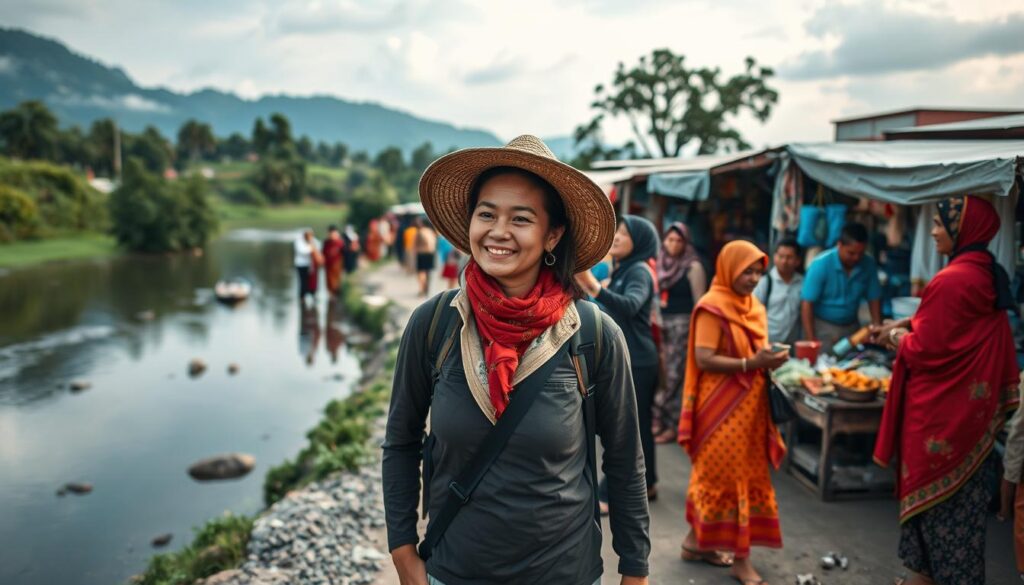
Travel photography is more than just snapping pretty pictures. It’s a powerful way to connect cultures and experiences. Travelers who dive into local cultures grasp the big responsibility of capturing human moments1.
Ethical travel photography requires respect, consent, and cultural awareness. Every image tells a deeper story than what meets the eye. Learning a few local words can help you get permission for meaningful shots1.
Using less gear and staying low-key can improve your interactions with locals. Phone cameras are a great option. They offer high-quality images while being less intrusive1.
Your photos can build understanding or create misunderstandings. Focus on telling stories with empathy to bridge cultural gaps. This approach helps your images resonate with viewers1.
Many photographers find it tricky to navigate ethical issues. It’s important to understand cultural boundaries when taking photos1.
Key Takeaways
- Respect local cultures and seek permission before photographing
- Use minimal equipment for less intrusive documentation
- Learn basic local language phrases
- Focus on storytelling with empathy
- Understand cultural photography boundaries
Understanding Photography Ethics in Travel
Travel photography goes beyond capturing beautiful moments. It’s about respecting people and cultures you meet. Cultural sensitivity is key in creating meaningful, ethical visual narratives2.
Photographers face complex ethical challenges in new destinations. Consent and privacy are crucial when documenting human experiences3.
What Photography Ethics Truly Means
Ethical travel photography involves several key principles:
- Requesting permission before capturing someone’s image2
- Respecting personal boundaries3
- Understanding cultural nuances4
- Considering environmental impact of your photographic practices
Impact on Local Communities
Your photos can shape how people view different cultures. Responsible photographers approach subjects with empathy and genuine interest3.
“Photography is about connection, not exploitation”
Respecting Cultural Sensitivities
Photography norms vary across regions. What’s okay in one culture might offend another3.
| Ethical Consideration | Recommended Action |
|---|---|
| Photographing Children | Always seek guardian permission3 |
| Public Space Photography | Respect personal boundaries2 |
| Cultural Events | Ask before documenting sacred moments |
Prioritizing respect and understanding transforms you into a responsible visual storyteller4. This approach enhances your photography and cultural experiences.
Best Practices for Ethical Travel Photography
Travel photography creates meaningful connections and respects communities. A thoughtful approach ensures compelling and culturally sensitive images. Your photos can tell powerful stories while honoring local customs5.
Key principles of ethical documentation are vital for responsible photography. Commercial Guidelines and Copyrights play significant roles. Ethical travel photography practices help guide your journey.
Obtaining Consent and Permission
Consent transforms photography into a respectful interaction. Verbal requests effectively communicate your intentions6. Consider these strategies:
- Learn basic local language phrases
- Use gentle, non-threatening body language
- Show genuine interest in the subject
- Offer to share photographs
Capturing Authentic Moments
Focus on natural moments that reveal true cultural experiences. Avoid staged scenes for authentic travel photography6. Engage with subjects beyond the camera lens.
Show respect and build trust through genuine interactions. This approach leads to more meaningful and honest photographs.
Balancing Artistic Vision with Respect
Your artistic vision should never compromise human dignity. Be mindful of cultural sensitivities when photographing vulnerable groups6. Respect sacred spaces and local customs.
Maintain transparency in post-production editing. This preserves the integrity of your visual storytelling. Your photos should reflect the truth of your experiences.
“Photography is an art of observation. It’s about finding something interesting in an ordinary place.” – Elliott Erwitt
Ethical considerations transform travel photography into powerful cross-cultural communication5. Your images can bridge gaps and foster understanding between diverse cultures.
Navigating Ethical Dilemmas in Travel Photography
Travel photography brings complex challenges that need careful thought. Photographers must balance artistic vision with respect for cultures and individuals. Ethical understanding is key to maintaining professional standards.
Digital manipulation can change image authenticity. Pro photographers know it’s vital to show scenes truthfully. Getting informed consent is crucial when capturing sensitive subjects.
Understanding power dynamics and subject vulnerability is important. Your duty goes beyond just taking photos. Education and advocacy are critical in promoting ethical practices.
Consider using multi-layered consent processes. This gives subjects control over their image use. Approach travel photography with care to create meaningful visual stories.
Respect cultural boundaries and individual dignity while maintaining photographic integrity. Ethical travel photography requires ongoing learning and self-reflection. Work to challenge stereotypes and show diverse human experiences authentically.
Always prioritize the dignity of the communities you photograph7. This approach ensures your work is both impactful and respectful.
FAQ
How do I ask for permission to take someone’s photo while traveling?
Approach people with respect and use friendly gestures. Learn basic phrases in the local language and make eye contact. Show your camera and ask permission by pointing and raising your eyebrows.
Respect their wishes if someone declines. In some cultures, a small gift can help build rapport. Avoid directly paying for photos to prevent exploitation.
What are the ethical considerations when photographing children?
Always get permission from guardians before photographing children. Be cautious and avoid images that could exploit minors. Consider how the photo might affect the child’s privacy and dignity.
In many cultures, photographing children without consent is disrespectful. It can also be culturally inappropriate.
How can I ensure my travel photography is culturally sensitive?
Research local customs and cultural norms before your trip. Learn about photography restrictions at religious sites and local attitudes. Ask local guides for guidance when in doubt.
Your goal should be to respect and celebrate the local culture. Avoid exploiting or misrepresenting it in your photos.
Is it okay to photograph people in challenging or vulnerable situations?
This is a complex issue. Avoid photographing people in distress without their consent. Get proper permissions if documenting social issues.
Explain how the image might be used. Consider how your photos could impact the subjects’ dignity and future opportunities.
What environmental considerations should I keep in mind while doing travel photography?
Be aware of your impact on nature. Stay on designated paths and avoid disturbing wildlife. Follow Leave No Trace principles in fragile ecosystems.
Use eco-friendly equipment and minimize waste. Consider how your images can promote environmental protection.
How do I handle photo consent in areas with language barriers?
Use non-verbal communication like smiling and pointing to your camera. Carry a translation card or use apps to help communicate. Be patient and understanding.
If communication is impossible, it’s best not to take the photo. Remember, positive human interaction matters more than getting the perfect shot.
Are there specific ethical guidelines for street and candid photography?
Be discreet and respectful in street photography. Avoid making subjects feel uncomfortable or invaded. Try to capture moments naturally without disrupting the scene.
Candid photography might be seen as intrusive in some cultures. Always be ready to delete a photo if asked. Balance your artistic vision with the subjects’ right to privacy.
Source Links
- Photo Ethics While Traveling, Part I: Taking the Images — emily pinna photography – https://www.emilypinnaphotography.com/blog/2020/9/15/photo-ethics-while-traveling-part-i-taking-the-images
- The Ethics of Travel Photography – https://erinoutdoors.com/ethics-of-travel-photography/
- Ethical Travel Photography: How To Capture With A Conscience – https://www.passportandpixels.com/ethical-travel-photography-guide/
- Taking photos – or requesting them? The ethics of travel photography – Responsible Travel – https://www.responsiblevacation.com/copy/ethics-of-travel-photography
- Guidelines for Ethical Photography | Guelph Institute of Development Studies – https://gids.uoguelph.ca/guidelines-ethical-photography
- Travel Photography Ethics – https://www.shutyouraperture.com/travel-photography-ethics/
- The Ethics of Street Photography – https://fotomachi.medium.com/the-ethics-of-street-photography-d238624dfaac