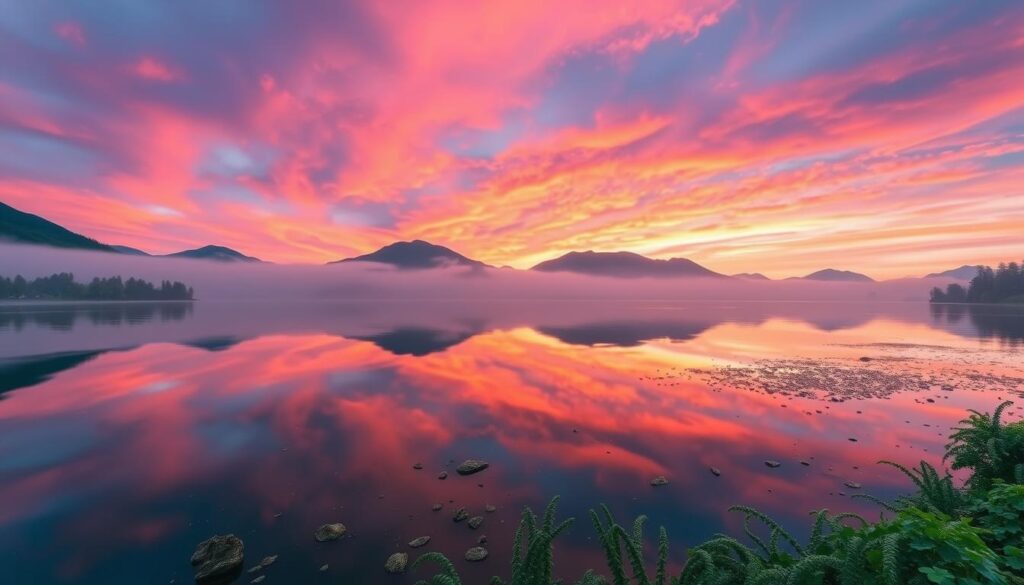
Reflections photography turns ordinary scenes into captivating visual tales. Reflective surfaces become magical portals, revealing unique perspectives and hidden beauty1. Mastering reflections can enhance your visual storytelling in both landscape and portrait photography2.
Capturing stunning reflections demands technical skill and creative vision. To ensure sharpness and depth, focus on the reflection itself2. Your camera settings are crucial for creating images that showcase alternative realities1.
Reflective surfaces abound for travel photographers. From serene lakes to city windows, these offer chances to add depth and texture1. Experiment with different angles to develop your unique reflective style.
Key Takeaways
- Reflections add depth and intrigue to travel photography
- Technical precision matters when capturing sharp reflections
- Look for unexpected reflective surfaces during your travels
- Practice with inanimate subjects before complex scenes
- Use aperture and shutter speed strategically
Understanding the Power of Reflections in Photography
Reflections can transform ordinary scenes into extraordinary visual experiences. They add magic to wedding, event, and nature photography. Mastering reflections can elevate your images from simple snapshots to captivating art3.
What Makes Reflections Compelling?
Reflections create depth and intrigue in photography by offering unique perspectives. They can transform standard scenes into visually stunning compositions. Reflections add layers of complexity to your images3.
The magic of reflections lies in their ability to:
- Create an illusion of additional space3
- Add visual interest to architectural photography4
- Tell a different story than the primary subject
Different Types of Reflections You Can Capture
Photographers have multiple reflective surfaces to explore in their creative journey:
| Surface Type | Photographic Potential |
|---|---|
| Water | Landscapes, nature photography3 |
| Glass | Architectural and urban scenes3 |
| Mirrors | Unique perspectives and compositions3 |
Tips for Finding Reflective Surfaces
Discovering compelling reflections requires a keen eye and creative approach. Look beyond traditional surfaces for new opportunities. Explore these unique reflective surfaces:
Pro tip: The golden hour provides ideal lighting for capturing breathtaking reflections4.
Remember, experimenting with different angles and light conditions can lead to surprisingly captivating results in your photography journey3.
Techniques to Capture Stunning Reflections
Reflection photography transforms ordinary scenes into extraordinary visual stories. It can elevate your images in family and portrait photography. Mastering reflection techniques will take your art to new heights5.
Reflective surfaces are everywhere, waiting to be discovered. Capturing compelling reflections needs both technical skills and creative vision5.
Using Natural Light Strategically
Light is key in reflection photography. Early morning and late evening offer the best conditions. Lakes and calm waters are especially magical during these times6.
- Morning light offers soft, golden tones
- Evening light creates dramatic sky reflections
- Overcast days produce even, diffused lighting
Composition Techniques for Maximum Impact
Use strategic composition methods in low light and product photography. These approaches will create visually engaging images:
- Align subjects symmetrically
- Use rule of thirds for dynamic framing
- Eliminate distracting background elements
Post-Processing Reflection Enhancements
Digital editing can make good reflection shots exceptional. Adjust exposure, contrast, and clarity to enhance reflections5.
| Editing Technique | Purpose |
|---|---|
| Exposure Adjustment | Balance brightness between subject and reflection |
| Contrast Enhancement | Define reflection details |
| Selective Sharpening | Highlight reflection clarity |
Remember, great reflection photography is about seeing the world from a unique perspective.
Practical Tips for Travel Photography
Mastering travel photography requires key strategies. Your approach is crucial for capturing stunning images. Creativity and keen observation skills are essential for dynamic scenes7.
Choose your gear wisely for better results. Pack lightweight equipment with versatile mobile lenses. A tripod, polarizing filter, and wide-angle lens are must-haves7.
Keep your camera handy for unexpected moments. This helps you capture candid shots during your travels7.
Focus on details like colors, textures, and patterns. Only 1-5% of photos are exceptional, so keep experimenting. Try different angles to increase your chances of great shots78.
Practice and patience are key in travel photography. Early morning light offers optimal shooting conditions. Be ready to adjust your technique for various scenes7.
Your passion and continuous learning will shape your photographic journey. Keep exploring and improving your skills.
FAQ
What are reflections in photography?
Reflections in photography are mirrored images on smooth surfaces. They appear on water, glass, mirrors, and even polished floors. These reflections add depth and visual interest to photos.
How do I find good reflective surfaces for photography?
Look for smooth, flat surfaces in natural and man-made settings. Water bodies, glass windows, and polished metals are great options. Wet sand and glossy floors can also work well.
Be creative and observe your surroundings carefully. You’ll spot potential reflective surfaces in unexpected places.
What camera settings work best for reflection photography?
Focus on the reflection itself, not the surface. Use a smaller aperture to increase depth of field. This ensures sharpness throughout the image.
A tripod helps with stability. Consider using a polarizing filter to control reflection intensity and reduce glare.
What time of day is best for capturing reflections?
Early morning and late afternoon offer the best natural lighting. These times provide warm, golden light for stunning reflections. Overcast days can also produce soft, even lighting.
How can I improve my reflection photography composition?
Try aligning your subject and its reflection symmetrically. Or use the rule of thirds for a more dynamic image. Get down to eye level with the reflective surface.
Keep the surrounding area clutter-free. Experiment with different angles to find the most compelling perspective.
What are some common mistakes in reflection photography?
Common errors include focusing on the surface instead of the reflection. Not considering light angles is another mistake. Forgetting to clean surfaces can ruin shots.
Accidentally capturing your own reflection is a frequent issue. Be mindful of your positioning and lighting conditions.
What equipment is recommended for reflection photography?
Essential gear includes a sturdy tripod and a polarizing filter. A wide-angle lens is great for expansive scenes. A reflector can help manipulate light in portraits.
A camera with good low-light performance helps capture subtle reflections in challenging conditions.
Where are the best locations for reflection photography?
Top spots include calm lakes, rivers, and ponds for landscapes. Modern cities with glass skyscrapers work well for architectural shots. Beaches at low tide offer unique opportunities.
Urban environments with smooth surfaces are great. Always look for unexpected reflective chances when traveling.
Source Links
- 10 Ways to Use the Beauty and Complexity of Reflections in Photography – https://digital-photography-school.com/ways-to-use-reflections-in-photography/
- How To Photograph Really Excellent Reflections – https://www.travelphotographyguru.com/travel-blogs/how-to-photograph-really-excellent-reflections
- Master Reflection Photography: Techniques for Stunning Images – https://www.wimarys.com/the-power-of-reflections-techniques-for-captivating-photos/
- Reflections in Photography – https://store.bandccamera.com/blogs/how-to/reflections-in-photography?srsltid=AfmBOopQWNsg8WaOZVBTXHsCuKFMOZ7mohECDXsrYdrHdqHlKca6uLv8
- 9 Tips for Incredible Reflection Photography | EyeEm – https://www.eyeem.com/blog/10-tips-for-incredible-reflection-photography-on-your-smartphone
- How to take stunning Reflection Photographs – https://nikonschool.co.uk/hints-and-tips/how-to-take-stunning-reflection-photographs
- 9 Travel Photography Tips From Pros We Love | Artifact Uprising – https://www.artifactuprising.com/photography-tips/travel-photography?srsltid=AfmBOor_94Wkvggs-uEMvsZj5NzTheU47UfFboLQAcviKbXQRz_e8uTT
- A Guide to Travel Photography – How to take better Travel Photos Part 1 — TravelPixelz – https://www.travelpixelz.com/blog/travel-photography-guide-pt1