
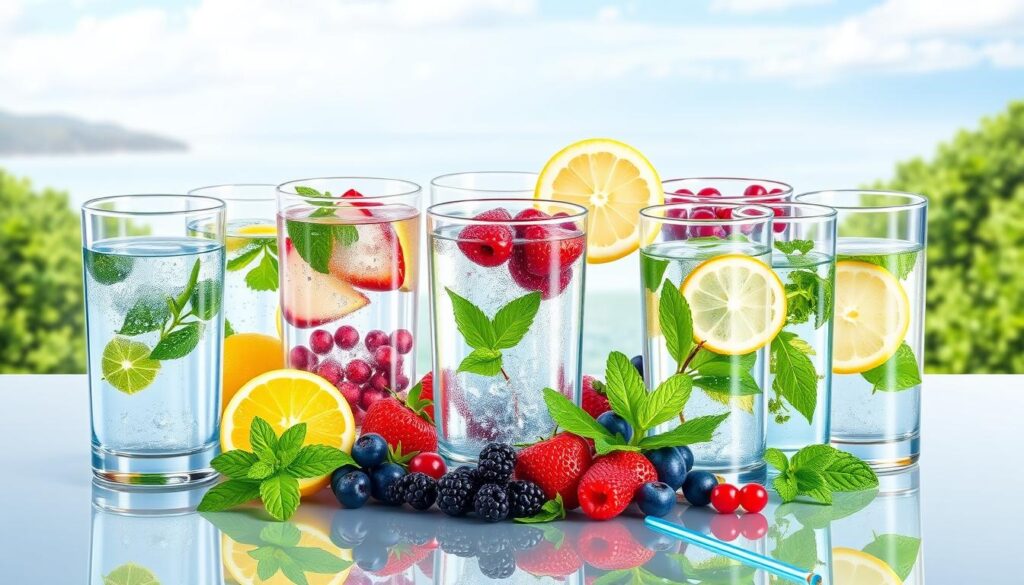
Water is vital for your body’s top performance. Knowing your hydration needs can boost your health and well-being1. Drinking 8 glasses of water daily is a good target for most healthy people1.
Your body relies on hydration for key functions. These include temperature control, waste removal, and protecting important tissues2. Smart hydration supports your overall health.
Your fluid needs depend on factors like activity and climate2. Not all fluids come from plain water. Milk, herbal teas, and coffee also count towards your daily intake1.
Men typically need about 15.5 cups of fluids daily. Women require around 11.5 cups1.
Key Takeaways
- Water makes up 50-70% of body weight
- Daily fluid needs vary by individual
- Hydration supports multiple body functions
- Thirst is a key indicator of hydration status
- Beverages beyond water contribute to daily intake
Understanding the 8 Glasses of Water Per Day Rule
Staying hydrated is vital for your health. The “8 Glasses of Water Per Day” rule has been challenged recently. New guidelines offer a more personalized approach to water intake3.
The old 8×8 rule suggested drinking eight 8-ounce glasses daily. This equals about 2 liters. However, individual water needs vary greatly3.
Origins of Water Intake Recommendations
Our bodies are about 60% water, showing how important hydration is3. New recommendations differ for men and women:
Individual Hydration Requirements
Your water needs depend on several key factors:
- Location and climate
- Physical activity levels
- Health conditions
- Diet
- Age
Hydration Guidelines by Age and Gender
Older adults face unique hydration challenges. Up to 40 percent may be chronically underhydrated4. Their sense of thirst declines with age.
This makes conscious water intake crucial for older adults4.
| Age Group | Daily Water Intake | Special Considerations |
|---|---|---|
| Children (1-8 years) | 5-7 cups | Avoid sugary drinks5 |
| Teenagers | 8-10 cups | Increased needs during growth |
| Adults | 11-15 cups | Varies by individual metabolism |
| Older Adults | 9-13 cups | Monitor hydration carefully4 |
Hydration is not just about drinking water, but maintaining your body’s fluid balance for optimal health.
Pro tip: Check your urine color and listen to your body’s thirst signals3. These are good ways to monitor your hydration.
Beyond Plain Water: Sources of Daily Hydration
Your body can get moisture from various sources, not just plain water. Water intake recommendations include more than drinking straight H2O6. Explore different ways to stay hydrated.
- Fruits and vegetables with high water content
- Milk and dairy products
- Soups and broths
- Herbal teas
- Sports drinks
Some foods are packed with moisture. Watermelon is 92% water, making it great for hydration7. Milk is also effective due to its protein, carbs, and electrolytes7.
| Hydration Source | Water Content | Additional Benefits |
|---|---|---|
| Watermelon | 92% | Rich in vitamins |
| Cucumber | 95% | Low calorie |
| Milk | 87% | Protein and calcium |
Your water intake should include all beverages and food moisture. Even coffee and tea count towards your daily fluid intake6. Caffeinated drinks don’t significantly increase water loss6.
“Hydration is not just about drinking water, but about understanding your body’s unique needs.”
Hydration needs vary based on weight, activity, and environment6. Listen to your body and try different hydration sources. Stay healthy by drinking smart!
Conclusion
Staying hydrated is more complex than following a simple rule. Your body’s water needs depend on your lifestyle and environment. Scientific research shows that hydration is not a one-size-fits-all approach89.
Listening to your body is the best way to stay hydrated. Experts like Barbara Rolls say healthy people can trust their thirst signals8. Your water needs change based on activity, temperature, and health conditions.
Keep an eye on your urine color and frequency. These are natural signs of proper hydration. Water is crucial for your overall health.
The human body is about 60% water10. Proper hydration is essential. Drinking water can improve migraines, support kidney health, and may help with weight management10.
Stay hydrated, but remember moderation. Too much water can lead to water intoxication9. Your hydration needs are unique to you.
Adapt your water intake to fit your lifestyle. Don’t stress about strict rules. Drink when thirsty, with meals, and during exercise. Trust your body’s signals for optimal health.
FAQ
How much water should I drink daily?
Your daily water needs vary based on several factors. The U.S. National Academies of Sciences suggest 92-124 ounces for adults. Your body size, activity level, climate, and health all play a role.
Are the 8 glasses of water per day scientifically proven?
The “8 glasses a day” rule isn’t scientifically proven. Its origin is unclear and may be based on general fluid intake estimates. Research shows this amount can be too much or too little for some people.
It’s best to listen to your body and drink when you’re thirsty. This natural signal helps you stay properly hydrated.
Can I get hydration from sources other than water?
Yes! Your daily fluid intake can come from various sources. Milk, fruit juice, coffee, and foods with high water content all contribute to hydration.
Fruits like watermelon, which is 91% water, are great hydrating options. Sports drinks can help during intense exercise or in hot weather.
What are signs of proper hydration?
Good hydration signs include rarely feeling thirsty and having light-colored urine. Aim to drink water with meals, between meals, and during exercise. Also, drink when you feel thirsty.
How does hydration affect my health?
Proper hydration is crucial for many bodily functions. It helps remove waste, regulate temperature, and protect tissues. Staying hydrated can aid weight loss, improve physical performance, and reduce headaches.
Good hydration may also relieve constipation and lower the risk of kidney stones. It’s essential for overall health and well-being.
Can you drink too much water?
Drinking too much water is rare for healthy adults. In extreme cases, it can lead to hyponatremia, which can be life-threatening.
The key is to balance your water intake with your individual needs. Consider your lifestyle and activity level when determining how much to drink.
Source Links
- How much water do you need to stay healthy? – https://www.mayoclinic.org/healthy-lifestyle/nutrition-and-healthy-eating/in-depth/water/art-20044256
- Drink 8 Glasses of Water a Day: Fact or Fiction? – https://www.healthline.com/nutrition/8-glasses-of-water-per-day
- How Much Water Should You Drink Per Day? – https://www.healthline.com/nutrition/how-much-water-should-you-drink-per-day
- Do You Really Need 8 Glasses of Water? – https://www.aarp.org/health/conditions-treatments/info-2023/how-much-water-should-you-drink-a-day.html
- Water, drinks and hydration – https://www.nhs.uk/live-well/eat-well/food-guidelines-and-food-labels/water-drinks-nutrition/
- Do you really need to drink 8 glasses of water a day? An exercise scientist explains why your kidneys say ‘no’ – https://today.wayne.edu/news/2021/04/23/do-you-really-need-to-drink-8-glasses-of-water-a-day-an-exercise-scientist-explains-why-your-kidneys-talk-no-42461
- 7 Easy Ways to Stay Hydrated Beyond Drinking Water | Aloha Integrative Health – https://alohaintegrativehealth.com/7-easy-ways-to-stay-hydrated-beyond-drinking-water/
- Fact or Fiction?: You Must Drink 8 Glasses of Water Daily – https://www.scientificamerican.com/article/fact-or-fiction-you-must-drink-8-glasses-of-water-daily/
- ‘Drink at Least 8 Glasses of Water a Day’ – Really? – https://geiselmed.dartmouth.edu/news/2002_h2/08aug2002_water.shtml
- 7 Reasons Why You Should Drink More Water – https://www.healthline.com/nutrition/7-health-benefits-of-water

