
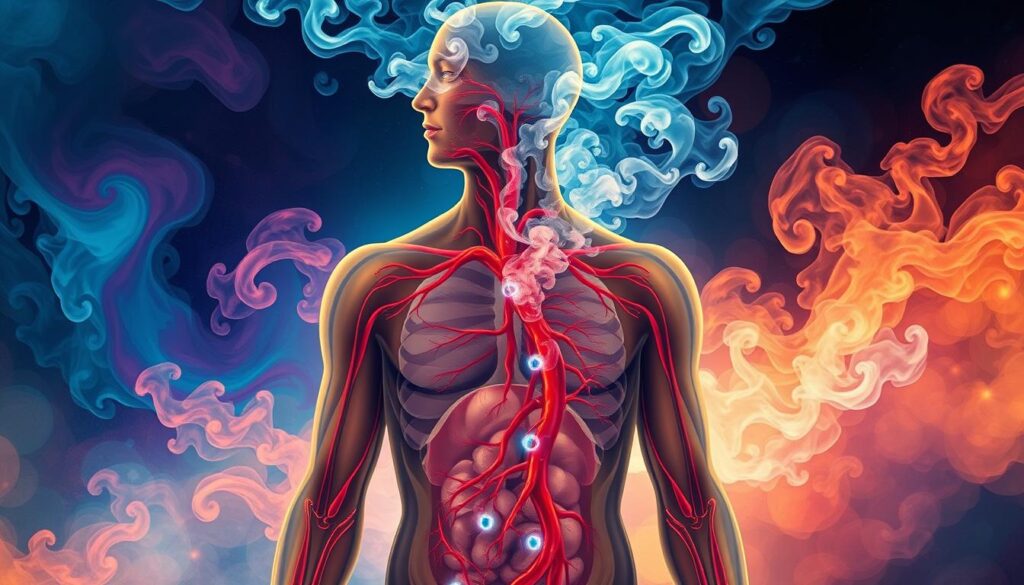
Vaping is popular, but it can harm your blood vessels. New studies show how e-cigarettes affect heart health. Your blood vessels are crucial for overall wellness1.
E-cigarette vapor causes immediate changes in your body. Blood vessels can’t expand properly, which affects blood flow1. Nicotine from e-liquid quickly enters your bloodstream2.
This leads to a faster pulse and higher blood pressure2. The risks go beyond short-term effects. Vapers’ blood vessel cells become more permeable1.
This could cause future health problems. Vape juice contains dangerous chemicals like lead and arsenic. These can damage your heart and blood vessels2.
Key Takeaways
- Vaping impairs blood vessel function
- Nicotine quickly affects cardiovascular system
- E-cigarettes contain harmful chemicals
- Young people are at higher risk of nicotine addiction
- Long-term vaping can lead to serious health issues
Understanding Vaping and Its Components
Vaping impacts blood pressure regulation and internal body systems. Understanding its components can help you make informed health choices. Your knowledge of vaping can guide better decisions.
What’s in Vape Juice?
Vape juice contains ingredients that interact with your body’s renin-angiotensin-aldosterone system. The typical composition includes:
- Propylene glycol
- Vegetable glycerin
- Nicotine salt or free-base nicotine
- Flavoring agents
Nicotine formulations play a crucial role in the vaping experience. Salt and free-base nicotine show significant differences in user perception. Salt nicotine results in higher sweetness and smoothness ratings3.
Mean difference effect estimates show that salt nicotine produces:
- Higher sweetness ratings (9.3)
- Increased smoothness (17.4)
- Lower bitterness ratings (-13.3)
- Reduced harshness (-21.0)
How Vaping Differs from Traditional Smoking
E-cigarettes offer a unique alternative to traditional smoking. Public Health England reports e-cigarettes are 95% less hazardous than tobacco cigarettes4. Vaping affects your thirst mechanism and blood pressure differently than smoking.
“E-cigarettes represent a technological shift in nicotine consumption methods”
E-cigarette use varies across demographics. Men use e-cigarettes more, with highest usage among unemployed and manual workers4. Young people increasingly experiment with vaping flavors, introducing potential new health concerns.
The Effects of Vaping on Blood Vessels
Vaping affects your body in unexpected ways. Your blood vessels play a vital role in health. E-cigarettes can disrupt this balance through various mechanisms.
Impact on Blood Flow and Circulation
Vaping stresses your cardiovascular system. Nicotine disrupts fluid balance and sodium reabsorption, risking your blood vessels. E-cigarette aerosols can cause serious cardiovascular changes5:
- Increased heart rate variability
- Potential cardiac arrhythmias
- Stimulation of sympathetic nervous system
Vaping’s Role in Inflammation
E-cigarettes introduce harmful chemicals that damage blood vessel walls. The salt intake from vaping may cause inflammation. This could increase your risk of long-term health issues6.
“Exposure to e-cigarette aerosols can introduce harmful chemicals directly into your bloodstream” – Health Research Team
Long-Term Health Risks of Vaping
Chronic vaping can lead to serious health problems. Some potential risks include6:
| Risk Category | Potential Impact |
|---|---|
| Lung Health | Potential lung irritation and disease |
| Cardiovascular System | Increased heart arrhythmia risk |
| Chemical Exposure | Potential cancer-causing chemical introduction |
Knowing these risks helps you make smart choices. Consider your health before picking up vaping habits7.
Tips for Improving Your Vascular Health
Good vascular health needs more than just quitting vaping. Your diet is key for sodium and electrolyte balance. Most Americans eat too much sodium, mainly from packaged and restaurant foods8.
Cutting daily sodium intake can boost kidney function and heart health8. This simple change can make a big difference in your overall well-being.
Alternatives to Vaping
Struggling to quit vaping? Try healthier options like nicotine patches or gum. Ask healthcare pros about smoking cessation programs. Exercise and meditation can help break vaping habits.
These alternatives not only help with cravings but also support your vascular health. They’re great steps towards a healthier lifestyle.
Lifestyle Changes to Consider
Eat more fruits, veggies, and whole grains for better vascular health. High-salt diets cause about one-third of hypertension cases9. Try to eat less than 2,300 mg of sodium daily8.
Stay hydrated and exercise regularly. Keep an eye on your blood pressure too. These habits will help maintain good cardiovascular wellness.
When to Seek Medical Advice
Listen to your body’s signals. See a doctor if you have chest pain, breathing trouble, or unusual tiredness. Regular check-ups help monitor kidney function and electrolyte balance.
A medical expert can guide you on improving vascular health. They’ll create a plan tailored to your long-term well-being.
FAQ
How much sodium does my body actually need daily?
Your body needs about 500 mg of sodium daily for essential functions. These include nerve impulse transmission, muscle contraction, and maintaining water balance. Most Americans consume around 3,400 mg per day, which is far more than necessary.
What are the recommended sodium intake levels?
The U.S. Dietary Reference Intakes suggest 1,500 milligrams daily for adults and pregnant women. The Chronic Disease Risk Reduction recommends a maximum of 2,300 milligrams per day. This helps reduce chronic disease risks.
What health risks are associated with excess sodium intake?
Too much sodium can lead to high blood pressure, heart disease, and stroke. It can also cause calcium losses from bones. Excess sodium intake may contribute to cardiovascular diseases and chronic kidney disease.
How does sodium relate to potassium in my body?
Sodium and potassium have opposite effects in your body. High salt intake increases blood pressure. High potassium intake can help relax blood vessels and remove sodium.
The typical U.S. diet contains more sodium than potassium. This imbalance can increase health risks.
Where does most of my dietary sodium come from?
Processed foods are the main source of dietary sodium. Cereals and cereal products are top contributors in most countries. Added salt in food products makes sodium deficiency rare in healthy people.
How do my kidneys manage sodium balance?
Your kidneys play a crucial role in sodium balance. This is closely linked to water balance. Sodium absorption occurs mainly in the distal small bowel and colon.
The kidneys maintain the concentration gradient between extracellular and intracellular fluid. They do this through sodium-potassium pump activity.
Can sodium intake affect my blood pressure?
Yes, sodium intake directly impacts blood pressure. Studies show that moderate sodium reduction can significantly lower blood pressure. This applies to people with high blood pressure, normal blood pressure, and even children.
Source Links
- E-cigarettes linked with blood vessel damage – https://www.nih.gov/news-events/nih-research-matters/e-cigarettes-linked-blood-vessel-damage
- How E-Cigarettes and Vaping Affect Your Body – https://www.webmd.com/smoking-cessation/ss/slideshow-vaping-body-effects
- Effect of Exposure to e-Cigarettes With Salt vs Free-Base Nicotine on the Appeal and Sensory Experience of Vaping: A Randomized Clinical Trial – https://pmc.ncbi.nlm.nih.gov/articles/PMC7804919/
- Health effects of electronic cigarette (e‑cigarette) use on organ systems and its implications for public health – https://pmc.ncbi.nlm.nih.gov/articles/PMC8500897/
- Nicotine in certain types of e-cigarettes may be more harmful than others, study shows – https://www.news-medical.net/news/20240105/Nicotine-in-certain-types-of-e-cigarettes-may-be-more-harmful-than-others-study-shows.aspx
- E-cigarettes and Vaping | Health Risks of E-cigarettes – https://www.cancer.org/cancer/risk-prevention/tobacco/e-cigarettes-vaping.html
- E-cigarettes: Facts, stats and regulations – https://truthinitiative.org/research-resources/emerging-tobacco-products/e-cigarettes-facts-stats-and-regulations
- Strategies to Reduce Dietary Sodium Intake – https://pmc.ncbi.nlm.nih.gov/articles/PMC3612540/
- Mechanism-based strategies to prevent salt sensitivity and salt-induced hypertension – https://pmc.ncbi.nlm.nih.gov/articles/PMC9069470/

