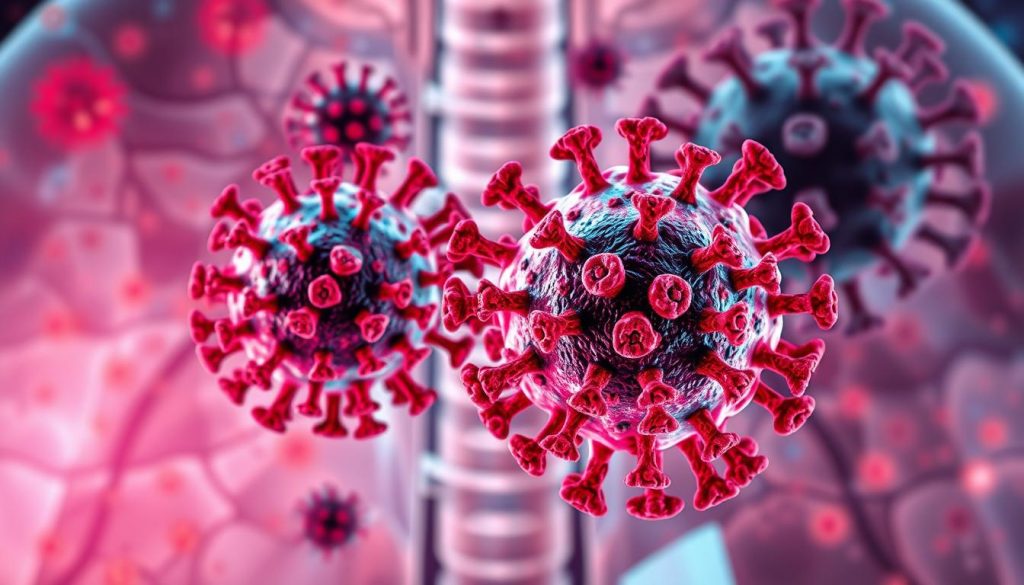
Human metapneumovirus (HMPV) is a significant respiratory infection causing global health concerns. This viral pneumonia has been circulating since its 2001 discovery. Recently, it’s gained attention due to a notable outbreak in China1.
HMPV mainly affects children and vulnerable groups. It causes respiratory illnesses that resemble common cold symptoms2. Recent data shows a surge in HMPV cases, especially in northern China.
Children under 14 have the highest infection rates1. Health authorities worldwide are closely monitoring this respiratory virus’s spread. They recognize its potential to overwhelm healthcare systems2.
HMPV thrives in colder temperatures. Its transmission increases during winter and early spring1. Currently, no specific vaccine or antiviral treatment exists. Prevention and symptom management are crucial strategies2.
Key Takeaways
- HMPV is a respiratory virus discovered in 2001
- Children under 14 are most vulnerable to infection
- No specific vaccine currently available
- Symptoms mimic common cold and flu
- Seasonal variations impact virus transmission
Understanding HMPV: The Recently Emerged Respiratory Threat
Human metapneumovirus (HMPV) is a rising global health concern. Understanding its origins and characteristics gives key insights into this complex pathogen. It’s part of the evolving landscape of respiratory viruses.
History and Discovery of Human Metapneumovirus
Scientists first identified HMPV in 2001 in the Netherlands. Yet serological evidence suggests its presence in human populations since 19583. The virus has quietly spread for decades, only recently gaining attention.
Its potential impact on public health has put it in the spotlight4. This discovery has changed our understanding of respiratory illnesses.
Classification Within the Pneumoviridae Family
HMPV belongs to the Pneumoviridae family, similar to respiratory syncytial virus (RSV). The virus has two main genetic lineages: A and B.
- Lineage A
- Lineage B
These lineages have sublineages that cause repeat infections throughout life3. This complex structure makes HMPV a challenging pathogen to combat.
Global Distribution Patterns
HMPV has spread worldwide, showing significant presence in various regions. Its spread has key features:
- Peak infections occur in winter and early spring3
- Children under two are most affected3
- Cases reported globally, including India and China4
“While HMPV might seem like a new threat, it has likely been silently circulating for generations.” – Respiratory Virus Research Team
HMPV can cause mild cold-like symptoms or severe complications. About 1% of cases may need hospital care3. Its impact ranges from minor discomfort to serious health risks.
Current Outbreak Situation in China
China is facing a surge in human metapneumovirus (HMPV) cases, mainly in northern provinces. Health authorities are worried about the rise in pediatric cases.
Key characteristics of the current respiratory illness surge include:
- Concentrated primarily among children under 145
- Widespread in northern regions of China6
- Part of a typical seasonal winter respiratory virus pattern7
Experts say this is a normal winter surge, not a health emergency. HMPV belongs to the same family as RSV and causes seasonal infections.
| Region | HMPV Impact | Primary Affected Group |
|---|---|---|
| Northern China | High Case Surge | Children Under 14 |
| Other Regions | Moderate Transmission | General Population |
The World Health Organization has not classified this as a global health emergency7.
HMPV symptoms include cough, fever, and congested nasal passages. These can be hard to tell apart from other respiratory viruses.
There’s no specific treatment or vaccine for HMPV. Prevention focuses on standard hygiene practices.
Key Transmission Patterns and Risk Factors
HMPV spreads through respiratory droplets and direct contact with infected people. Understanding its transmission is vital for prevention.
The virus shows specific transmission traits that affect different groups. Its spread highlights key population impacts.
- Transmission occurs mainly through close personal contact
- Respiratory droplets are the primary mode of spread
- Contaminated surfaces can facilitate virus transmission
Primary Modes of Virus Spread
HMPV transmission rates show interesting patterns. Research reveals an overall transmission of 1.14 events per 100 person-weeks8.
Certain factors greatly influence transmission risk:
| Transmission Risk Factors | Incidence Rate Ratio (IRR) |
|---|---|
| Children aged 1-4 years | 2.35 |
| Coinfection as initial infection | 1.94 |
| Households without electricity | 2.70 |
High-Risk Population Groups
Some groups are more at risk for HMPV transmission9:
- Young children
- Elderly individuals
- Immunocompromised patients
Seasonal Variation in Transmission
Seasonal respiratory infections follow predictable patterns. In Western Australia, HMPV season starts around week 35. It lasts about 13 weeks and covers 68% of total detections10.
Understanding transmission patterns is key to developing effective prevention strategies.
Clinical Manifestations and Symptoms
Human metapneumovirus (HMPV) causes a range of respiratory symptoms. These can vary from mild to severe. Most people experience mild to moderate symptoms similar to a typical viral infection11.
Common HMPV symptoms include:
- Cough
- Fever
- Sore throat
- Runny or stuffy nose
- Possible wheezing
- Shortness of breath
Young children and older adults are more likely to get HMPV infections11. The virus usually spreads in late winter and early spring12. The incubation period for HMPV ranges from three to six days after exposure1112.
Sometimes, HMPV can lead to serious respiratory problems. Children under two have the highest risk of needing hospital care13. Severe cases may include:
- Bronchiolitis
- Pneumonia
- Worsening of existing breathing issues
“Most persons infected with HMPV experience mild symptoms, but some individuals may develop more serious respiratory complications.”
Adults over 65 with heart or lung diseases face higher risks. These include conditions like asthma or COPD13. People with weak immune systems should be extra careful.
Reinfection can lead to more severe breathing problems in these groups11. Treatment mainly involves supportive care. This includes fever reducers, fluids, and managing symptoms13.
For most patients, rest and over-the-counter medicines can help manage HMPV symptoms. These simple steps often provide effective relief.
Diagnostic Approaches for HMPV Detection
Detecting human metapneumovirus (HMPV) requires advanced molecular diagnostics. Medical professionals use sophisticated lab methods to identify this respiratory pathogen. These techniques ensure accurate detection of HMPV.
HMPV diagnosis has evolved with more sophisticated molecular techniques. Labs now use multiple strategies to detect this complex virus14.
Laboratory Testing Methods
Modern HMPV diagnosis involves several cutting-edge molecular approaches:
- Multiplex reverse transcriptase-PCR (RT-PCR), which accounts for 57.4% of detection cases14
- Real-time RT-PCR, utilized in 38.3% of diagnostic scenarios14
- Viral culture techniques
- Fluorescent immunoassays
Differential Diagnosis Considerations
Telling HMPV apart from other respiratory infections requires careful analysis. Doctors must consider overlapping symptoms. They use precise molecular diagnostic techniques for accurate identification15.
Testing Availability and Accessibility
HMPV testing abilities differ across healthcare systems. New tech has improved detection methods. Various platforms now offer sensitive testing options15.
Advanced molecular diagnostics are revolutionizing our ability to detect and understand respiratory viruses like HMPV.
Doctors can choose from several diagnostic approaches:
- GeXP multiplex RT-PCR
- TaqMan-based RT-qPCR
- Duplex RT-qPCR assays
- Reverse transcription loop-mediated isothermal amplification (RT-LAMP)
Effective HMPV diagnosis requires understanding available molecular testing methods. Knowing each test’s unique abilities is crucial for accurate results.
Treatment Options and Management Strategies
HMPV treatment is challenging for doctors. There’s no specific antiviral therapy to eliminate the virus directly. Care focuses on managing symptoms and preventing complications.
Treatment strategies are tailored to each patient’s needs. They include rest, hydration, and over-the-counter pain relievers. Fever reduction medications and oxygen support may also be used.
High-risk groups need more intensive care. These include people with respiratory conditions, the elderly, and those with weak immune systems. They might need hospital care and close monitoring.
- Rest and hydration
- Over-the-counter pain relievers
- Fever reduction medications
- Oxygen support for respiratory distress
Severe cases may require advanced interventions. These can include intravenous fluids and respiratory support equipment. Careful observation and oxygen therapy might also be necessary.
The key to managing HMPV is supportive care and vigilant symptom monitoring.
Research continues to explore new treatment options. Most patients recover within 7-10 days with proper care. Preventive measures are crucial to reduce HMPV spread and simplify treatment16.
- Intravenous fluids
- Respiratory support equipment
- Careful clinical observation
- Potential supplemental oxygen therapy
Preventive Measures and Safety Protocols
HMPV prevention requires a comprehensive approach. The virus spreads quickly, making proactive safety measures crucial. Protecting yourself and others is key to minimizing transmission risks17.
Personal Hygiene Practices
Effective hand hygiene is the first defense against HMPV transmission. Experts recommend washing hands with soap for at least 20 seconds18.
Key strategies include frequent handwashing and using alcohol-based sanitizers. Avoid touching your face with unwashed hands. Practice good respiratory etiquette when coughing or sneezing.
- Washing hands frequently
- Using alcohol-based hand sanitizers
- Avoiding touching face with unwashed hands
- Practicing respiratory etiquette when coughing or sneezing
Environmental Control Measures
A clean environment helps reduce HMPV spread. Try these control strategies:
- Regularly disinfect frequently touched surfaces
- Ensure proper ventilation in indoor spaces
- Use disposable tissues when coughing or sneezing
- Avoid sharing personal items
Community Prevention Strategies
Community-level efforts can greatly impact HMPV transmission. Most people encounter HMPV at least once before age 518. This makes collective prevention crucial.
Prevention is always better than cure when dealing with respiratory viruses.
| Prevention Strategy | Effectiveness |
|---|---|
| Hand Hygiene | High |
| Social Distancing | Moderate |
| Mask Wearing | Moderate to High |
| Surface Disinfection | Moderate |
Stay informed, practice good hygiene, and protect yourself and your community from HMPV transmission.
Global Health Response and Surveillance
HMPV surveillance efforts have intensified worldwide. International health organizations are tracking this emerging respiratory threat. They’re working hard to understand its impact and spread.
- Tracking virus transmission patterns
- Collecting regional outbreak data
- Implementing rapid response protocols
- Sharing international surveillance information
The World Health Organization (WHO) is closely watching HMPV’s spread. They plan to release detailed reports soon. Experts note that HMPV isn’t new, having circulated globally since 20011920.
*Effective global collaboration is crucial in managing emerging respiratory threats.*
Countries have launched specific outbreak response strategies:
| Country | Response Measures | Case Status |
|---|---|---|
| India | Issued Covid-like guidelines | 5 confirmed cases19 |
| Karnataka | Enhanced surveillance | 2 pediatric cases20 |
| Maharashtra | Health monitoring | No reported cases20 |
Public health authorities are creating robust monitoring frameworks. These aim to address potential HMPV transmission risks worldwide. The focus is on quick detection and response1920.
Impact on Vulnerable Populations
Human Metapneumovirus (HMPV) poses serious risks for vulnerable groups. It requires careful management and understanding21.
Pediatric Vulnerabilities
Children under 14 are highly susceptible to HMPV infections. They face higher infection rates and unique health risks21.
Specific concerns include respiratory complications and severe symptoms. Schools and daycares can be hotspots for HMPV transmission22.
- Higher susceptibility to respiratory complications
- Potential for severe symptom development
- Increased transmission potential within school and daycare settings22
Elderly Care Considerations
The elderly, especially those over 65, are at high risk for HMPV complications. They need specialized care protocols to manage the infection effectively22.
| Vulnerable Group | Risk Factors | Recommended Actions |
|---|---|---|
| Children | High infection rates | Close monitoring, hydration |
| Elderly | Weakened immune response | Preventive care, isolation |
Immunocompromised Patient Management
Immunocompromised patients face the greatest HMPV challenges. They need aggressive supportive care and extra medical attention21.
Early detection and specialized medical intervention are crucial for managing HMPV in vulnerable populations.
Prevention is key in fighting HMPV. Good hygiene, vaccinations, and quick medical help can make a big difference22.
Distinguishing HMPV from COVID-19 and Other Respiratory Infections
HMPV and COVID-19 have unique features that set them apart. Both cause respiratory symptoms but differ in transmission and clinical presentation. Careful analysis is key to telling these viruses apart respiratory infection comparison23.
HMPV peaks in winter and early spring, following a predictable cycle. COVID-19, however, shows more variable transmission rates throughout the year23.
| Characteristic | HMPV | COVID-19 |
|---|---|---|
| Peak Season | Late Winter/Early Spring | Variable |
| Symptom Severity | Mostly Mild | Range from Mild to Severe |
| Transmission Method | Respiratory Droplets | Respiratory Droplets |
HMPV usually causes mild cold-like symptoms. It can progress to bronchiolitis or pneumonia in some cases23.
COVID-19 symptoms range from none to severe. It can lead to complications affecting multiple organs23.
- HMPV most affects young children and immunocompromised individuals23
- COVID-19 impacts broader age groups with varying severity23
- Prevention relies on similar hygiene practices for both viruses23
Understanding viral distinctions is crucial for accurate diagnosis and effective management of respiratory infections.
Doctors stress the need for specific tests to tell these viruses apart. This ensures the right treatment is given24.
Current Research and Vaccine Development Status
HMPV vaccine development faces challenges despite significant research efforts. No licensed vaccine against human metapneumovirus exists yet. Scientists are working hard to create effective respiratory virus prevention strategies.
Antiviral research has uncovered key insights into the virus’s complex nature. Scientists have identified major obstacles in vaccine development.
- Immune response evasion mechanisms
- Challenges in generating long-lasting protective antibodies
- Risk of enhanced pulmonary disease
New approaches in HMPV vaccine development show promise. These include innovative technologies and advanced immunization strategies.
- Multi-epitope mRNA vaccine targeting viral proteins
- Innovative platform technologies
- Advanced immunization strategies25
The primary goal of current research is to develop a vaccine that can effectively prevent severe respiratory infections caused by HMPV.
| Research Approach | Current Status |
|---|---|
| mRNA Vaccine Development | Promising early-stage results |
| Protein-based Vaccines | Active clinical investigations |
| Fusion Protein Strategies | Showing potential immunogenicity25 |
HMPV vaccine research looks promising, with varied approaches targeting respiratory virus prevention26. Scientists explore new ways to overcome past challenges through advanced immunological techniques.
Conclusion
Human metapneumovirus (hMPV) highlights the need for better public health readiness. It affects many groups, impacting respiratory illness prevention27. The virus causes acute respiratory infections, especially in children and at-risk populations27.
HMPV shows seasonal patterns, peaking in spring and winter27. Almost all kids get infected by age 10, showing its widespread nature27. Grasping these patterns is key to creating effective prevention plans.
We must focus on ongoing research, better diagnostics, and public education about hMPV. Current infection rates are manageable, but the risk of severe complications remains. Health experts can reduce risks through targeted actions and promoting good hygiene.
Our future depends on understanding and preventing threats like hMPV. Staying informed and proactive will help protect communities from respiratory infections. Together, we can minimize the impact of these viral threats.
FAQ
What is HMPV?
HMPV is a respiratory virus discovered in 2001. It causes upper and lower respiratory illnesses with flu-like symptoms. HMPV can lead to bronchiolitis or pneumonia in at-risk groups.
Where is HMPV currently causing concern?
China is facing a major HMPV outbreak, especially in northern areas. The surge affects children under 14 most. Hospitals are overcrowded, and public health monitoring has increased.
How does HMPV spread?
HMPV spreads through respiratory droplets and contact with infected people or surfaces. It’s most common in winter and early spring. The incubation period lasts three to six days.
What are the typical symptoms of HMPV?
Common symptoms include cough, fever, sore throat, and runny nose. Wheezing may also occur. Severe cases can progress to bronchitis, pneumonia, or bronchiolitis.
Children, elderly, and immunocompromised individuals are at higher risk for complications.
How is HMPV diagnosed?
Diagnosis usually involves PCR or antigen detection tests. Careful assessment is needed due to similar symptoms with other respiratory infections.
Is there a specific treatment for HMPV?
No specific antiviral drugs exist for HMPV. Treatment focuses on easing symptoms and providing supportive care. This includes rest, hydration, and over-the-counter medications.
Severe cases may require hospital care.
How can I prevent HMPV infection?
Practice good hand hygiene and avoid close contact with infected people. Disinfect surfaces, wear masks in high-risk areas, and boost your immune health.
Is HMPV the same as COVID-19?
No, HMPV and COVID-19 are different viruses with unique characteristics. HMPV follows a more predictable seasonal pattern. It requires different diagnostic and treatment approaches.
Is there a vaccine for HMPV?
No vaccine is currently available for HMPV. Research continues for effective vaccines and antiviral therapies. Prevention relies on public health measures and personal protection.
Who is most at risk for severe HMPV infection?
Children under 14, elderly individuals, and immunocompromised patients are most vulnerable. These groups may experience more severe symptoms and potential complications.
Source Links
- Viral video showing HMPV chaos at China hospital raises alarm. Is human metapneumovirus a new virus? – https://m.economictimes.com/news/international/global-trends/hmpv-china-viral-video-showing-hmpv-chaos-at-china-hospital-raises-alarm-is-human-metapneumovirus-a-new-virus-india-two-cases-bengaluru/articleshow/116989250.cms
- China Virus HMPV: All you need to know about HMPV | World News – Times of India – https://timesofindia.indiatimes.com/world/rest-of-world/another-pandemic-brewing-in-china-all-you-need-to-know-about-human-metapneumovirus/articleshow/116900423.cms
- HMPV: Are we overestimating its threat or facing a hidden pandemic risk? – Times of India – https://timesofindia.indiatimes.com/life-style/health-fitness/health-news/hmpv-are-we-overestimating-its-threat-or-facing-a-hidden-pandemic-risk/articleshow/116997185.cms
- A respiratory virus is spreading in China. Here’s why it’s not the new COVID-19. – https://www.businessinsider.com/why-human-metapneumovirus-hmpv-not-new-covid-lockdown-pandemic-2025-1
- ‘Very different to COVID-19’: What to know about the HMPV outbreak in China – https://www.sbs.com.au/news/article/what-to-know-about-the-hmpv-outbreak-in-china/p3jqvyayk
- What to know about the HMPV outbreak in China – https://www.dw.com/en/hmpv-outbreak-what-to-know-about-the-virus-spread-in-china/a-71230553
- HMPV virus – latest: Cases begin rising across parts of world after outbreak in China – https://www.independent.co.uk/news/health/hmpv-virus-china-uk-cases-symptoms-latest-news-b2674517.html
- Risk factors and patterns of household clusters of respiratory viruses in rural Nepal – https://pmc.ncbi.nlm.nih.gov/articles/PMC6805793/
- Household transmission of human metapneumovirus and seasonal coronavirus | Epidemiology & Infection | Cambridge Core – https://www.cambridge.org/core/product/CC0E035403C3883AB51559045A8AFF79
- An Unusual Resurgence of Human Metapneumovirus in Western Australia Following the Reduction of Non-Pharmaceutical Interventions to Prevent SARS-CoV-2 Transmission – https://pmc.ncbi.nlm.nih.gov/articles/PMC9612024/
- Human Metapneumovirus – https://dph.illinois.gov/topics-services/diseases-and-conditions/diseases-a-z-list/human-metapneumovirus.html
- About Human Metapneumovirus – https://www.cdc.gov/human-metapneumovirus/about/index.html
- Signs and Symptoms of hMPV: What to Know About Virus That’s Surging – https://www.healthline.com/health-news/what-are-the-signs-and-symptoms-of-hmpv-and-should-you-worry
- Advances in laboratory assays for detecting human metapneumovirus – https://pmc.ncbi.nlm.nih.gov/articles/PMC7290561/
- Epidemiology and diagnosis technologies of human metapneumovirus in China: a mini review – Virology Journal – https://virologyj.biomedcentral.com/articles/10.1186/s12985-024-02327-9
- Human Metapneumovirus (HMPV): Symptoms, Risks, Treatment & Prevention Tips | Max Hospital – https://www.maxhealthcare.in/blogs/human-metapneumovirus-hmpv
- What is HMPV? Its symptoms, transmission and prevention explained – https://m.economictimes.com/news/india/what-is-hmpv-its-symptoms-transmission-and-prevention-explained/articleshow/116992356.cms
- What Is Human Metapneumovirus? – https://www.webmd.com/lung/what-is-human-metapneumovirus
- Global HMPV Tracker: Tamil Nadu Detects 2 Cases, India’s Tally Rises To 5 – https://www.ndtv.com/world-news/global-hmpv-tracker-karnataka-maharashtra-issue-guidelines-amid-rising-cases-china-hmpv-virus-scare-bengaluru-virus-7409815
- HMPV Virus Cases Highlights: The health systems and surveillance networks of the country remain vigilant, says Union Health Minister JP Nadda – The Economic Times – https://m.economictimes.com/news/newsblogs/hmpv-virus-cases-tracker-live-updates-human-metapneumovirus-news-symptoms-prevention-guidelines-bengaluru-gujarat/liveblog/116989837.cms
- hMPV Virus (Human Metapneumovirus): Symptoms, Prevention, and More – https://www.apollohospitals.com/health-library/human-metapneumovirus-hmpv/
- HMPV Alert: Doctor cautions on upper respiratory impact in children – ET HealthWorld – https://health.economictimes.indiatimes.com/news/hospitals/hmpv-alert-doctor-cautions-on-upper-respiratory-impact-in-children/116993914
- HMPV and COVID-19: Similarities, differences, and is there a vaccine? – https://m.economictimes.com/news/international/us/hmpv-and-covid-19-similarities-differences-and-is-there-a-vaccine/articleshow/117001846.cms
- Human metapneumovirus and human coronavirus infection and pathogenicity in Saudi children hospitalized with acute respiratory illness – https://pmc.ncbi.nlm.nih.gov/articles/PMC3183689/
- Mucosal bivalent live attenuated vaccine protects against human metapneumovirus and respiratory syncytial virus in mice – npj Vaccines – https://www.nature.com/articles/s41541-024-00899-9
- Engineering of Live Chimeric Vaccines against Human Metapneumovirus – https://pmc.ncbi.nlm.nih.gov/articles/PMC7168645/
- Human metapneumovirus: review of an important respiratory pathogen – https://pmc.ncbi.nlm.nih.gov/articles/PMC7110553/