
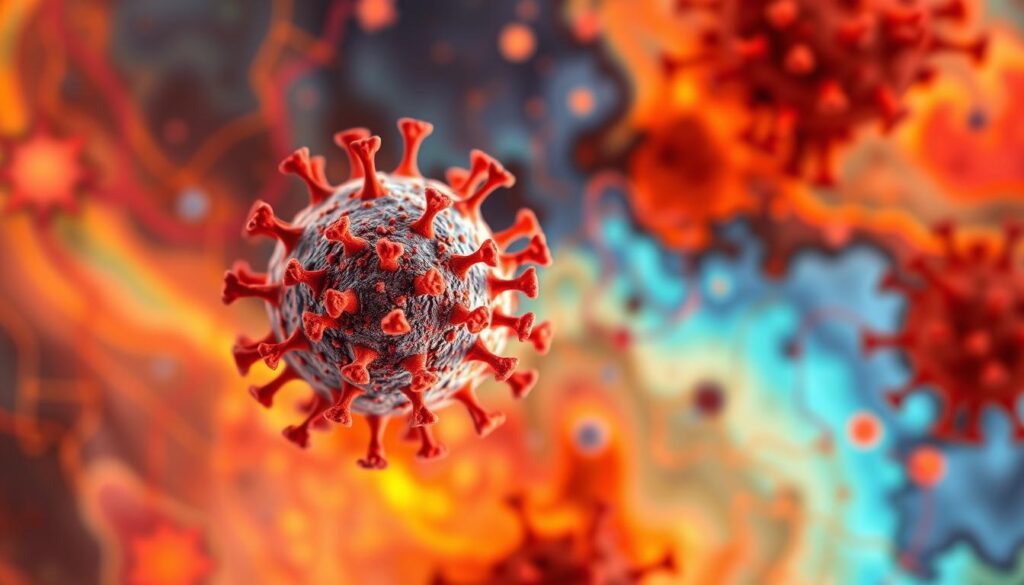
Respiratory syncytial virus (RSV) is a widespread childhood illness affecting lung health. It’s vital to grasp the RSV-asthma link for parents and pediatric healthcare pros1. By age 2, almost every child has encountered this virus1.
Your child’s breathing health is crucial. Studies show RSV in infancy may boost childhood asthma risk. About 21% of RSV-infected kids develop asthma by age 52.
Guarding against severe respiratory infections could greatly impact long-term lung health2. The numbers are startling: over 50,000 young U.S. children face RSV hospitalization yearly2.
Childhood asthma affects 8% of U.S. kids. This underscores the need to understand and prevent breathing illnesses1.
Key Takeaways
- RSV affects nearly all children by age 2
- Preventing RSV in infancy may reduce asthma risk
- 21% of RSV-infected children develop asthma by age 5
- Over 50,000 children are hospitalized with RSV annually
- Early prevention is crucial for long-term respiratory health
Understanding RSV: A Brief Overview
Respiratory syncytial virus (RSV) is a common infection that greatly affects child healthcare3. Most U.S. children get RSV before turning two3. This respiratory disease can seriously impact young children’s health.
What is RSV?
RSV is a respiratory virus affecting people of all ages4. It’s a leading cause of childhood illness and infant hospitalization45. By age 2, most children have had RSV5.
How Does RSV Spread?
- Through respiratory droplets when infected individuals cough or sneeze
- Direct contact with contaminated surfaces
- Close proximity to infected individuals
Symptoms of RSV
5 Symptoms usually appear four to six days after exposure to the virus5. Infants and young children may show different signs.
| Age Group | Common Symptoms |
|---|---|
| Infants | Rapid breathing, cough, poor feeding, irritability |
| Young Children | Runny nose, fever, wheezing, sneezing |
“Understanding RSV is crucial for protecting your child’s respiratory health.”
Early recognition of symptoms can help prevent severe respiratory complications.
The Connection Between RSV and Asthma
RSV plays a crucial role in childhood lung health and asthma development. It can impact a child’s respiratory system, potentially increasing asthma risk. Understanding this link helps parents protect their children’s health.
Lung health during early childhood is sensitive to viral infections. RSV can harm developing lungs, leading to lasting effects. This makes early protection vital for long-term respiratory well-being.
How RSV Affects the Respiratory System
RSV can cause severe damage to young children’s lungs. It inflames lung tissues and may alter respiratory pathways. The virus can also disrupt normal immune system growth.
- Inflammation of lung tissues
- Potential structural changes in respiratory pathways
- Disruption of normal immune system development
Children with severe RSV infections are twice as likely to develop asthma later. About 70% of infants get RSV in their first year6. This makes early action crucial.
Long-term Impacts of RSV on Respiratory Health
RSV can significantly affect childhood illnesses and asthma prevention. Recent studies offer important insights into this connection. These findings highlight the importance of protecting infants from RSV.
- Infants who avoid RSV have a 26% lower risk of asthma by age 52
- 21% of RSV-infected children develop asthma by age 52
- Researchers estimate that 15% of asthma cases could be prevented by avoiding RSV in infancy2
Early protection against RSV could be a key strategy in preventing future respiratory challenges.
These connections show the importance of guarding against RSV. Parents can take steps to protect their children’s respiratory health. Early action may help prevent future breathing problems.
Who is at Risk for RSV and Asthma?
Certain groups face higher risks of serious respiratory complications from RSV. Pediatrics research has identified these vulnerable populations. Understanding who’s at risk is crucial for effective prevention and management.
RSV can be especially challenging for those with compromised respiratory health. Identifying high-risk groups helps healthcare providers create targeted prevention strategies.
High-Risk Infants and Young Children
Some children are more vulnerable to severe RSV infections:
- Premature infants
- Infants under 6 months old7
- Children with chronic lung or heart diseases
- Children with neuromuscular disorders
- Children with Down syndrome
RSV can significantly impact young children. Each year, 100-300 children under 5 face fatal RSV complications7.
Children infected with RSV in their first year have a higher risk of childhood asthma8.
Individuals with Pre-existing Conditions
Certain groups face elevated risks from respiratory diseases:
| Population Group | RSV Risk Factors |
|---|---|
| Older Adults | 60,000-120,000 hospitalizations annually7 |
| COPD Patients | Nearly two times higher infection rates7 |
| Immunocompromised Individuals | Higher susceptibility to severe infections |
Protecting vulnerable populations requires awareness and early intervention. These steps are vital in preventing serious respiratory complications.
Prevention is always better than cure when it comes to respiratory health.
Symptoms of Asthma Triggered by RSV
Respiratory diseases can greatly affect lung health, especially in children with asthma triggered by RSV. Knowing the symptoms helps manage these conditions better.
Understanding RSV-Related Asthma Symptoms
RSV can cause various breathing issues in people with asthma. These problems may include:
- Persistent coughing
- Wheezing and chest tightness
- Difficulty breathing
- Increased mucus production
Distinguishing RSV from Asthma
Telling RSV-triggered asthma apart from other conditions can be tricky. Nearly all children get RSV before they turn two years old9.
Babies who have severe RSV bronchiolitis in their first year are more likely to develop asthma later10.
| Symptom | RSV | Asthma |
|---|---|---|
| Coughing | Short-term | Persistent |
| Breathing Difficulty | During infection | Recurring episodes |
| Wheezing | Temporary | Chronic |
“Understanding the nuanced differences between RSV and asthma can help parents and healthcare providers manage respiratory health more effectively.”
Good asthma control can reduce the risk of severe attacks during respiratory illnesses11. If you think your child has RSV-triggered asthma, talk to a doctor.
Diagnosing RSV in Asthma Patients
Identifying RSV in asthma patients requires careful medical assessment. Pediatrics professionals recognize the importance of early detection in managing respiratory diseases. Early detection helps effectively manage these conditions.
Understanding the diagnostic process aids in managing your respiratory health. RSV testing is crucial when specific symptoms appear. This is especially true for those with underlying respiratory conditions.
Advanced Testing Methods for RSV
Healthcare providers use several techniques to confirm RSV infection:
- Nasal swab testing
- Viral culture analysis
- Rapid antigen detection tests
- Polymerase chain reaction (PCR) screening
RSV detection is vital for asthma patients. Research shows RSV in 60% of asthma exacerbations linked to respiratory infections12.
In hospitalized patients with chronic illnesses, RSV was found in 17% of adults with respiratory symptoms12. This makes it the most commonly detected virus in this group.
Importance of Early Diagnosis
Early RSV identification can greatly impact patient outcomes. Asthma patients may face higher risks of severe RSV infections. This risk is particularly high for older adults and those with chronic lung diseases13.
| Diagnostic Method | Accuracy | Turnaround Time |
|---|---|---|
| Nasal Swab PCR | 95-98% | 24-48 hours |
| Rapid Antigen Test | 80-85% | 15-30 minutes |
| Viral Culture | 90% | 3-7 days |
“Early detection of RSV can prevent serious respiratory complications in high-risk patients.” – Pediatric Respiratory Specialists
Seek medical help if you have persistent respiratory symptoms. Your healthcare provider can recommend appropriate tests. They can also create a personalized plan for your respiratory health.
Preventing RSV Infections
Protecting your child from respiratory syncytial virus (RSV) is vital for their health. RSV can greatly affect breathing, especially in babies and young kids14.
Learning prevention methods can help keep your family safe. Each year, 58,000-80,000 children under five end up in hospitals due to RSV14.
Vaccination Options
New vaccines are helping prevent RSV and asthma. The CDC suggests these steps:
- RSV vaccination for adults 60-74 with increased risk
- Preventative antibody treatments for infants14
- Vaccination for pregnant women between 32-36 weeks during RSV season15
Hygiene Practices to Reduce Risk
Good hygiene is key to fighting viral infections. Here are some important tips:
- Frequent handwashing
- Avoiding close contact with sick individuals
- Cleaning frequently touched surfaces16
| Prevention Method | Effectiveness |
|---|---|
| Monoclonal Antibody | Up to 80% risk reduction15 |
| Vaccination | Over 80% protection for adults 60+15 |
Prevention is always better than cure when protecting your child’s respiratory health.
Acting quickly can greatly help your child’s long-term health. Early treatment is crucial in managing RSV16.
Managing Asthma Symptoms Following RSV Infection
RSV can greatly impact your child’s health. Asthma prevention and management are crucial after RSV infection. They protect your child’s respiratory system17.
RSV can increase the risk of asthma attacks. It may also lead to long-term respiratory complications18.
Immediate Care Steps
Quick action is key when managing asthma after RSV. Here are some critical steps to follow:
- Consult your healthcare provider immediately
- Review and update your Asthma Action Plan
- Monitor breathing patterns closely
- Ensure proper hydration
- Provide adequate rest
Long-term Management Strategies
A comprehensive approach to respiratory health is vital. Consider these strategies:
- Work with a pediatric pulmonologist
- Implement regular breathing assessments
- Maintain a clean, allergen-reduced environment
| Management Aspect | Recommended Actions |
|---|---|
| Medication | Follow prescribed inhaler and medication regimens |
| Prevention | Vaccinate against potential respiratory infections17 |
| Monitoring | Regular check-ups and lung function tests |
Early intervention and consistent management are key to protecting your child’s respiratory health.
Each child’s respiratory response is unique. Personalized care and close medical supervision are essential. They help manage asthma symptoms after RSV infection18.
Seeking Medical Advice
Child healthcare can be tricky, especially with respiratory diseases like RSV and asthma. Knowing when to get professional help is vital. It protects your child’s health and prevents possible problems.
When to Consult a Healthcare Provider
Experts say to get medical help right away if your child shows certain warning signs. Look out for these key indicators:
- Difficulty breathing or rapid breathing
- Persistent fever above 100.4°F
- Bluish color around lips or fingernails
- Signs of dehydration
- Wheezing or unusual respiratory sounds
Babies and young kids are more likely to get respiratory infections. Every year, over 50,000 children end up in the hospital with RSV in the U.S19.
Getting help early can greatly reduce long-term breathing problems. It’s crucial to act fast when you notice these signs.
Questions to Ask Your Doctor
Being ready is important when talking about your child’s breathing health. Here are some key questions to ask during your visit:
- What are my child’s specific risk factors for RSV and asthma?
- Are there preventative treatments available?
- What vaccination options exist for RSV protection?
- How can we manage potential respiratory disease progression?
“Early detection and proactive management are fundamental in pediatric respiratory healthcare.”
Studies show that avoiding RSV in infancy might prevent 15% of childhood asthma cases2. Your doctor can give you specific advice for your child’s health.
Recent Research on RSV and Asthma
New studies are revealing the link between respiratory syncytial virus (RSV) and childhood asthma. This research could change how we prevent asthma in kids. Scientists are finding crucial information that might help protect children’s lungs.
Current studies look at how RSV affects kids’ breathing over time. They explore how early viral infections might lead to asthma later on. Researchers are studying the tiny changes in the body that connect these two issues.
Key Findings in Current Studies
Recent studies have found important patterns in RSV and asthma risk:
- Children hospitalized for RSV at specific age ranges show varying risks of future asthma development20
- Researchers studied 18,042 individuals to track RSV infection impacts20
- Incidence rates of asthma-related hospitalizations differ based on infection timing20
Implications for Future Treatments
Vanderbilt University Medical Center got a $4.5 million grant to study these connections21. Their team plans to:
- Study airway epithelial cells from RSV-infected children21
- Identify cell signatures that increase asthma vulnerability21
- Investigate how RSV alters cellular metabolism21
This study will continue until 2026. It could change how we understand asthma prevention21. Researchers hope to find a clear link between baby RSV infections and future breathing problems.
Their goal is to create new ways to help prevent these issues. This could lead to better treatments for kids with RSV.
“Preventing or delaying RSV infection could significantly reduce the burden of acute and chronic respiratory illnesses.”
These findings bring hope to parents and doctors. They offer new ways to protect young children’s lung health. This research could make a big difference in kids’ lives.
Support for Families Affected by RSV and Asthma
Dealing with RSV and asthma in children can be tough. But you’re not alone. There are support systems to help you understand and manage these conditions.
These resources can make a big difference for your family. They offer guidance and assistance in handling complex health issues.
Resources for Parents
Parents have many support options for managing asthma and respiratory health. Here are some key resources to consider:
- Online support groups dedicated to respiratory conditions
- Local healthcare provider networks
- Educational materials from reputable health organizations
- Workshops and webinars on childhood respiratory health
Community Support Networks
Community networks are vital for families dealing with respiratory diseases. Connecting with other parents can provide emotional support and practical advice.
These connections help in managing RSV and asthma effectively. They offer a space to share experiences and learn from others.
| Support Type | Benefits |
|---|---|
| Local Support Groups | Share experiences, learn coping strategies |
| Online Forums | 24/7 access to information and support |
| Community Health Programs | Free screenings, education, resources |
“Knowledge and support are powerful tools in managing childhood respiratory health.” – Pediatric Health Experts
You have the power to manage your child’s respiratory health. Seek out resources and stay informed. Build a strong support network to help you along the way19.
Conclusion: Staying Informed about RSV and Asthma Risk
RSV greatly affects infant health worldwide. It causes 33 million infections annually and may lead to long-term breathing issues22. Knowing about RSV helps you protect your child’s respiratory health.
Prevention is key in fighting asthma. RSV-infected infants face a higher asthma risk later in life23. About 20.75% of these children develop asthma, compared to 15.50% of uninfected kids.
Your actions can make a big difference. Practice good hygiene and seek medical advice when needed. Stay updated on the latest research to manage respiratory risks effectively.
By being proactive, you can help reduce long-term impacts of RSV. This approach may also lower the chances of chronic breathing problems.
Importance of Awareness
Knowledge helps parents make smart health choices. Understanding RSV’s link to future breathing issues allows for better care. It also aids in early detection of potential problems.
Encouragement to Take Preventive Measures
Every step to protect your child’s breathing matters. Talk to doctors about the best ways to keep your child healthy. Keep up good hygiene practices at home.
Stay informed about new findings in respiratory diseases. This knowledge can help you make the best decisions for your child’s health.
FAQ
What is RSV, and how does it affect children?
RSV is a common respiratory virus affecting lungs and airways. It’s the main cause of pneumonia and bronchiolitis in babies under 1. RSV spreads through droplets when infected people cough or sneeze.
For infants, symptoms include runny nose, coughing, sneezing, and fever. Very young babies may show irritability and decreased activity. The virus can survive on surfaces for hours.
How is RSV linked to asthma?
RSV infection in infancy increases asthma risk. A study found babies avoiding RSV in their first year had 26% lower asthma risk by age 5. The virus can harm developing lungs and immune systems.
Who is most at risk for severe RSV?
High-risk groups include premature infants and babies under 6 months. Children under 2 with chronic lung or heart diseases are also at risk. Adults 75 and older face increased danger too.
How can I prevent RSV infection?
Wash hands often and avoid sick people. Clean frequently touched surfaces. Vaccines are available for certain groups, including adults 75 and older.
Pregnant women can get vaccinated between 32-36 weeks during RSV season. Antibody treatments like nirsevimab are recommended for some infants and young children.
What should I do if I or my child contracts RSV?
Most RSV infections clear up in 7-10 days. Follow your Asthma Action Plan if you have asthma. Stay hydrated and rest. Ask your doctor before using over-the-counter medicines.
Seek medical help if breathing becomes difficult or symptoms worsen. Watch for signs of dehydration, especially in infants.
Can RSV be tested?
Yes, doctors can diagnose RSV through nasal swabs and blood tests. Early diagnosis is crucial for high-risk individuals. If you have asthma and show symptoms, contact your doctor.
They may suggest testing for RSV, flu, and COVID-19. These tests help determine the best treatment plan.
Are there long-term implications of RSV?
RSV during early lung development may cause long-term breathing issues. The INSPIRE study showed preventing RSV in infancy could reduce asthma cases by 15% at age 5.
Scientists continue to study how RSV affects long-term respiratory health. More research is needed to fully understand its impact.
Source Links
- Study finds early RSV infection linked to significantly increased risk of asthma in children – https://news.vumc.org/2023/04/24/study-finds-early-rsv-infection-linked-to-significantly-increased-risk-of-asthma-in-children/
- Avoiding RSV in infancy reduces asthma risk – https://www.nih.gov/news-events/nih-research-matters/avoiding-rsv-infancy-reduces-asthma-risk
- What is the connection between RSV and asthma? – https://www.medicalnewstoday.com/articles/rsv-and-asthma
- Clinical Overview of RSV – https://www.cdc.gov/rsv/hcp/clinical-overview/index.html
- Respiratory syncytial virus (RSV)-Respiratory syncytial virus (RSV) – Symptoms & causes – Mayo Clinic – https://www.mayoclinic.org/diseases-conditions/respiratory-syncytial-virus/symptoms-causes/syc-20353098
- Evidence for a causal relationship between respiratory syncytial virus infection and asthma – https://pmc.ncbi.nlm.nih.gov/articles/PMC3215509/
- What doctors wish patients knew about RSV infection – https://www.ama-assn.org/delivering-care/public-health/what-doctors-wish-patients-knew-about-rsv-infection
- RSV Infection in Infancy Linked to Increased Risk of Childhood Asthma – https://www.ajmc.com/view/rsv-infection-in-infancy-linked-to-increased-risk-of-childhood-asthma
- Frontiers | Recurrent Wheezing and Asthma After Respiratory Syncytial Virus Bronchiolitis – https://www.frontiersin.org/journals/pediatrics/articles/10.3389/fped.2021.649003/full
- Is there a link between RSV and asthma development? – https://www.contemporarypediatrics.com/view/there-link-between-rsv-and-asthma-development
- Respiratory Infections – https://aafa.org/asthma/asthma-triggers-causes/respiratory-infections-flu-cold-asthma/
- Respiratory syncytial virus infections in the adult asthmatic – mechanisms of host susceptibility and viral subversion – https://pmc.ncbi.nlm.nih.gov/articles/PMC2966842/
- How RSV Affects Adults with Asthma: Symptoms and Treatment – https://resources.healthgrades.com/right-care/asthma/rsv-in-adults-with-asthma
- RSV Prevention and Treatment – https://www.lung.org/lung-health-diseases/lung-disease-lookup/rsv/treatment
- Health Alert Network (HAN) – 00498 – https://www.cdc.gov/han/2023/han00498.html
- Respiratory Syncytial Virus – http://www.ontario.ca/page/respiratory-syncytial-virus
- Respiratory Infections and Asthma – https://www.cdc.gov/asthma/respiratory-infections/index.html
- Asthma and viral infections: An intricate relationship – https://pmc.ncbi.nlm.nih.gov/articles/PMC7111180/
- Respiratory Syncytial Virus (RSV) – https://aafa.org/asthma/asthma-triggers-causes/respiratory-infections-flu-cold-asthma/respiratory-syncytial-virus-rsv/
- Asthma Risk Is Linked to Age at First Respiratory Syncytial Virus Infection – https://www.cdhub360.com/exclusive/pulmonology/asthma/asthma-risk-linked-age-first-respiratory-syncytial-virus-infection
- Study explores role RSV plays in later asthma development – https://news.vumc.org/2022/07/21/rsv-role-asthma-development/
- Respiratory syncytial virus, recurrent wheeze and asthma: A narrative review of pathophysiology, prevention and future directions – https://pmc.ncbi.nlm.nih.gov/articles/PMC9826513/
- Respiratory syncytial virus infection during infancy and asthma during childhood in the USA (INSPIRE): a population-based, prospective birth cohort study – https://pmc.ncbi.nlm.nih.gov/articles/PMC10367596/

