
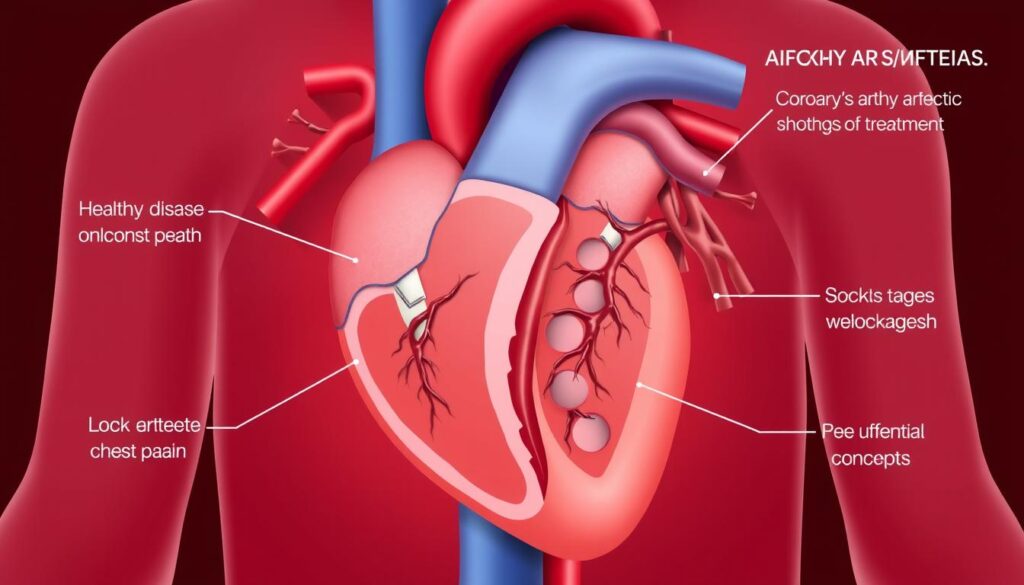
Coronary artery disease (CAD) is a serious heart condition affecting millions of Americans yearly. It occurs when coronary arteries become blocked, limiting blood flow to the heart1. Plaque buildup in arteries starts in childhood and continues throughout life2.
Knowing the risk factors is key for prevention. Your lifestyle choices greatly impact CAD development. High cholesterol, blood pressure, smoking, and lack of exercise increase your risk2.
Many can delay or prevent CAD through lifestyle changes and medications1. Early symptom recognition makes a big difference in treatment and management. Symptoms vary, including chest pain, heart palpitations, shortness of breath, and fatigue1.
Women may experience different signs. These can include back pain, jaw discomfort, or a burning feeling in the chest1.
Key Takeaways
- Coronary artery disease is the most common type of heart disease in the U.S.
- Plaque buildup begins early and restricts blood flow to the heart
- Lifestyle changes can help prevent or delay CAD progression
- Symptoms can differ between men and women
- Early detection and treatment are crucial for heart health
What is Coronary Artery Disease?
Coronary artery disease (CAD) is a serious heart condition affecting millions of Americans. It develops silently over time, making it crucial to understand its mechanisms and risks. Your heart’s health depends on grasping this complex cardiovascular disorder.
CAD starts with atherosclerosis, a process where fatty substances build up in artery walls. This plaque narrows arteries, limiting blood flow to your heart muscle3.
Understanding the Disease Mechanism
As atherosclerosis advances, arteries become stiffer and narrower. This reduced blood flow can lead to serious heart problems4.
Critical Risk Factors
- Age (risk increases after 45 for men, 55 for women)
- Family history of heart disease
- High blood pressure
- Elevated cholesterol levels
- Diabetes
- Obesity
- Physical inactivity
- Chronic stress
About 18.2 million U.S. adults have been diagnosed with coronary artery disease4. Knowing these risk factors helps you take steps to prevent and manage CAD.
Early awareness and lifestyle changes can greatly reduce your risk of serious heart complications.
| Risk Category | Impact Level |
|---|---|
| Smoking | High Risk |
| Sedentary Lifestyle | Moderate to High Risk |
| Healthy Diet | Protective Factor |
Healthier choices could prevent about 80% of coronary artery disease deaths4. You have the power to protect your heart’s health.
Recognizing Symptoms of Coronary Artery Disease
Spotting signs of coronary artery disease (CAD) could save your life. Your heart’s health depends on noticing subtle and critical symptoms. Know these signs to protect your heart.
Common Symptoms You Shouldn’t Ignore
CAD shows up in various ways. These can differ from person to person. Here are the most common signs:
- Chest pain (angina) – often described as pressure or tightness in the chest5
- Shortness of breath, especially during physical activities6
- Heart palpitations
- Extreme fatigue
- Swelling in hands and feet6
“Not all heart problems come with clear warning signs. Silent symptoms can be just as dangerous.” – Heart Health Expert
When to Seek Medical Attention
Some heart attack symptoms need quick medical help. Look out for these critical signs:
- Crushing chest pain radiating to shoulders or arms
- Persistent shortness of breath
- Unexplained sweating
- Sudden lightheadedness
Women might have other subtle symptoms. These include anxiety, back pain, trouble sleeping, indigestion, and nausea6. Over 16 million Americans have coronary artery disease5. Early detection is key.
Knowing your risk factors can help prevent serious heart issues6. If you notice any worrying symptoms, see a doctor right away.
Effective Treatment Options for Coronary Artery Disease
Coronary artery disease management requires a mix of lifestyle changes and medical care. Your treatment plan depends on your condition’s severity and health factors7.
Lifestyle Changes for Heart Health
Cardiac rehab strategies can greatly boost your heart health. Focus on a balanced diet, regular exercise, and stress management. Quitting smoking after a heart attack can reduce future risks8.
Weight control and blood pressure management are key to heart health. These changes can make a big difference in your overall well-being9.
Medications for Managing CAD
Doctors may prescribe meds for cholesterol and heart function. Statins like atorvastatin help lower cholesterol and heart attack risks8. Blood thinners such as aspirin can prevent dangerous clots9.
Beta-blockers and calcium channel blockers control blood pressure. They also improve heart performance8.
Surgical Procedures
Severe cases might need medical procedures. Advanced treatments like percutaneous coronary intervention (PCI) can improve blood flow7. Coronary artery bypass is another option for better heart function.
These surgeries are used when other treatments don’t work well9.
Monitoring and Follow-up
Regular check-ups are key to tracking heart health. Work closely with your doctor to ensure good care. With proper management, many people with CAD live active lives7.
FAQ
What is coronary artery disease (CAD)?
CAD happens when plaque narrows or blocks coronary arteries, limiting blood flow to the heart. It develops slowly and can cause heart attacks if untreated. Cholesterol deposits build up along artery walls, making it hard for blood to supply oxygen.
What are the main risk factors for coronary artery disease?
Key factors include age, gender, high blood pressure, high cholesterol, and diabetes. Obesity, inactivity, stress, poor diet, smoking, and family history also increase risk. Men face higher risk, but women’s risk rises after menopause.
What symptoms should I watch out for?
Common signs include chest pain, shortness of breath, heart palpitations, and extreme fatigue. Women might feel anxiety, back pain, indigestion, and nausea. Some people have “silent” CAD with no symptoms until a heart attack.
Heart attack signs include crushing chest pain and pain in shoulders or arms. Sweating and lightheadedness may also occur during an attack.
How is coronary artery disease diagnosed?
Doctors use physical exams, medical history reviews, and various tests to diagnose CAD. Tests may include ECG, stress tests, and blood work to check cholesterol levels.
Coronary angiography and imaging studies like echocardiograms or CT scans help assess heart function. These tests can reveal artery blockages and other heart issues.
What are the treatment options for coronary artery disease?
Treatment involves lifestyle changes, medications, and sometimes medical procedures. A heart-healthy diet, regular exercise, and quitting smoking are crucial steps. Doctors may prescribe aspirin and cholesterol-lowering drugs.
Severe cases might require angioplasty or bypass surgery. Cardiac rehab programs help with recovery and ongoing management.
Can I prevent coronary artery disease?
You can’t control age and genetics, but a healthy lifestyle greatly reduces risk. Eat fruits, vegetables, and whole grains. Exercise regularly and maintain a healthy weight.
Manage stress, avoid smoking, and limit alcohol. Control conditions like diabetes and high blood pressure to lower your risk.
How serious is coronary artery disease?
CAD can lead to life-threatening problems like heart attacks and heart failure if not managed. Early detection, proper treatment, and lifestyle changes help many people live active lives.
Regular check-ups and following your doctor’s advice are key to managing CAD. With proper care, you can effectively control this serious condition.
Source Links
- Coronary Artery Disease Symptoms | Advocate Health Care – https://www.advocatehealth.com/health-services/advocate-heart-institute/programs-and-treatments/coronary-artery-disease-program/symptoms
- Coronary Artery Disease (CAD) | Frankel Cardiovascular Center – https://www.umcvc.org/conditions-treatments/coronary-artery-disease-cad
- Coronary artery disease – Symptoms and causes – https://www.mayoclinic.org/diseases-conditions/coronary-artery-disease/symptoms-causes/syc-20350613
- What’s Draggin’ Your Heart Down? – https://my.clevelandclinic.org/health/diseases/16898-coronary-artery-disease
- Coronary Heart Disease – https://www.hopkinsmedicine.org/health/conditions-and-diseases/coronary-heart-disease
- Coronary artery disease symptoms | Aurora Health Care – https://www.aurorahealthcare.org/services/heart-vascular/conditions/coronary-artery-disease/symptoms
- Coronary Artery Disease | Conditions & Treatments | UTSW – https://utswmed.org/conditions-treatments/coronary-artery-disease/
- Coronary heart disease – Treatment – https://www.nhs.uk/conditions/coronary-heart-disease/treatment/
- A Complete Guide to Treating Coronary Artery Disease – https://www.healthline.com/health/coronary-artery-disease/coronary-artery-disease-treatments

