
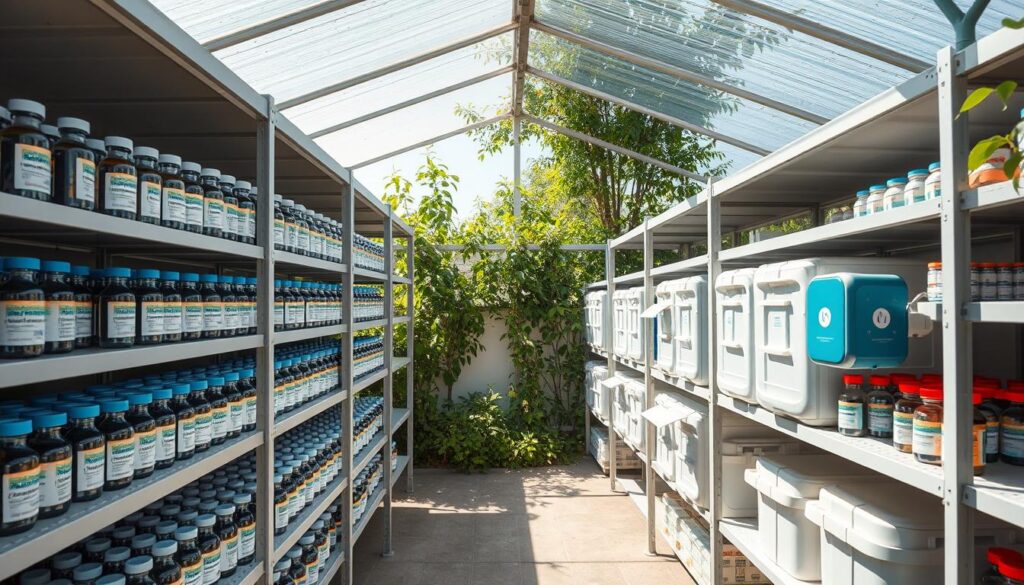
Vaccine stability without refrigeration is changing global healthcare. It offers hope to remote communities and challenges old storage methods. This breakthrough promises to revolutionize immunization access worldwide1.
Thermostable vaccines may replace 20% of the global vaccine market soon. These innovative solutions can prevent millions of deaths yearly. They solve cold storage issues for diseases like diphtheria, tetanus, and measles1.
Non-refrigerated vaccine storage could be a game-changer. The Western Pacific region hosts 41% of vaccine manufacturers. This shows great potential for widespread use1.
Pfizer-BioNTech and Moderna are making exciting progress. They’re creating vaccines that stay stable at different temperatures1.
Key Takeaways
- Thermostable vaccines can potentially transform global healthcare access
- Temperature-stable vaccines reduce cold chain dependency
- Innovative storage methods can save millions of lives annually
- Pharmaceutical companies are actively developing heat-stable vaccine formulations
- Non-refrigerated vaccines offer hope for remote and underserved communities
Introduction to Vaccine Stability Without Refrigeration
Vaccine distribution faces challenges due to complex cold chain management. Traditional vaccine storage depends on precise temperature control. This creates barriers for global immunization efforts2.
New storage solutions are changing immunization approaches. The main challenge is keeping vaccines potent without constant cooling. This is especially true in remote or resource-limited areas.
The Critical Role of Temperature Control
Vaccine stability relies heavily on temperature management. Most vaccines need specific storage conditions:
- Temperatures between 2°C to 8°C for standard vaccines3
- Frozen vaccines need temperatures from -50°C to -15°C3
- Optimal room temperatures between 20°C to 25°C for storage units3
Distribution Challenges in Vaccine Logistics
Thermotolerant vaccines offer a solution to cold chain limitations. Traditional storage methods present significant obstacles:
- Expensive refrigeration infrastructure
- Risk of temperature fluctuations
- Limited access in remote regions
“The future of global immunization depends on our ability to create vaccines that can survive without constant refrigeration.” – Vaccine Research Expert
Emerging Storage Technologies
New approaches are changing vaccine preservation. Advanced cooling tech in purpose-built units maintains consistent temperatures2. Researchers explore ultra-fine droplet aerosol dehydration to eliminate refrigeration needs3.
These innovations could greatly improve vaccine accessibility. They may reduce distribution costs and expand global immunization coverage.
Understanding Vaccine Stability
Vaccine stability is crucial for effective immunization. It ensures vaccines remain potent throughout their lifecycle. Refrigeration-free storage reveals the complex science behind maintaining vaccine effectiveness in various conditions.
Vaccines are delicate biological products requiring careful handling. Their stability depends on several factors. These include temperature range, chemical composition, light exposure, and storage conditions.
- Temperature range4
- Chemical composition
- Light exposure
- Storage conditions
Definition of Vaccine Stability
Ambient temperature stability means vaccines stay effective without strict refrigeration. Most vaccines need storage between 2°C to 8°C. This creates major challenges for global distribution4.
Factors Affecting Stability
Different vaccine types have unique stability traits. Freezing can harm inactivated vaccines. Heat and light affect live attenuated vaccines5.
Vaccines come in liquid or lyophilized powder form. Each requires specific preparation5.
“The future of vaccine development lies in creating more stable formulations that can withstand temperature variations.”
Importance of Stability in Immunization
Vaccine stability impacts healthcare delivery, especially where refrigeration is limited. Ambient-stable vaccines could revolutionize global immunization efforts. This would make healthcare more accessible and efficient.
| Vaccine Type | Storage Requirements |
|---|---|
| Inactivated Vaccines | 2°C to 8°C |
| Live Attenuated Vaccines | Frozen (-50°C to -15°C) |
Grasping these details helps maintain vaccine integrity. It ensures successful immunization programs worldwide. Healthcare professionals can better protect vaccines and their patients.
The Science Behind Temperature-Sensitive Vaccines
Vaccine temperature stability is vital for effective immunization strategies. Research on cold chain alternatives aims to improve global healthcare delivery. These efforts are crucial for developing countries with limited resources.
Vaccines are delicate biological products needing precise environmental conditions. They require careful temperature management to stay effective6. Different vaccines often need unique temperature ranges for storage.
Temperature Ranges for Optimal Stability
Most vaccines work best between 2°C to 8°C. However, some cutting-edge vaccines challenge these traditional storage limitations. Scientists have created vaccines that can handle varied conditions7.
- MenAfriVac vaccine – First licensed for controlled temperature delivery in 20127
- Prioritized vaccines for controlled temperature chain usage:
- Human papillomavirus (HPV)
- Oral cholera vaccine
- Tetanus toxoid vaccines
- Hepatitis B vaccine birth dose
Effects of Temperature Fluctuations
Temperature changes can greatly affect vaccine effectiveness. Wrong storage may weaken vaccines or cause them to break down6. This creates problems for healthcare providers in remote areas.
Maintaining precise temperature conditions is not just a scientific requirement, but a critical public health necessity.
Role of Stabilizers in Vaccine Formulations
Scientists are creating new ways to make vaccines last longer. Special compounds help vaccines handle higher temperatures7. This reduces the need for traditional cold storage.
Over 70% of stakeholders from six countries want controlled temperature chain labeled vaccines7. The future of vaccines depends on solving temperature sensitivity issues.
Innovations in Vaccine Technology
Groundbreaking advances are revolutionizing non-refrigerated vaccine storage. Scientists are developing cutting-edge technologies to transform immunization preservation and distribution. These innovations promise to save more lives through improved vaccine stability.
Development of Heat-Stable Vaccines
Researchers are creating innovative vaccine formats that can withstand higher temperatures. Metal-organic frameworks (MOFs) represent a breakthrough in vaccine preservation. These advanced materials allow vaccines to be encapsulated in powder form, potentially eliminating refrigeration requirements8.
- Genetically engineered vaccines with enhanced stability
- Powder-based vaccine formulations
- Nanotechnology-enhanced preservation methods
Role of Nanotechnology in Vaccine Storage
Nanotechnology is transforming vaccine storage solutions. Researchers are developing nanoparticle-based preservation techniques to improve vaccine stability. These microscopic technologies enable more robust storage mechanisms, reducing dependence on traditional cold chain infrastructure9.
| Technology | Stability Improvement | Potential Impact |
|---|---|---|
| Metal-Organic Frameworks | High temperature resistance | Reduced refrigeration needs |
| Nanoparticle Encapsulation | Enhanced preservation | Extended vaccine shelf life |
Case Studies on New Vaccine Formats
Real-world innovations are proving the potential of non-refrigerated vaccine technologies. The COVID-19 pandemic accelerated research into alternative vaccine storage methods.
Drones and portable refrigeration units are expanding vaccine delivery capabilities in challenging environments8.
“Innovative vaccine technologies are reshaping global healthcare delivery.” – Global Health Experts
Regulatory compliance remains crucial for implementing these groundbreaking storage solutions. Ensuring quality, safety, and efficacy standards is vital in developing next-generation vaccine technologies10.
Current Examples of Non-Refrigerated Vaccines
Vaccine technology has made big leaps in creating heat-resistant vaccines. These vaccines can survive without traditional cooling. This focus is crucial for global health efforts11.
Keeping vaccines potent has been a big challenge for doctors. Now, researchers have found new ways to make tougher vaccines. These can handle higher temperatures11.
This breakthrough could change how we distribute vaccines. It’s especially helpful for remote areas with limited resources11.
Oral Polio Vaccine: A Breakthrough in Stability
The Oral Polio Vaccine (OPV) is a great example of vaccine toughness. Scientists have made it work well in tough conditions11.
- Demonstrated stability at higher temperatures
- Reduced dependency on complex cold chain logistics
- Improved accessibility in challenging environments
Bacillus Calmette-Guérin (BCG) Vaccine Innovations
The BCG vaccine shows promise in heat-resistant technology. Researchers are finding ways to keep it working without strict cooling11.
“Our goal is to create vaccines that can protect communities regardless of their access to sophisticated storage facilities.” – Global Health Researcher
New Developments in Influenza Vaccines
Exciting new research is changing influenza vaccines. Scientists are trying new ways to keep them safe, including:
- Sugar film preservation techniques
- Genetic engineering approaches
- Nanoparticle stabilization methods
| Vaccine Type | Temperature Tolerance | Preservation Method |
|---|---|---|
| OPV | Up to 40°C | Sugar Film Technique |
| BCG | Extended Room Temperature | Pullulan Preservation |
| Influenza | Ambient Conditions | Nanoparticle Stabilization |
The future looks bright for vaccines that don’t need refrigeration. Global vaccination rates show great potential11. These new ideas could make healthcare much more available worldwide.
Benefits of Non-Refrigerated Vaccines
Vaccine technology is transforming global healthcare. It tackles key challenges in immunization delivery. Ambient temperature vaccine stability offers groundbreaking solutions worldwide.
Accessibility in Remote Areas
Non-refrigerated vaccines improve healthcare access in tough environments. Remote regions can now receive vital immunizations without complex cold storage. The MenAfriVac vaccine showed great potential in hard-to-reach areas12.
Reduced Cold Chain Costs
Vaccine cold chain alternatives cut transportation and storage costs. Traditional storage needs pricey refrigeration, but thermostable vaccines remove these barriers. A vaccination campaign in northern Benin revealed impressive efficiency gains12:
- Reduced logistical complexities
- Lower transportation costs
- Simplified storage requirements
Increased Vaccine Acceptance Rates
Easier vaccine administration can boost community acceptance. Convenient vaccination encourages more people to participate in immunization programs. In one campaign, 98.7% of supervisors preferred the new vaccine delivery method12.
“Innovative vaccine technologies are transforming global health accessibility”
Ambient temperature vaccine stability is a huge medical breakthrough. It reduces complexity and increases reliability. These advances promise to change healthcare delivery in underserved regions13.
Challenges Facing Non-Refrigerated Vaccines
Healthcare professionals face unique obstacles in developing temperature-stable vaccines. These challenges impact global immunization efforts. Innovative storage solutions are crucial for overcoming these hurdles.
Public perception is a major barrier to non-refrigerated vaccine technologies. Many remain skeptical about alternatives to traditional cold chain storage. Healthcare providers and patients often question the safety of these new methods14.
Public Awareness Challenges
Educating communities about temperature-stable vaccines requires comprehensive strategies:
- Developing clear communication materials
- Conducting targeted awareness campaigns
- Engaging community health leaders
- Sharing scientific evidence transparently
Regulatory Approval Complexities
Vaccine storage solutions undergo strict regulatory scrutiny. Approval processes require extensive documentation proving efficacy, safety, and stability15. Pharmaceutical companies must invest heavily in research to gain acceptance.
“Innovation in vaccine technology requires patience, persistence, and robust scientific validation.”
Healthcare Worker Training Needs
Successful use of non-refrigerated vaccines relies on thorough healthcare worker education. Training programs must cover essential aspects of vaccine handling and storage.
- New storage protocols
- Temperature monitoring techniques
- Handling procedures for thermostable vaccines
- Quality assurance methods
Tackling these issues will improve vaccine distribution worldwide. It will make vaccines more accessible and efficient16.
Worldwide Initiatives for Stable Vaccines
Global health groups are changing how vaccines are distributed. The World Health Organization (WHO) leads efforts to improve vaccine storage and delivery worldwide17.
Vaccine access is still a big issue. 1 in 5 children miss out on lifesaving vaccinations each year. Over 22 million kids under one don’t get full vaccine doses.
This is mostly due to problems storing vaccines without fridges in far-off places17.
Strategic Vaccine Distribution Approaches
- Developing heat-stable vaccines that can survive higher temperatures18
- Creating innovative storage solutions for challenging environments
- Reducing dependency on traditional refrigeration methods
Successful Immunization Campaigns
New ideas in vaccine distribution are making a difference. The MenAfriVac vaccine is a great example. WHO says it can be stored at up to 40°C for four days19.
Pharmaceutical Collaborations
Drug companies are working on heat-stable vaccines. They want to use these vaccines in places where keeping things cold is hard17.
“Innovation in vaccine storage is key to global health accessibility”
New tech like microarray patches could help deliver vaccines. These might work at room temperature18.
Future Prospects of Vaccine Storage
Vaccine technology is rapidly evolving. Groundbreaking innovations promise to revolutionize vaccine stability without refrigeration. Thermotolerant vaccines are emerging as a critical solution to global immunization challenges.
Research continues to push boundaries. Exciting developments are transforming how we preserve vaccines.
Researchers are developing innovative approaches to extend vaccine shelf life. These methods aim to reduce temperature dependence20.
- Advanced sugar-based preservation techniques
- Nanotechnology-enhanced stabilization methods
- Digital monitoring systems
Innovations on the Horizon
The future of vaccine storage is promising. Current vaccines need strict temperature control between -70°C to 8°C20.
Cutting-edge research aims to create more resilient vaccines. These could withstand broader temperature ranges, revolutionizing global health distribution.
Potential Impacts on Global Health
Thermotolerant vaccines could improve healthcare accessibility in remote regions. Some breakthrough developments show remarkable potential:
| Vaccine Type | Temperature Stability | Potential Impact |
|---|---|---|
| Rotavirus Vaccine | 30 months below 25°C | Enhanced rural healthcare |
| Experimental mRNA Vaccines | Potentially weeks at room temperature | Simplified global distribution |
Integration with Digital Health Technologies
Digital monitoring systems are crucial in vaccine management. Advanced tracking technologies now provide real-time temperature monitoring. These ensure vaccine quality throughout distribution21.
The future of vaccines is not just about development, but about ensuring they reach every corner of the world safely and effectively.
How to Ensure Vaccine Quality and Efficacy
Maintaining vaccine integrity is vital for successful immunization programs. Refrigeration-free storage poses unique challenges. These challenges require careful attention and precise monitoring strategies.
Healthcare pros must use robust practices to preserve vaccine temperature stability. They need to ensure patient safety. The following guidelines will help manage vaccine quality effectively.
Essential Storage Practices for Non-Refrigerated Vaccines
- Inspect vaccines upon arrival for potential damage
- Maintain detailed vaccine inventory records
- Use specialized monitoring devices
- Develop emergency management procedures
Critical Monitoring Systems
Temperature tracking is crucial for vaccine preservation. Digital data loggers can monitor conditions every 30 minutes. This ensures optimal storage environments22.
Specialized medical refrigerators help maintain consistent temperatures. These temps are critical for vaccine stability23.
| Monitoring Practice | Recommended Action |
|---|---|
| Temperature Range | 2°C to 8°C (36°F to 46°F) |
| Storage Capacity | Fill storage units 50% to ensure proper airflow |
| Inventory Management | Track expiration dates and lot numbers |
Guidelines for Healthcare Professionals
Modern vaccine storage systems like AccuVax boost immunization program reliability. These systems cut over 91% of common vaccine errors24.
They offer key features such as automatic stock rotation. Extended battery backup is another important feature.
“Proper vaccine storage is not just a technical requirement, but a fundamental commitment to public health.” – Vaccine Research Institute
By using these strategies, healthcare pros can ensure top-notch vaccine quality and efficacy.
The Role of Governments and NGOs
Governments and NGOs drive vaccine cold chain innovations. Their investments reshape global immunization capabilities. Strategic efforts are transforming non-refrigerated vaccine storage technologies25.
Vaccine development is rapidly evolving. Key players focus on innovative solutions for global health. They aim to break down barriers to widespread vaccine access26.
Funding and Support for Research
Research funding advances non-refrigerated vaccine storage technologies. Key initiatives are making a difference.
- Targeted grants for thermostable vaccine development
- Support for breakthrough biopreservation methods
- Investments in cutting-edge vaccine preservation technologies
Collaborations in Vaccine Development
Strategic partnerships drive innovation in vaccine technologies. Organizations like Upkara pioneer solutions to cold chain challenges. They aim to improve global health equity25.
“Our mission is to provide advanced medicines to people in lower-income countries, prioritizing social impact over profit.” – Research Leader
Promoting Public Health Initiatives
Governments actively support vaccine accessibility through comprehensive strategies:
- Distributing vaccines to low-income countries25
- Investing in infrastructure for vaccine storage26
- Developing policies to support innovative vaccine technologies
Collaborative efforts are crucial for developing vaccine cold chain alternatives. These innovations can revolutionize global immunization strategies. They pave the way for better health outcomes worldwide.
Conclusion: The Future of Immunization with Non-Refrigerated Vaccines
Innovations in vaccine stability are transforming global immunization. These advancements can reshape healthcare accessibility worldwide. Only 20% of people have reliable refrigeration, creating challenges for vaccine distribution.
Breakthrough technologies are tackling critical vaccine delivery barriers. Researchers are developing solutions to reduce vaccine inactivation rates. Currently, about 50% of vaccines are inactivated due to temperature changes.
Trehalose stabilization and advanced nanoparticle formulations offer promising paths for resilient vaccines. These innovative approaches could lead to more stable and effective immunizations.
Summary of Benefits and Challenges
Thermostable vaccines could greatly improve healthcare access in remote areas. They could reduce cold chain costs, which make up 80% of vaccination program expenses.
This would allow more resources to be used for broader immunization efforts. Your support can speed up this shift towards better global vaccination strategies.
Call to Action for Stakeholders
Healthcare, research, and government stakeholders must work together on vaccine stability technologies. Médecins Sans Frontières is already pushing for thermostable vaccine development.
We can invest in research and support innovative technologies. By prioritizing global health equity, we’ll create a future with widespread vaccine access.
Life-saving vaccines could reach every community, despite geographical or infrastructural challenges. This future is possible with continued effort and collaboration.
FAQ
What makes a vaccine stable without refrigeration?
Specialized stabilizers and innovative techniques help vaccines stay potent at higher temperatures. Key factors include pullulan, trehalose, and advanced preservation methods. These technologies allow vaccines to maintain effectiveness up to 40°C (104°F) for extended periods.
How can non-refrigerated vaccines improve global health?
Non-refrigerated vaccines can overcome major distribution challenges in remote areas. They reduce transportation costs and potentially increase vaccination rates in underserved populations. This is crucial, as only 7% of children in the poorest 73 countries receive all recommended vaccine doses.
Are there existing vaccines that don’t require refrigeration?
Yes, some vaccines like the Oral Polio Vaccine (OPV) and BCG vaccine are stable without refrigeration. Researchers are developing thermostable versions of other vaccines too. These include innovative formulations for influenza that remain effective at higher temperatures.
What challenges do non-refrigerated vaccines face?
Non-refrigerated vaccines face lengthy regulatory approval processes and the need for extensive public education. Healthcare workers require specialized training for proper handling and administration. Public perception and awareness of these new technologies also need significant attention.
How do researchers create thermostable vaccines?
Scientists use genetic engineering, advanced preservatives, and novel formulations to create thermostable vaccines. Sugar films, metal-organic frameworks, and special stabilizing compounds help maintain vaccine effectiveness. These techniques allow vaccines to withstand higher temperatures without losing potency.
What is the potential impact of non-refrigerated vaccines on global immunization?
Non-refrigerated vaccines could revolutionize global immunization by reducing cold chain costs. They improve accessibility in remote areas and potentially increase vaccination coverage. Currently, 85% of 1-year-olds globally are vaccinated for various diseases.
Thermostable vaccines could help reach the remaining unvaccinated populations more effectively. This would significantly boost global health efforts and save lives.
Are non-refrigerated vaccines completely safe?
Non-refrigerated vaccines show promise but require rigorous monitoring and strict guidelines. Healthcare professionals must follow specific protocols for storage, handling, and administration. This ensures vaccine efficacy and patient safety.
Ongoing research and collaboration between health organizations continue to improve these technologies. Safety remains a top priority in vaccine development.
What organizations are supporting non-refrigerated vaccine development?
The World Health Organization (WHO) is actively working on strategies to improve vaccine distribution. Pharmaceutical companies and research institutions like McMaster University are driving innovations in vaccine stability. Global health organizations collaborate to advance storage technologies for vaccines.
Source Links
- Thermostable Vaccine Market Trends, Growth, Share and Outlook – https://www.towardshealthcare.com/insights/thermostable-vaccine-market-sizing
- Ask The Experts About Vaccines: Storage & Handling | Immunize.org – https://www.immunize.org/ask-experts/topic/storage-handling/
- RXinsider | The Significance of Refrigeration in Maintaining Vaccine Storage – https://rxinsider.com/market-buzz/?p=14938-the-significance-of-refrigeration-in-maintaining-vaccine-storage
- The Ultimate Guide to Vaccine Storage | Sensitech Blog – https://www.sensitech.com/en/blog/blog-articles/blog-vaccine-storage-ultimate-guide.html
- Vaccinating Adults: A Step-by-Step Guide – Step 3 Vaccine Storage and Handling – https://www.immunize.org/wp-content/uploads/guide/pdfs/vacc-adults-step3.pdf
- Temperature Sensitive Vaccine Storage – https://www.mediproducts.net/blog/healthcare-compliance/temperature-sensitive-vaccine-storage
- How the use of vaccines outside the cold chain or in controlled temperature chain contributes to improving immunization coverage in low- and middle-income countries (LMICs): A scoping review of the literature – https://pmc.ncbi.nlm.nih.gov/articles/PMC7915947/
- Revolutionizing Vaccine Storage and Distribution with Innovative Solutions | TechTarget – https://www.techtarget.com/pharmalifesciences/feature/Revolutionizing-Vaccine-Storage-and-Distribution-with-Innovative-Solutions
- Stability Preparedness: The Not-So-Cold Case for Innovations in Vaccine Stability Modelling and Product Release – https://www.ncbi.nlm.nih.gov/pmc/articles/PMC11435764/
- The future of vaccine storage: Why cold chain innovation is critical – https://www.healthcaredive.com/spons/the-future-of-vaccine-storage-why-cold-chain-innovation-is-critical/695938/
- Vaccines that don’t need refrigeration could save a ton of lives – https://www.vox.com/future-perfect/2019/6/5/18647563/vaccines-cold-chain-public-health-lives
- Benefits of using vaccines out of the cold chain: Delivering Meningitis A vaccine in a controlled temperature chain during the mass immunization campaign in Benin – https://pmc.ncbi.nlm.nih.gov/articles/PMC5355207/
- Why do Vaccines need to be Refrigerated? – https://www.news-medical.net/health/Why-do-Vaccines-need-to-be-Refrigerated.aspx
- The Challenges of Vaccine Transport and Storage – https://www.technologynetworks.com/biopharma/articles/the-challenges-of-vaccine-transport-and-storage-368536
- Vaccine refrigeration: Thinking outside of the box – https://pmc.ncbi.nlm.nih.gov/articles/PMC4896515/
- Vaccine Fridges | What Happens if Vaccines Are Not Refrigerated? | CoolMed – https://www.coolmed.co.uk/knowledge/what-happens-if-vaccines-are-not-refrigerated/
- Heat-Stable Vaccines Urgently Needed to Reach the One in Five Children Missed by Immunization Worldwide – https://www.doctorswithoutborders.org/latest/heat-stable-vaccines-urgently-needed-reach-one-five-children-missed-immunization-worldwide
- The quest for thermostable vaccines and other innovations during Covid-19 – https://www.statnews.com/2021/06/23/thermostable-vaccines-other-innovations-covid-19/
- Vaccines that don’t need refrigeration – https://www.dw.com/en/nanovaccines-vaccines-that-dont-need-refrigeration-in-developing-countries/a-17510950
- Vaccine cold chain management and cold storage technology to address the challenges of vaccination programs – https://pmc.ncbi.nlm.nih.gov/articles/PMC8706030/
- Vaccine Storage and Handling Toolkit – January 2023 – https://www.cdc.gov/vaccines/hcp/downloads/storage-handling-toolkit-addendum.pdf
- Best practices for vaccine storage, handling, and inventory management – https://www.ismanet.org/ISMA/Resources/e-Reports/1-18-24/Best_practices_for_vaccine_storage.aspx
- Manufacturing, safety and quality control of vaccines – https://www.who.int/news-room/feature-stories/detail/manufacturing-safety-and-quality-control
- Understanding the Importance of Proper Vaccine Storage: How AccuVax Ensures Vaccine Efficacy – TruMed Systems – https://trumedsystems.com/blog/ensuring-vaccine-efficacy-the-role-of-proper-storage-with-accuvax/
- Breaking the ‘cold chain’ – https://umdearborn.edu/news/breaking-cold-chain
- Management of COVID-19 vaccines cold chain logistics: a scoping review – https://pmc.ncbi.nlm.nih.gov/articles/PMC8889047/

