
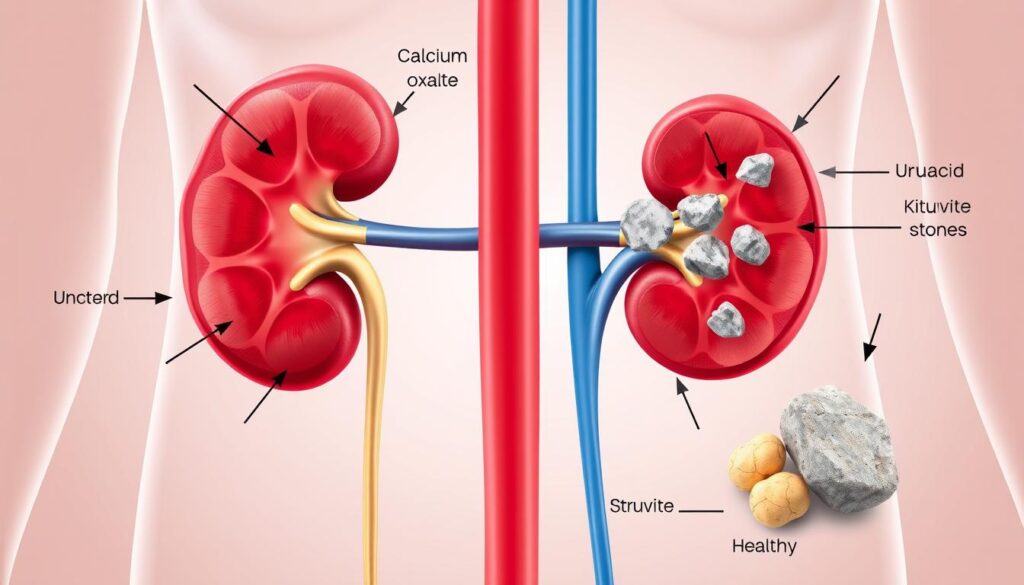
Kidney stones are mineral deposits that form in your kidneys. They can cause severe pain when passing through your urinary tract1. Calcium oxalate is the most common type of kidney stone1.
Your diet plays a big role in kidney stone formation. Eating animal protein can increase your risk of developing stones1. People who don’t get enough calcium in their diet are also more likely to get kidney stones1.
Drinking lots of water is crucial for preventing kidney stones. It helps dilute minerals in your urine, lowering the risk of stone formation1. While some people try herbal supplements, there’s not enough proof they work for prevention1.
Key Takeaways
- Kidney stones are mineral deposits that can cause significant urinary discomfort
- Calcium oxalate is the most prevalent type of kidney stone
- Diet and hydration significantly impact stone formation
- Animal protein increases kidney stone risk
- Proper fluid intake is crucial for prevention
What Are Kidney Stones and How Do They Form?
Kidney stones are mineral formations that develop in your urinary system. They can cause discomfort and health issues. Learning about these tiny deposits helps you manage your urinary tract health better.
Kidney stones affect many people. About 11 percent of men and 6 percent of women experience them at least once. These stones can vary in size, composition, and potential health risks.
Types of Kidney Stones
Not all kidney stones are created equal. The primary types include:
- Calcium Oxalate Stones: The most common type of urinary tract stones2
- Struvite Stones: Associated with urinary tract infections
- Uric Acid Stones: Typically linked to high-protein diets
- Cystine Stones: A rare, inherited condition
Factors Influencing Stone Formation
Several key factors contribute to kidney stone causes:
- Dehydration: Reduced fluid intake concentrates minerals
- Diet: High protein and sodium consumption
- Medical conditions: Diabetes, metabolic syndrome
- Genetic predisposition3
“Prevention is always better than cure when it comes to kidney stones.”
Your risk of kidney stones increases with certain conditions. These include chronic inflammation, urinary tract blockages, and recurring infections3. Knowing these factors helps you protect your urinary health.
Common Symptoms of Kidney Stones
Kidney stone symptoms can be painful and challenging. Recognizing signs helps identify urinary tract issues. About 600,000 kidney stone cases occur in the U.S. yearly4.
Recognizing Pain and Discomfort
Symptoms typically appear when stones move through your urinary tract. Intense pain often radiates from your side to your lower abdomen.
This pain can be extremely sharp and varies in intensity5.
- Sharp pain below the ribs
- Pain radiating to lower abdomen
- Burning sensation during urination
Other Symptoms to Watch For
Urinary tract stones can cause various other symptoms. These signs may indicate potential problems.
- Urine color changes (pink, red, or brown)
- Cloudy or foul-smelling urine
- Frequent urination
- Nausea and vomiting
“Recognizing early signs can help prevent complications with Nephrolithiasis,” says urinary health experts.
When to Seek Medical Help
Men are more likely to develop kidney stones than women. About 11% of men get them, compared to 6% of women4.
Seek immediate medical help if you experience:
- Severe, unbearable pain
- Fever and chills
- Blood in urine
- Difficulty urinating
Note: About 16% of individuals with acute kidney stones also have a urinary tract infection, making prompt medical consultation essential4.
| Symptom Category | Potential Indication |
|---|---|
| Pain Characteristics | Fluctuating intensity, radiating location |
| Urinary Changes | Color, odor, frequency alterations |
| Systemic Symptoms | Nausea, vomiting, fever |
Treatments for Kidney Stones
Kidney stone treatment varies based on your specific condition. Understanding your options is vital for effective management. Your approach depends on the stone’s size and complexity.
Home Remedies and Lifestyle Changes
Simple strategies can be your first defense against kidney stones. Drink more fluids, aiming for six to eight 8-ounce glasses daily.
Citrus drinks like lemonade can help prevent stone formation. They contain citrate, which may stop stones from developing.
- Drink plenty of water
- Consume citrus beverages
- Reduce salt intake
- Monitor your diet
Medical Treatments and Procedures
For tougher kidney stones, medical interventions are necessary. Urolithiasis Treatment includes several advanced procedures:
- Shock Wave Lithotripsy (SWL): Breaks stones using targeted shock waves6
- Ureteroscopy: Uses specialized scopes to locate and remove stones7
- Percutaneous Nephrolithotomy: Removes stones through a small back incision7
Importance of Follow-Up Care
Nephrolithiasis Management continues after stone removal. Preventing future stones is crucial. Up to 50% of patients experience stone recurrence within five years8.
Your doctor might suggest specific medications or diet changes to lower your risk7. Regular check-ups and proper hydration are key to long-term kidney health8.
Prevention is always better than cure when it comes to kidney stones.
Prevention Tips for Kidney Stones
Kidney stones affect up to 12 percent of Americans9. Prevention is key for urinary tract health. Focus on diet changes and understanding risk factors10.
Managing your diet is crucial for preventing kidney stones. Aim for 1000-1200 mg of calcium daily11. Limit sodium to 2,300 milligrams per day10.
Avoid high-oxalate foods like spinach, chocolate, and beets9. These can increase your risk of stone formation.
Staying hydrated is vital for your Kidney Stone Diet. Drink enough water to keep your urine light yellow. This helps prevent mineral buildup.
Regular urinary tract monitoring can reduce your chances of developing stones9. If you’ve had a kidney stone, you’re 50 percent more likely to get another within ten years9.
FAQ
What are kidney stones?
Kidney stones are hard deposits in your kidneys. They form when urine becomes concentrated. These stones can cause discomfort when passing through your urinary system.
They range in size and can develop anywhere in the urinary tract. Minerals crystallize and stick together, creating these painful deposits.
What are the different types of kidney stones?
There are four main types of kidney stones. Calcium stones are the most common, usually calcium oxalate.
Struvite stones are linked to urinary tract infections. Uric acid stones and cystine stones also exist. Each type forms differently and may need unique treatments.
What symptoms indicate I might have kidney stones?
Severe pain in the side and back below your ribs is common. You might feel pain radiating to the lower abdomen and groin.
Other symptoms include burning while urinating and pink, red, or brown urine. You may also experience cloudy or smelly urine, frequent urination, and nausea.
Vomiting and fever might occur if an infection is present.
How are kidney stones treated?
Treatment depends on the stone’s size, type, and location. Small stones may pass naturally with increased fluid intake and pain medication.
Medical treatments can include alpha-blockers to relax the ureter. Shock wave lithotripsy breaks up larger stones. Ureteroscopy is used for stones that can’t pass on their own.
How can I prevent kidney stones?
Stay hydrated by drinking more than 12 glasses of water daily. Reduce sodium and animal protein intake. Eat more fruits and vegetables.
Manage your weight and limit sugar and high-fructose corn syrup. Regular checkups with a doctor can help monitor your risk factors.
When should I seek medical attention for kidney stones?
Seek immediate help if you have severe pain or pain with nausea and vomiting. Get help if you have pain with fever and chills.
Blood in your urine or difficulty passing urine are also reasons to see a doctor. These could indicate a serious condition needing medical care.
Are some people more likely to develop kidney stones?
Yes, certain factors increase your risk of kidney stones. These include dehydration and a diet high in protein and sodium.
Obesity, diabetes, and metabolic syndrome can also raise your risk. Some medications and genetic factors play a role too. A family history of kidney stones increases your risk.
Can diet really help prevent kidney stones?
Yes, diet plays a crucial role in preventing kidney stones. Calcium from dairy products can help bind oxalate before it reaches your kidneys.
Eating more fruits and vegetables can make your urine less acidic. Limiting sodium, animal protein, and high-sugar foods significantly decreases your risk of stones.
Source Links
- Kidney Stones – https://www.kidney.org/kidney-topics/kidney-stones
- Kidney Stones – https://www.hopkinsmedicine.org/health/conditions-and-diseases/kidney-stones
- Definition & Facts for Kidney Stones – NIDDK – https://www.niddk.nih.gov/health-information/urologic-diseases/kidney-stones/definition-facts
- Kidney Stone Symptoms: 8 Warning Signs of Kidney Stones – https://www.healthline.com/health/symptoms-of-kidney-stones
- Kidney stones – https://www.mountsinai.org/health-library/diseases-conditions/kidney-stones
- Kidney stones – Treatment – https://www.nhs.uk/conditions/kidney-stones/treatment/
- Treatment for Kidney Stones – NIDDK – https://www.niddk.nih.gov/health-information/urologic-diseases/kidney-stones/treatment
- Kidney Stone Treatment & Prevention – https://www.uclahealth.org/medical-services/urology/kidney-stone/kidney-stone-treatment-prevention
- How to Prevent Kidney Stones: 9 Ways – https://www.healthline.com/health/kidney-health/how-to-prevent-kidney-stones
- Lots of water, small dietary changes can help prevent kidney stones, UTSW expert says – https://www.utsouthwestern.edu/newsroom/articles/year-2023/june-prevent-kidney-stones.html
- Kidney Stones | Diet Plan and Prevention – https://www.kidney.org/kidney-topics/kidney-stone-diet-plan-and-prevention

