
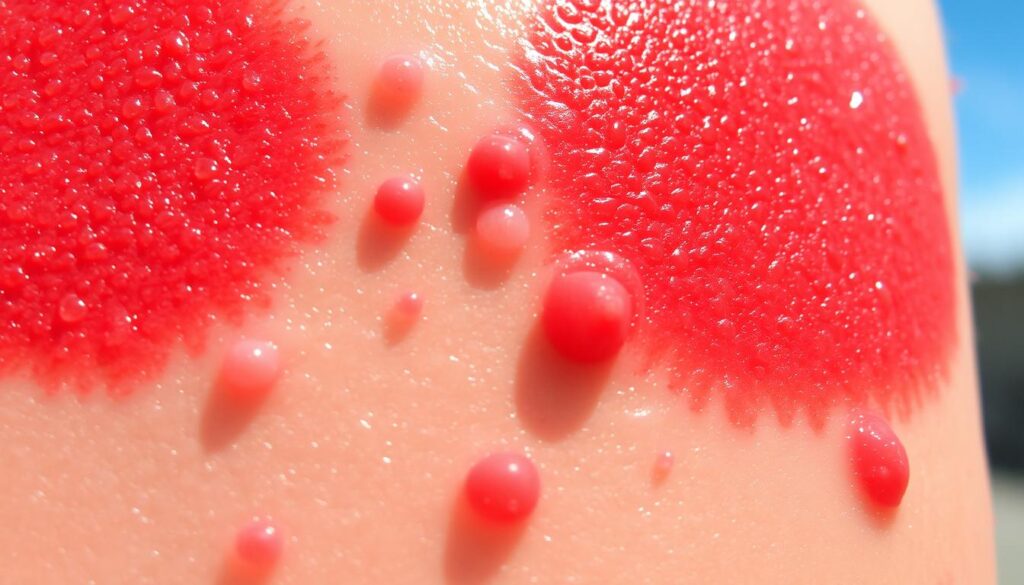
Heat rash, or prickly heat, affects many during hot, humid weather. It happens when sweat ducts get blocked, preventing proper body cooling1. Understanding heat rash helps manage this common summer skin problem.
Heat rash impacts both children and adults. Babies and young children are more vulnerable due to underdeveloped sweat ducts1. About 4.8% of people get heat rash, causing discomfort in warm months1.
There are different types of miliaria, from mild to severe. Miliaria crystallina is the mildest, often seen in young infants2. Adults usually get miliaria rubra, which causes itchy red bumps and less sweating2.
Key Takeaways
- Heat rash is a common skin condition in hot weather
- Different types of heat rash affect various age groups
- Blocked sweat ducts cause heat rash symptoms
- Most heat rash cases resolve without medical intervention
- Prevention involves staying cool and wearing breathable clothing
What is Heat Rash and How Does It Occur?
Sweat rash is a frustrating skin condition caused by body overheating. It happens when blocked sweat glands prevent natural cooling. This uncomfortable irritation can make your skin feel itchy and bumpy2.
Heat rash often appears in hot, humid places where sweat gets trapped under the skin. While it can affect anyone, certain groups face higher risks3.
Understanding Heat Rash Types
There are three primary types of heat rash:
- Miliaria Crystallina: The mildest form, most common in infants2
- Miliaria Rubra: Known as prickly heat, causing red bumps and itchiness2
- Miliaria Profunda: The most severe type, typically occurring in adults after intense physical activity2
Factors Contributing to Skin Irritation
| Risk Factors | Description |
|---|---|
| Excessive Sweating | Increases likelihood of blocked sweat glands3 |
| Clothing | Tight or warm garments trap moisture3 |
| Physical Activity | High-intensity exercise promotes sweating2 |
Prevent heat rash by wearing loose cotton clothes and staying cool. Avoid excessive sweating when possible. If symptoms worsen, seek help from a healthcare professional2.
Recognizing the Symptoms of Heat Rash
Summer brings heat rash, a common skin condition affecting many. Knowing the signs helps you act fast and avoid complications. Quick action is key to managing this heat-related issue.
Heat rash occurs when sweat ducts get blocked. This traps perspiration under the skin. It can happen in various body areas, causing uncomfortable skin problems45.
Identifying Common Heat Rash Signs
The typical symptoms of heat rash include:
- Small, red bumps or clear blisters
- Prickly or stinging skin sensation
- Itching in affected areas
- Inflammation in skin folds4
Understanding Different Heat Rash Types
Skin cooling techniques can help manage different heat rash variations:
| Rash Type | Characteristics |
|---|---|
| Miliaria Crystallina | Clear, fluid-filled bumps that break easily5 |
| Miliaria Rubra | Inflamed blister-like bumps with prickling sensation5 |
| Miliaria Pustulosa | Bumps filled with pus5 |
When to Seek Medical Help
Heatstroke prevention involves spotting serious heat rash symptoms. See a doctor if your rash lasts over 3-4 days. Also, watch for signs of infection or fever.
- Rash persisting beyond 3-4 days4
- Signs of infection like pus-filled blisters4
- Accompanying fever or swollen lymph nodes4
“Understanding your body’s signals is key to preventing heat-related skin issues.”
Remember, most heat rashes heal within a few days. Proper care and cooling techniques are essential for recovery4.
Natural Remedies for Managing Heat Rash
Heat rash can be uncomfortable. Thankfully, natural remedies can provide relief and soothe your skin. Let’s explore effective solutions to manage symptoms quickly6.
Cooling Techniques for Immediate Relief
Quick cooling methods can calm irritated skin. Try these practical techniques:
- Apply a cold compress to affected areas
- Take cool baths or showers
- Stay in air-conditioned environments6
Herbal Treatments and Soothing Oils
Natural treatments offer excellent home remedies for heat rash. Check out these skin-soothing options to ease your symptoms:
- Aloe vera gel with powerful anti-inflammatory properties7
- Colloidal oatmeal baths to reduce inflammation7
- Sandalwood paste to calm irritated skin7
- Neem oil for its antibacterial qualities7
Natural remedies can offer gentle relief without harsh chemicals.
For babies and children, use gentle approaches. Pat skin dry and allow brief diaper-free periods to manage heat rash6.
If symptoms last over a week, see a healthcare professional6. Prevention is crucial. Wear loose, breathable clothing and stay cool to avoid heat rash6.
Preventing Heat Rash in Hot Weather
Summer skin care needs smart ways to avoid heat rash. Keep your body cool and protected. Wear cotton and loose-fitting clothes when it’s hot out8. Breathable fabrics can lower your chance of getting these skin issues9.
Be careful with outdoor activities in hot weather. Stay hydrated and wear light clothes that let air flow. Up to 30% of people in warm places get heat rashes8.
Choose natural fiber clothes that move sweat away from skin. These create space between fabric and body.
Avoid tight clothes that block air8. Take cool showers often. Use fans and find air-conditioned spaces when it’s hottest out.
These steps will protect your skin in hot summer days9.
Tips for Staying Cool
Use light, breathable fabrics to help your skin stay cool. Managing sweat and keeping skin aired out helps prevent heat rash8.
Appropriate Clothing Choices
Pick loose, light-colored clothes made from natural materials like cotton. These help reduce sweat and heat rash risk9. Your summer clothes should be comfy and breathable.
FAQ
What exactly is heat rash?
Heat rash is a skin condition caused by blocked sweat ducts. It occurs in hot, humid environments. The condition results in small, itchy bumps on the skin.
Who is most likely to get heat rash?
Heat rash can affect anyone, but it’s common in babies and young children. People in tropical climates or those who sweat a lot are at risk. Wearing tight clothing can also lead to heat rash.
What are the main symptoms of heat rash?
The main symptoms are small, red bumps or clear blisters on the skin. These often come with a prickly or stinging feeling. Common areas affected include the neck, chest, groin, and skin folds.
In babies, it may appear on the face, neck, and diaper area.
Are there different types of heat rash?
Yes, there are three main types of heat rash:
– Miliaria crystallina: The mildest form
– Miliaria rubra: Also called prickly heat
– Miliaria profunda: The most severe form
How can I treat heat rash naturally?
Natural remedies include:
– Taking cool baths or showers
– Using cold compresses
– Applying calamine lotion – Using aloe vera gel – Taking oatmeal baths
– Applying a paste of sandalwood powder and water
– Using baking soda in lukewarm baths
When should I be concerned about heat rash?
Seek medical attention if the rash:
– Persists beyond 3-4 days
– Worsens significantly
– Becomes infected
– Is accompanied by fever
– Causes severe discomfort or pain
How can I prevent heat rash?
Prevention tips include:
– Staying in air-conditioned environments
– Wearing loose-fitting, lightweight clothing – Choosing breathable fabrics like cotton
– Avoiding synthetic materials
– Staying hydrated
– Taking frequent cool showers
– Changing out of sweaty clothes promptly
Is heat rash dangerous?
Heat rash is usually a mild condition that clears up on its own. It typically resolves within a few days. However, if left untreated, it can lead to more serious skin infections.
Can adults get heat rash as easily as babies?
Babies are more prone to heat rash due to underdeveloped sweat glands. Adults can still get heat rash, especially in certain conditions. Those who exercise intensely or work in hot environments are at risk.
How long does heat rash typically last?
Most heat rashes go away within 2-3 days with proper care. Cool the skin and reduce sweating to help it heal. If the rash persists longer, consult a doctor.
Source Links
- Heat Rash – International Hyperhidrosis Society – https://www.sweathelp.org/home/heat-rash.html
- What is Heat Rash — And Can You Prevent It? – https://www.healthline.com/health/heat-rash-pictures-remedies
- Heat rash, sun rash — what’s the difference? – https://www.osfhealthcare.org/blog/heat-rash-sun-rash-whats-the-difference/
- Heat rash – https://www.healthdirect.gov.au/heat-rash
- Heat rash: Tips for treating this common skin condition-Heat rash – Symptoms & causes – Mayo Clinic – https://www.mayoclinic.org/diseases-conditions/heat-rash/symptoms-causes/syc-20373276
- Home remedies for heat rash: 12 natural methods – https://www.medicalnewstoday.com/articles/326430
- 14 Heat Rash Remedies: At-Home Treatment, Self-Care, and OTC Options – https://www.verywellhealth.com/heat-rash-remedies-8625324
- Heat Rash (Prickly Heat): Causes, Symptoms, and Treatment – https://www.webmd.com/skin-problems-and-treatments/understanding-heat-rash-basics
- Heat rash: Symptoms, treatment, appearance, and causes – https://www.medicalnewstoday.com/articles/181512

