
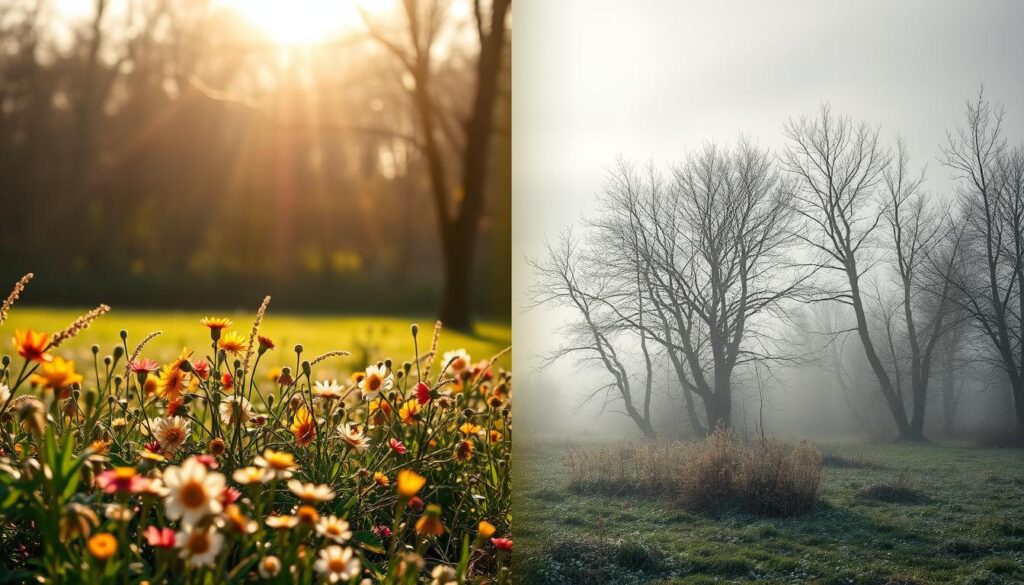
Winter depression can greatly affect your mental health and daily life. Seasonal Affective Disorder (SAD) is a mood condition that impacts millions of Americans12. It creates major challenges during darker months.
Your body’s internal clock may become disrupted during winter. This can lead to changes in serotonin and melatonin levels. These changes might trigger seasonal mood shifts that feel overwhelming.
Women face SAD more often than men. Symptoms usually start in young adulthood13. If you live where daylight hours are shorter, your risk increases1.
People far from the equator are more likely to experience SAD2. This is due to the reduced sunlight in these areas. Recognizing how less sunlight affects your mental health is key.
Key Takeaways
- SAD affects individuals for 4-5 months annually
- Women are more likely to experience winter depression
- Geographical location influences SAD risk
- Symptoms can vary in intensity
- Early recognition is crucial for management
What is Seasonal Affective Disorder (SAD)?
Seasonal depression impacts millions yearly. It’s more than just winter blues. Seasonal changes can significantly affect your mental health4.
Understanding the Basics
SAD is a type of depression with recurring seasonal patterns. It typically occurs during specific times of the year.
There are two main variations:
- Winter-pattern SAD: More common, occurring during fall and winter months
- Summer-pattern SAD: Less frequent, happening during spring and summer
Root Causes of SAD
Several factors contribute to seasonal depression:
- Vitamin D deficiency caused by reduced sunlight exposure
- Melatonin imbalance disrupting sleep-wake cycles
- Decreased serotonin levels affecting mood regulation5
Symptoms to Recognize
Your body might signal SAD through various symptoms. Winter-pattern SAD often presents with:
- Oversleeping and fatigue
- Carbohydrate cravings
- Social withdrawal
- Weight gain
*”SAD is not just feeling a bit down—it’s a serious condition that can significantly impact your daily life.”*
Summer-pattern SAD might manifest differently. Its symptoms include:
- Insomnia
- Decreased appetite
- Increased irritability
- Unintended weight loss4
SAD affects about 11 million people in the U.S. annually. Another 25 million experience milder winter blues4.
Recognizing these patterns can help you address seasonal depression effectively. Don’t hesitate to seek help if you notice these symptoms.
How SAD Affects Your Daily Life
Seasonal affective disorder can transform your everyday experiences. It creates challenges beyond simple mood changes. Recognizing winter blues early helps address seasonal mood shifts before they disrupt your life6.
Impact on Work and Productivity
Winter blues can undermine your professional performance. Decreased energy makes concentrating difficult, potentially compromising work quality. Low mood and lethargy can turn routine tasks into overwhelming challenges76.
- Reduced motivation and focus
- Increased difficulty completing assignments
- Higher risk of workplace burnout
Effects on Relationships
Social withdrawal becomes a concern during seasonal mood changes. You might retreat from interactions, straining personal and professional relationships. Decreased energy can make maintaining connections feel exhausting86.
“SAD can transform social interactions from enjoyable to overwhelming”
Connection to Overall Well-Being
SAD’s effects extend beyond immediate symptoms. It can impact sleep patterns, appetite, and mental health. Women are three times more likely to experience these challenges76.
| SAD Impact Area | Potential Consequences |
|---|---|
| Mental Health | Increased depression risk |
| Physical Health | Disrupted sleep and appetite |
| Social Life | Reduced interaction and connection |
Recognizing these patterns is crucial for managing seasonal mood changes. It’s the first step towards maintaining a balanced, fulfilling life8.
Strategies for Managing SAD
Seasonal Affective Disorder needs a well-rounded approach for both body and mind. Effective strategies can help you handle tough winter months. Your overall well-being can improve with the right management9.
Light Therapy: A Beacon of Hope
Phototherapy is a powerful tool against seasonal depression. SAD lamps with 10,000 lux of light can boost mood and regulate sleep cycles10.
These special light boxes mimic natural sunlight. They help ease symptoms for those with seasonal mood changes9.
“Light therapy can be a game-changer for those struggling with winter blues” – Mental Health Expert
Lifestyle Changes to Boost Your Mood
- Maintain a consistent sleep schedule
- Engage in regular exercise
- Spend time outdoors when possible
- Practice stress-reduction techniques
Professional Support Options
Professional help can greatly improve SAD management. Cognitive behavioral therapy for SAD (CBT-SAD) offers ways to challenge negative thoughts10.
Sometimes, doctors may suggest antidepressants to help manage symptoms9.
| Treatment Approach | Effectiveness |
|---|---|
| Light Therapy | High |
| Cognitive Behavioral Therapy | Moderate to High |
| Antidepressant Medication | Varies by Individual |
Managing SAD is a personalized journey. Talk to a healthcare expert about a treatment plan for you.
Find more SAD treatment info at the Mayo Clinic’s comprehensive guide.
When to Seek Help for SAD
Recognizing when seasonal mood disorder needs professional help is vital for mental health. SAD symptoms can disrupt daily life, affecting mood and energy levels. If you notice these changes, it’s time to seek support.
Mental health support is crucial when severe depression symptoms appear. These include low mood, irritability, and decreased self-esteem11. Seasonal depression treatment options vary, but professional guidance can help.
People aged 18-30, especially those with a family history, may be at higher risk12. Stay alert if you fall into this category.
Treatment may include cognitive behavioral therapy, which can be as effective as light therapy12. Antidepressants might also be recommended. These typically take two to six weeks to work fully12.
Early intervention can greatly improve life quality during tough seasonal changes. Don’t wait to consult a mental health professional if SAD symptoms persist.
The National Alliance on Mental Illness (NAMI) offers additional support for managing SAD effectively11. Reach out to them for more guidance.
FAQ
What exactly is Seasonal Affective Disorder (SAD)?
SAD is a type of depression linked to seasonal changes. It usually starts in late fall or early winter and ends in spring. SAD affects millions of Americans with symptoms like sadness, low energy, and changes in sleep patterns.
Who is most likely to experience SAD?
SAD is more common in women, young adults, and people far from the equator. You’re at higher risk if you have a family history of depression. Living in regions with big seasonal light changes also increases your risk.
What causes Seasonal Affective Disorder?
The main cause is less sunlight exposure. This can disrupt your body’s internal clock and affect serotonin and melatonin levels. Such changes impact your mood, sleep, and mental health.
Vitamin D deficiency and changes in melatonin production also play important roles.
What are the typical symptoms of winter-pattern SAD?
Winter-pattern SAD symptoms include oversleeping, carb cravings, and weight gain. You might feel sluggish and unmotivated during darker months. Social withdrawal, low energy, and trouble focusing are also common.
How can I effectively manage SAD?
Light therapy using a 10,000 lux light box can help manage SAD. Regular exercise and a consistent sleep schedule are also effective. Spending time outdoors and trying Cognitive Behavioral Therapy (CBT-SAD) can be beneficial.
Some people find relief with vitamin D supplements. In some cases, doctors may prescribe antidepressant medications.
When should I seek professional help for SAD?
Seek help if symptoms persist for days or interfere with daily activities. Watch for major changes in sleep or appetite. Loss of interest in enjoyed activities and trouble functioning are warning signs.
If you have thoughts of self-harm, get professional help immediately.
Are there different types of Seasonal Affective Disorder?
Yes, there are two main types: winter-pattern SAD and summer-pattern SAD. Winter SAD is more common and often involves oversleeping and weight gain. Summer SAD can cause insomnia, poor appetite, and increased irritability.
Can SAD be completely cured?
SAD can’t be completely cured, but it can be effectively managed. Early intervention and consistent treatment are key. A proactive approach to managing symptoms can greatly improve your life during tough seasons.
Source Links
- Seasonal Affective Disorder – https://www.nimh.nih.gov/health/publications/seasonal-affective-disorder
- Steps to keep your mood and motivation steady throughout the year-Seasonal affective disorder (SAD) – Symptoms & causes – Mayo Clinic – https://www.mayoclinic.org/diseases-conditions/seasonal-affective-disorder/symptoms-causes/syc-20364651
- Seasonal Affective Disorder – https://www.hopkinsmedicine.org/health/conditions-and-diseases/seasonal-affective-disorder
- Seasonal Depression (Seasonal Affective Disorder) – https://www.webmd.com/depression/seasonal-affective-disorder
- Seasonal Affective Disorder (SAD) – https://askjan.org/disabilities/Seasonal-Affective-Disorder-SAD.cfm
- Seasonal Affective Disorder (SAD) – https://www.mentalhealth.org.uk/explore-mental-health/a-z-topics/seasonal-affective-disorder-sad
- Overview – Seasonal affective disorder (SAD) – https://www.nhs.uk/mental-health/conditions/seasonal-affective-disorder-sad/overview/
- Understanding Seasonal Affective Disorder: Causes, Symptoms, and Solutions – https://www.rwjbh.org/blog/2024/october/understanding-seasonal-affective-disorder-causes/
- Tips for How to Manage Seasonal Depression – https://www.massgeneralbrigham.org/en/about/newsroom/articles/tips-for-managing-seasonal-depression
- How to Manage Seasonal Affective Disorder | IllinoisDocAssist (866) 986-2778 – https://illinoisdocassist.uic.edu/news-stories/how-to-manage-seasonal-affective-disorder/
- Seasonal affective disorder (SAD) – https://www.nhsinform.scot/illnesses-and-conditions/mental-health/seasonal-affective-disorder-sad/
- Seasonal Affective Disorder: More Than Just the Winter Blues – https://www.loyolamedicine.org/newsroom/blog-articles/what-seasonal-affective-disorder-sad

