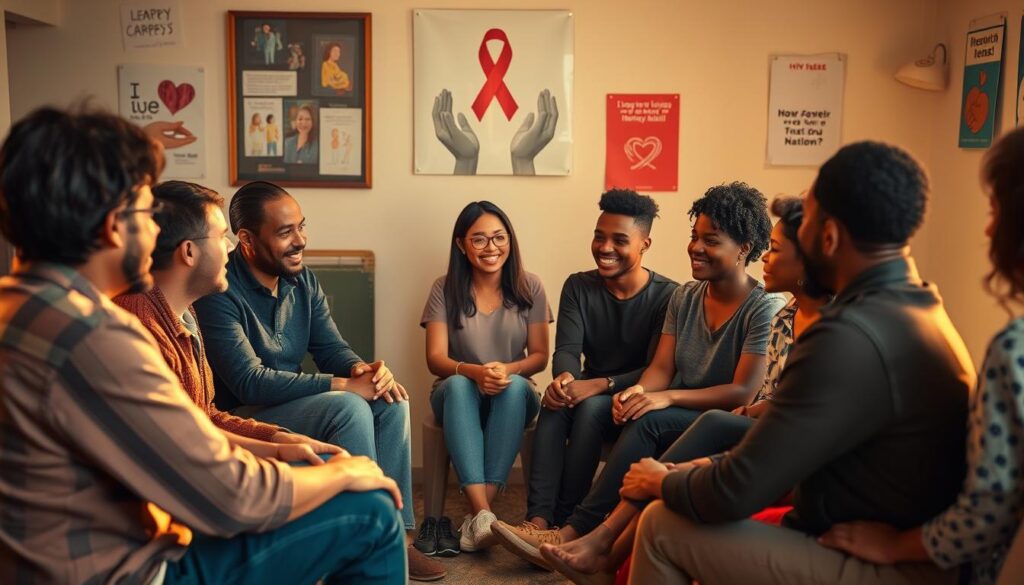
Talking about HIV with multiple partners requires understanding and open communication. Being transparent about sexual health protects everyone from potential risks1. The CDC provides important data on HIV diagnoses across different contact types1.
Knowing how HIV spreads is vital for effective conversations. Unprotected sex is the main way HIV spreads. Male-to-male sexual contact accounts for 66.6% of new diagnoses1.
Heterosexual contact leads to 24% of new cases. Injection drug use causes 11% of new HIV diagnoses1.
When discussing HIV in relationships, be honest and respectful. Your openness can create a safe space for talking about sexual health. Plan these talks in private, comfortable settings.
Key Takeaways
- Communicate openly about sexual health
- Understand HIV transmission risks
- Create safe spaces for honest discussions
- Get tested regularly
- Use protection during sexual encounters
Why Open Communication is Essential
Talking about HIV takes bravery, truth, and empathy. Open chats break down myths and shame. Your honest talks can change relationships and keep everyone safe.
Understanding the Importance of Honesty
Honesty builds trust in HIV talks. Studies show many people struggle to speak up in healthcare.
- 27% of people fear being labeled a ‘difficult patient’
- 23% believe healthcare providers always know best
- 21% feel hopeless about discussing their concerns
Building Trust with Your Partners
Clear talks about sex health create trust. Your open chats help reduce HIV shame. Discuss ways to prevent HIV, like PrEP, which lowers risks.
“Communication is the key to understanding and preventing HIV transmission.”
Educating Yourself and Others
Knowledge is power in prevention. Understand that HIV disproportionately affects certain communities2. Learning and sharing facts helps beat wrong ideas about HIV.
Each HIV talk brings more understanding and support. It also helps create better ways to stop HIV3.
Approaching the Conversation
Talking about HIV requires care and planning. It’s vital for healthy relationships and mental health4. Prepare yourself emotionally and mentally before starting these discussions.
- Choose a private, comfortable setting
- Select a time when both parties are calm and receptive
- Prepare your thoughts in advance
- Practice self-compassion and patience
Selecting the Right Moment
Timing is crucial for HIV conversations. Pick a moment for uninterrupted talk. Ensure both people feel safe and respected when discussing sensitive health topics.
Communicating with Clarity and Respect
Use simple language without medical jargon. Your goal is to inform, not overwhelm. Be direct about your HIV status, especially before intimate relationships5.
| Communication Strategy | Recommended Approach |
|---|---|
| Language | Simple, factual, non-judgmental |
| Tone | Calm, confident, empathetic |
| Information Sharing | Provide accurate medical insights |
Addressing Concerns and Misconceptions
Be ready to discuss HIV coping strategies and clear up misconceptions. Share accurate facts about HIV transmission, treatment, and prevention4.
Explain that proper medication can make the virus undetectable. This prevents transmission to others5.
Knowledge is power, especially when navigating complex health conversations.
Open talks build trust. They support both partners’ emotional and physical health.
Continuing the Dialogue
Talking about HIV prevention is vital for your health and your partners’. Open dialogue reduces stigma and boosts understanding of HIV treatment and prevention. Young people often miss out on these crucial health talks.
Create a safe space for questions by being patient and non-judgmental. Regular HIV testing and discussing PrEP can keep you informed. Check out HIV prevention resources for more info.
Conversations about sexual health can positively change behavior and attitudes6. Use support systems like healthcare providers and HIV organizations to boost your knowledge. Explore payment help programs if money is tight.
Regular check-ins with partners show you care about mutual health and trust. More talks about sexual health lead to better prevention understanding6. Stay informed and keep communication open.
FAQ
How do I start a conversation about HIV status with a potential partner?
Find a private spot to talk about HIV status. Suggest getting tested together or share your recent test results. Be clear and respectful about your status before any sexual activity.
What prevention methods can help reduce HIV transmission?
PrEP can cut HIV risk by up to 99%. Consistent condom use and regular testing are also effective. Talk to your partner and doctor about the best options for you.
How should I handle disclosure if I’m HIV-positive?
Be open and caring when sharing your HIV status. Pick a safe, quiet time to talk. Share facts about your health and treatment. Be ready to answer questions and address worries.
What if my partner reacts negatively to the HIV conversation?
Stay calm and have info from trusted HIV groups ready. Bad reactions often come from fear and wrong ideas. Offer to talk more or share facts if they’re willing to learn.
Are there resources available for those without health insurance?
Yes, help is out there. Check out Advancing Access and the Patient Advocate Foundation. Many clinics offer lower prices based on income. PrEP Daily can guide you to affordable HIV care options.
How often should I get tested for HIV?
If you’re sexually active, get tested at least once a year. Those with more partners should test every 3-6 months. Many places offer free or cheap private testing.
What should I do if I’ve had unprotected sex with someone of unknown HIV status?
Get tested right away. Look into PEP treatment within 72 hours of possible exposure. Talk to a doctor quickly about your choices and preventive care.
How can I support a partner who is HIV-positive?
Learn about HIV and offer emotional support. Help them stick to their treatment plan. Create a space free of judgment. Go to doctor visits if they’re okay with it.
Remember, their HIV status doesn’t define them or your relationship. Show that you care about their whole self, not just their health.
Source Links
- How to Talk to a Partner about HIV Prevention – PrEP Daily – https://prepdaily.org/how-to-talk-to-a-partner-about-hiv-prevention/
- Effectively Communicating About HIV and Other Health Disparities: Findings From a Literature Review and Future Directions – https://pmc.ncbi.nlm.nih.gov/articles/PMC7884094/
- Good communication between PLHIV and HCPs – https://viivhealthcare.com/ending-hiv/stories/positive-perspectives/good-communication-between-people-living-with-hiv-and-healthcare-professionals/
- How to Help and Support Someone Who Is HIV Positive – https://www.hiv.gov/hiv-basics/overview/making-a-difference/supporting-someone-living-with-hiv
- Initiating Conversations About HIV Prevention – https://www.clinicaladvisor.com/features/initiating-conversations-about-hiv-prevention/
- How peer conversations about HIV/AIDS media messages affect comprehension and beliefs of young South African women – https://pmc.ncbi.nlm.nih.gov/articles/PMC5642442/