
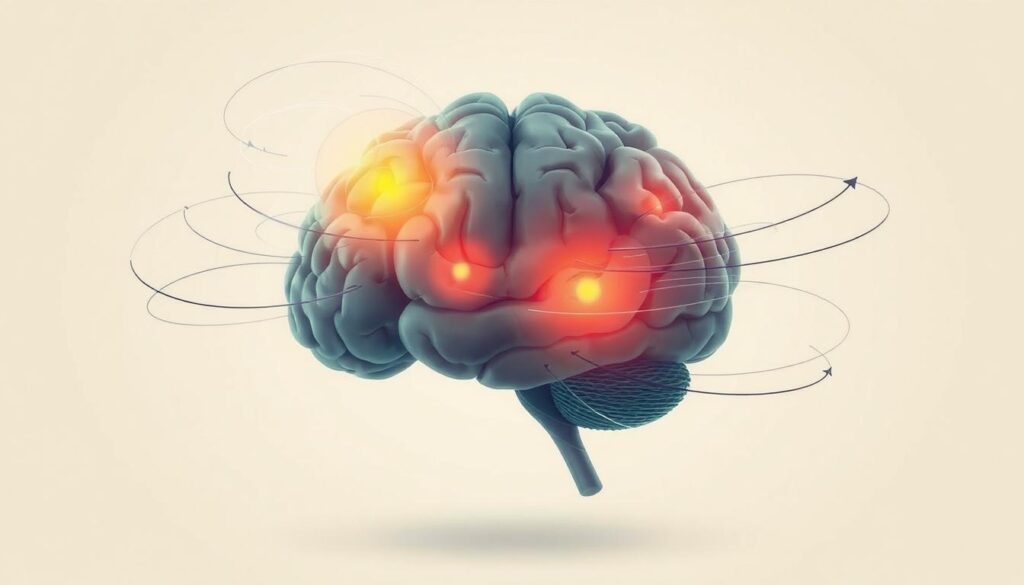
A concussion is a serious brain injury that can happen to anyone. It occurs when your brain gets shaken inside your skull. This sudden impact disrupts normal brain function1.
Head trauma can occur during sports, falls, or accidents. Concussion symptoms vary for each person1. Your brain redirects energy towards healing, causing physical and cognitive changes.
Most people fully recover from concussions. However, the healing process needs careful attention. Symptoms may change as you heal1.
Spotting these changes early helps prevent long-term complications. Quick identification and proper treatment are key to optimal recovery.
Key Takeaways
- Concussions are mild traumatic brain injuries affecting brain function
- Symptoms vary by individual and can change during recovery
- Most concussions resolve with proper rest and medical guidance
- Quick identification and treatment are essential for optimal healing
- Different age groups may experience unique concussion symptoms
What is a Concussion?
A concussion is a complex brain injury affecting neurological functioning. It happens when a sudden impact makes your brain move inside your skull. This movement can disrupt normal brain activity2.
Knowing about concussions helps protect your brain’s health. These injuries can occur in various situations. Some scenarios are more common than others.
Understanding the Mechanism of Injury
Your brain can shift rapidly inside the skull during sudden head movements. This shift may cause cognitive impairment and disrupt normal brain function2.
Common Causes of Concussions
Risk Factors
Certain groups are more susceptible to post-concussion syndrome:
- Young children
- Athletes in contact sports
- Individuals over 65
- People with previous concussion history2
“The brain is incredibly complex and vulnerable to sudden impacts.” – Neuroscience Research Institute
About 20% of patients might have lasting post-concussion symptoms. This makes prevention and proper management crucial4.
Most concussive symptoms will clear up within one month with proper care4.
| Concussion Type | Potential Symptoms | Recovery Timeline |
|---|---|---|
| Mild Concussion | Temporary confusion | 1-2 weeks |
| Moderate Concussion | Persistent headaches | 2-4 weeks |
| Severe Concussion | Extended cognitive impairment | 4-8 weeks |
Protecting your brain begins with understanding these injuries. Taking proactive prevention measures is key3.
Recognizing Concussion Symptoms
Concussions can be hard to spot. Symptoms may not show up right away after an injury. Knowing the signs helps protect you and your loved ones from long-term problems.
Common Physical Symptoms
Concussions can really mess with your daily life. You might get bad headaches or have trouble walking. You could feel dizzy and sensitive to light.
Nausea, vomiting, and blurry vision are also possible. These symptoms can make everyday tasks tough to do.
- Persistent headaches that seem unusually intense
- Significant balance issues that make walking difficult
- Dizziness and sensitivity to light
- Nausea or vomiting
- Blurred or double vision
Emotional and Cognitive Symptoms
Concussions affect more than just your body. They can change how you think and feel too. Amnesia about the injury is common.
You might have trouble focusing or remembering things. Mood swings and irritability can happen. Feeling more anxious or sad is also normal.
- Confusion and difficulty concentrating
- Memory problems
- Mood swings and irritability
- Increased anxiety or depression
When to Seek Medical Attention
“When in doubt, check it out” – Concussion Safety Motto
Some symptoms need a doctor right away. Get emergency care if you have:
- Repeated vomiting
- Loss of consciousness lasting over 30 seconds
- Worsening headaches
- Fluid drainage from ears or nose
- Seizures or significant behavioral changes
Only 20% of concussions lead to post-concussion syndrome5. Most people recover within three weeks5. Athletes should never play on the same day they get hurt6.
Quick care can help you heal faster. It also prevents long-term problems. Don’t ignore concussion symptoms – get help if you need it.
Treatment Options for Concussions
Recovering from a concussion needs a careful plan for your unique healing process. Your brain requires special care to overcome cognitive issues. This care helps restore normal brain function7.
Recovery involves several steps to support brain healing. These steps also aim to reduce long-term problems. Your doctor will guide you through this process.
Initial Care and Rest
Rest is vital in the early stages of concussion treatment. You’ll need to cut back on mental and physical activities. This break allows your brain to heal7.
Typical recovery periods include:
Rehabilitation Techniques
Fixing balance issues requires specific rehab strategies. Neuropsychological testing can help detect cognitive problems. These tests guide your recovery plan7.
New research suggests limited, supervised exercise might speed up healing8. Your doctor can create a personal rehab program for you.
This program may focus on:
- Gradual cognitive exercises
- Balance and coordination training
- Monitoring post-concussion syndrome symptoms
Preventative Measures
To lower future concussion risks, use protective strategies. Prevention is always better than treatment. Here are some key tips:
- Wearing appropriate protective gear during sports
- Creating fall-prevention strategies at home
- Regular balance and strength training
Your brain’s health is paramount. Always consult healthcare professionals for personalized guidance.
The Importance of Follow-Up Care
Proper follow-up care is key for brain healing after a concussion. Most concussions heal with rest. Yet, professional guidance helps prevent long-term brain issues9.
Your recovery may involve several specialists. Concussion-trained doctors can guide you to the right professionals. These may include therapists and psychologists9.
Some patients might face ongoing cognitive problems. In these cases, special help may be needed9.
Follow-up visits are crucial for tracking your progress. Experts suggest a check-up within four weeks of diagnosis10. Doctors will assess your symptoms during these visits.
They’ll create a plan for your return to normal activities. Your recovery might need adjustments to ensure safe brain healing10.
Every concussion is different. Stay in touch with your doctors. Follow their advice closely. Your commitment can help reduce long-term brain risks.
FAQ
What exactly is a concussion?
A concussion is a mild brain injury caused by sudden head movement. It happens during falls, sports collisions, or car accidents. The brain moves inside the skull, stretching nerves and blood vessels.
This causes chemical changes that affect normal brain function. Concussions can have lasting effects on a person’s health.
What are the most common symptoms of a concussion?
Concussion symptoms include physical, cognitive, and emotional responses. Headaches, dizziness, and fatigue are common physical signs. Confusion and memory problems are typical cognitive issues.
Emotional changes may involve irritability and mood swings. Symptoms vary and might not appear right away.
How long does it take to recover from a concussion?
Recovery time depends on the person and injury severity. Most people get better in 7-10 days. Some symptoms can last for weeks or months.
Rest and slow return to activities are key. Athletes might need more time to recover.
When should I seek emergency medical attention after a head injury?
Get immediate help if you have repeated vomiting or long loss of consciousness. Watch for worsening headaches, fluid from ears or nose, and seizures.
Significant changes in behavior or coordination are also warning signs. These could mean a serious brain injury.
Can concussions have long-term effects?
Untreated or repeated concussions can cause lasting problems. Post-concussion syndrome may make symptoms last for months or years. Multiple concussions increase the risk of chronic traumatic encephalopathy (CTE).
CTE is a brain condition that can change thinking and behavior.
How can I prevent concussions?
Wear proper gear during sports and use seat belts. Make your home safer to prevent falls. Exercise regularly to improve balance.
Athletes should follow safe play guidelines. Using proper techniques in sports is crucial.
What is the initial treatment for a concussion?
Initial treatment focuses on rest and slow recovery. Avoid activities that could cause another injury. Get enough sleep and gradually return to normal activities.
Mental and physical rest helps the brain heal. Follow a doctor’s advice to reduce symptom duration.
Are children more susceptible to concussions?
Children are more vulnerable to concussions. Their symptoms can differ from adults. Kids might struggle to explain how they feel.
Extra caution is needed in sports and physical activities. Stricter return-to-play rules and close medical monitoring are important.
Source Links
- Signs and Symptoms of Concussion – https://www.cdc.gov/heads-up/signs-symptoms/index.html
- How Long Does a Concussion Last? – https://my.clevelandclinic.org/health/diseases/15038-concussion
- Concussion – Symptoms and causes – https://www.mayoclinic.org/diseases-conditions/concussion/symptoms-causes/syc-20355594
- What is a Concussion? | Concussion Legacy Foundation – https://concussionfoundation.org/concussion-resources/what-is-concussion/
- Ultimate Concussion 101 Guide: Symptoms, Signs, Treatment and Rehab – https://baselinetesting.com/concussion-101-guide-symptoms-treatment-rehab/
- Recognizing concussions during a game – https://www.chop.edu/centers-programs/concussion-program/recognizing-concussions-during-game
- Concussion – https://www.hopkinsmedicine.org/health/conditions-and-diseases/concussion
- Concussion Treatment and Recovery | University of Michigan Health – https://www.uofmhealth.org/conditions-treatments/brain-neurological-conditions/concussion-treatment-and-recovery
- Concussion Information Center Chapter VIII: Follow-up Care for Concussion – http://biausa.org/public-affairs/media/concussion-information-center-chapter-viii-follow-up-care-for-concussion
- Follow-up visits after a concussion in the pediatric population: An integrative review – https://pmc.ncbi.nlm.nih.gov/articles/PMC10200233/

