
Persistent back pain can disrupt daily life, especially when caused by spinal issues. Diskectomy offers a solution for herniated disc problems. This surgery targets nerve compression, giving hope to those with severe spinal discomfort1.
Lumbar disk herniation affects about 12% of people, more common in men over 351. Knowing your spinal decompression options helps with decisions about disc removal and surgery1.
Doctors suggest diskectomy when other treatments don’t work. They assess your condition, looking at nerve compression and spinal health. The goal is to remove damaged disk parts causing pain and weakness2.
Key Takeaways
- Diskectomy addresses herniated disk issues causing nerve compression
- The procedure is most effective for specific nerve-related symptoms
- Surgical techniques have advanced to minimize invasiveness
- Recovery time varies depending on individual job requirements
- Proper post-surgical care is crucial for long-term success
What is Diskectomy and How it Works
Diskectomy is a surgery that treats disc herniation and eases severe back pain3. A damaged spinal disk can cause discomfort and affect your daily activities4.
Microdiscectomy removes the part of the damaged disk pressing on nerve roots. This minimally invasive technique aims to relieve nerve pressure and reduce pain.
The surgery also helps restore spinal function and improve mobility. It’s a targeted approach to address specific spinal issues.
- Relieve pressure on compressed nerves
- Reduce chronic pain and inflammation
- Restore proper spinal function
- Improve overall mobility
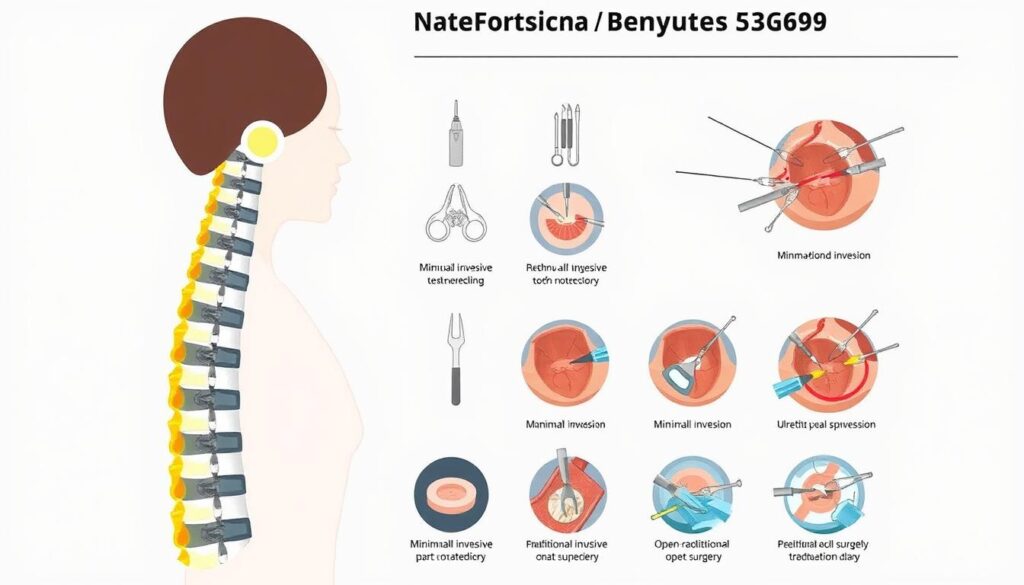
Two main approaches exist for treating disc herniation4:
- Open Discectomy: Traditional surgical method
- Minimally Invasive Discectomy: Modern technique with reduced recovery time
Your surgeon will carefully evaluate your specific condition to determine the most appropriate surgical approach.
The surgery usually takes about an hour and can be done as an outpatient procedure3. After surgery, you’ll need to follow specific recovery guidelines.
These may include limiting lifting and bending. You might also need to wear a back brace briefly3.
Before considering microdiscectomy, doctors often try conservative treatments first3. These can include physical therapy and anti-inflammatory medications.
Benefits and Ideal Candidates for Spinal Surgery
Spinal surgery can be daunting, but knowing your options helps with treatment decisions. Not everyone needs surgery. Finding the right candidates is key for successful outcomes.
Key Indications for Surgery
Some conditions signal the need for spinal surgery. Your doctor might suggest laminectomy or spinal fusion when:
- Conservative treatments have failed after 6-12 weeks
- Persistent nerve pain disrupts daily activities
- Progressive neurological symptoms develop
- Cauda equina syndrome is present
Advantages of Modern Surgical Techniques
Modern spine surgeries offer amazing benefits for patients. Minimally invasive spine surgery can treat various conditions with significant advantages5. It addresses herniated discs, degenerative disc disease, and spinal stenosis5.
“Advanced surgical techniques have transformed spinal treatment, offering patients hope and improved outcomes.”
Key benefits include:
Surgical precision has greatly improved. Surgeons now use advanced robotic tech for better accuracy in spinal fusion6. Minimally invasive spine surgery can last from under an hour to a few hours6.
Some patients go home the same day. Others may need a short hospital stay6. Your surgery approach depends on your health and recommended treatment plan.
Preparing for Your Diskectomy Procedure
Herniated disc surgery requires careful planning. Your surgical team will guide you through a comprehensive preparation process. This ensures the best possible outcome for your back pain relief7.
Before your spinal decompression procedure, you’ll need to complete several important steps:
- Medical Evaluation: Schedule a thorough pre-surgical assessment8
- Medication Review: Discuss current medications with your surgeon
- Pre-Surgery Hygiene: Use specific antibacterial soap to minimize infection risks7
Your surgery prep involves some key considerations. Patients must arrange transportation home. Anesthesia will prevent you from driving yourself9.
| Preparation Aspect | Key Details |
|---|---|
| Surgery Duration | 1-2 hours9 |
| Incision Size | 1-2 inches7 |
| Return to Work | 1-2 weeks (office jobs), 4-8 weeks (physical jobs)9 |
Special Considerations: Smokers should quit at least four weeks before surgery. This improves recovery outcomes8. Patients with chronic conditions like diabetes might need extra medical clearance8.
Your preparation is key to a successful herniated disc surgery and optimal back pain relief.
Following these steps carefully sets you up for a smoother surgical experience. It can also lead to a potentially faster recovery7.
Conclusion
Diskectomy offers hope for those battling persistent herniated disc problems. This spinal surgery can greatly improve mobility and life quality. Studies show excellent outcomes for 65.6% of patients, with 27.8% reporting good results.
Modern herniated disc surgery has transformed treatment options. Minimally invasive microdiscectomy allows for shorter hospital stays and quicker recovery. Patients often go home the same day and experience less scarring than with traditional methods10.
Your surgical success relies on several factors, including the chosen technique and surgeon’s skill. Both open and microscopic discectomy provide similar long-term pain relief. However, each approach has its own benefits11.
Work closely with your healthcare team to find the best surgical strategy. They’ll help you choose the right approach for your specific condition.
Surgery is just one part of your healing journey. Maintain a healthy lifestyle and focus on low-impact exercises. Follow post-surgical rehab recommendations to prevent future spinal issues.
Your dedication to recovery will maximize diskectomy benefits. With proper care, you can regain an active, pain-free life.
FAQ
What exactly is a diskectomy?
A diskectomy is a surgery to remove damaged parts of a herniated spinal disk. It aims to relieve pressure on spinal nerves. This can help reduce pain, numbness, and weakness caused by nerve compression.
When is a diskectomy typically recommended?
Doctors may suggest a diskectomy when other treatments don’t work after 6 to 12 weeks. It’s often recommended for ongoing pain that spreads to arms or legs. Progressive neurological symptoms may also warrant this procedure.
What are the different types of diskectomy procedures?
Diskectomy approaches include traditional open surgery and minimally invasive techniques. Modern options are microdiskectomy, microendoscopic diskectomy, and fully endoscopic diskectomy. These advanced methods aim to minimize tissue damage and speed up recovery.
How should I prepare for a diskectomy?
Preparation involves a thorough medical evaluation, including health history and imaging studies. Discuss your medications with your surgeon and consider quitting smoking before the procedure. Arrange for someone to drive you home after surgery.
Your surgical team will give you specific instructions about fasting and pre-operative care.
What are the potential risks of diskectomy?
Diskectomy risks include infection, bleeding, nerve damage, and anesthesia complications. Modern techniques have greatly reduced these risks. Your surgeon will explain specific risks based on your health and the surgical approach.
How long is the recovery period after a diskectomy?
Recovery time varies based on the procedure and your overall health. Most patients can resume light activities within a few weeks. Full recovery might take several months.
Your surgeon may recommend physical therapy to strengthen muscles and improve mobility during recovery.
Will a diskectomy permanently solve my back problems?
A diskectomy can provide significant relief but doesn’t cure the underlying cause of disk herniation. To prevent future issues, maintain a healthy lifestyle. This includes proper weight management and low-impact exercises recommended by your doctor.
What are the signs that I might need a diskectomy?
Key signs include persistent pain unresponsive to conservative treatments and numbness or weakness in limbs. Difficulty walking or standing and neurological symptoms like tingling may also indicate need for surgery.
Conditions such as cauda equina syndrome may require surgical intervention as well.
Source Links
- Diskectomy – StatPearls – NCBI Bookshelf – https://www.ncbi.nlm.nih.gov/books/NBK544281/
- Diskectomy – Mayo Clinic – https://www.mayoclinic.org/tests-procedures/diskectomy/about/pac-20393837
- Minimally Invasive Lumbar Discectomy – https://www.hopkinsmedicine.org/health/treatment-tests-and-therapies/minimally-invasive-lumbar-discectomy
- Discectomy Spine Surgery – Brigham and Women’s Hospital – https://www.brighamandwomens.org/medical-resources/discectomy
- Who is a Candidate for Minimally Invasive Spine Surgery? – https://www.adrspine.com/insights/minimally-invasive-spine-surgery-candidates
- Minimally Invasive Spine Surgery – https://my.clevelandclinic.org/health/treatments/17235-minimally-invasive-spine-surgery
- Microdiscectomy in the Low Back: Before Your Surgery – https://healthy.kaiserpermanente.org/health-wellness/health-encyclopedia/he.microdiscectomy-in-the-low-back-before-your-surgery.ud1633
- Diskectomy: MedlinePlus Medical Encyclopedia – https://medlineplus.gov/ency/article/007250.htm
- Microdiscectomy in the Low Back: Before Your Surgery – https://myhealth.alberta.ca/Health/aftercareinformation/pages/conditions.aspx?hwid=ud1633
- Microdiscectomy vs Discectomy Differences | Texas Spine Center – https://www.texasspinecenter.com/articles/microdiscectomy-vs-discectomy-differences/
- Open discectomy vs Microdiscectomy – https://www.cortho.org/spine/microdiscectomy/open-discectomy-vs-microdiscectomy/

