
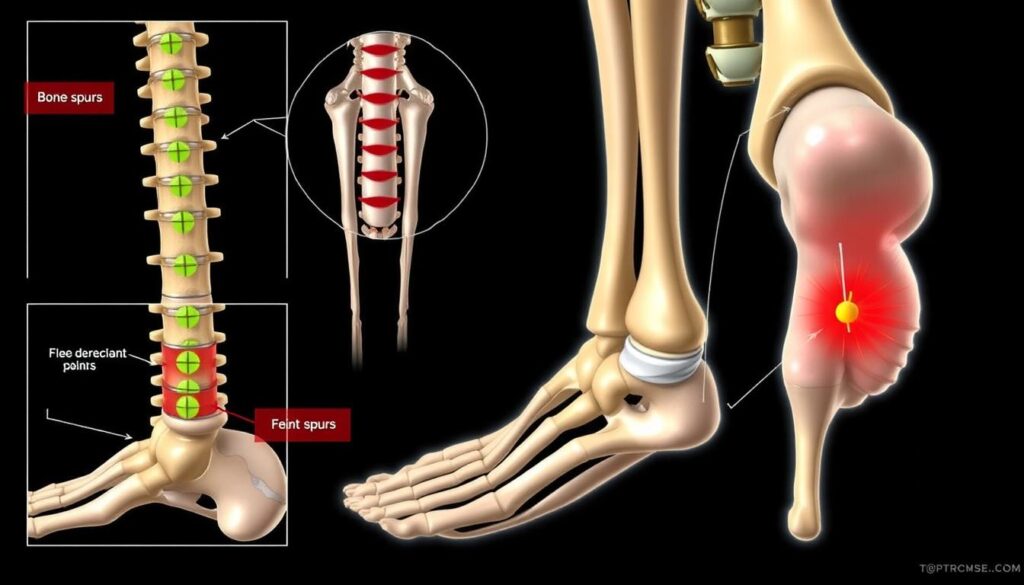
Bone spurs, or osteophytes, are smooth, hard bone growths that form in joints. These orthopedic conditions can develop in various body parts. While often unnoticed, some bone spurs cause discomfort and affect daily mobility12.
Bone spurs often result from joint damage, especially due to osteoarthritis1. They can appear in your spine, shoulders, hips, knees, and feet2.
Your chances of getting bone spurs increase with age. Repetitive joint stress, excess weight, and inflammatory conditions also play a role3. Knowing these factors helps manage and prevent bone spur growth.
Key Takeaways
- Bone spurs are common orthopedic growths that develop in joint areas
- Most bone spurs do not cause immediate symptoms
- Osteoarthritis is a primary contributor to bone spur development
- Age and joint stress significantly impact bone spur formation
- Understanding risk factors can help manage potential complications
What Are Bone Spurs and Their Common Causes
Bone spurs are bony growths on bone edges. They can cause discomfort in various body parts. Learning about them helps manage foot pain and joint issues.
Most bone spurs don’t cause immediate symptoms. They can go unnoticed for years4. Many older adults have bone spurs.
By age 50, 80% of men and 60% of women have them. This rises to 95% by age 705.
Types of Bone Spurs and Their Locations
Bone spurs can develop in multiple areas, including:
- Feet and heel (Calcaneal Spur)
- Knee joints
- Spine
- Shoulders
- Hands
- Hips
Primary Causes of Bone Spur Formation
Several key factors contribute to bone spur development:
- Joint damage from Arthritis
- Inflammation at joint connections
- Chronic tendon stress
- Genetic predisposition
Common Risk Factors
Your chance of getting Heel Spurs goes up with:
| Risk Factor | Impact on Bone Spur Development |
|---|---|
| Age | Higher risk after 50 |
| Plantar Fasciitis | Increases potential for heel bone growths |
| Obesity | Adds stress to joints |
Understanding bone spurs is the first step toward effective management and treatment.
Bone spurs might seem scary, but many people live with them without problems6. Talk to a doctor to find the best plan for you.
Recognizing Bone Spur Symptoms and Diagnosis Methods
Bone spurs often go unnoticed. They’re usually discovered during routine medical exams or imaging tests. These bony growths can appear in various parts of your body7.
Common areas include hands, shoulders, neck, spine, hips, knees, and feet7.
Knowing bone spur symptoms is key for effective heel spurs treatment. Not all spurs cause issues, but some can be quite uncomfortable7.
Common symptoms include:
- Joint pain and stiffness
- Weakness in affected areas
- Numbness or tingling sensations
- Muscle spasms
- Visible bumps under the skin
Doctors use several methods to diagnose bone spurs. These approaches help identify and assess the bony outgrowths8.
| Diagnostic Test | Purpose |
|---|---|
| Physical Examination | Check joint range of motion |
| X-rays | Visualize bone structure |
| CT Scans | Detailed bone and tissue imaging |
| MRI | Assess soft tissue involvement |
Age increases the risk of bone spur development. By 70, about 95% of people have bone spurs9.
Early detection and proper treatment are vital for maintaining mobility and comfort.
“Early recognition of bone spur symptoms can lead to more effective management and treatment strategies.”
If you have ongoing joint pain or limited movement, see a doctor. They can offer personalized heel spurs treatment options8.
Conclusion
Bone spurs are complex orthopedic conditions. Most people won’t face major issues from these bony growths10. Only 40% of folks over 60 need medical help for bone spur symptoms11.
Take charge of your bone spur management. Treatment choices vary based on your symptoms and joint health. Bone spurs can form in many body parts10. Seek medical advice for the best plan.
Preventing and catching osteophytes early is key. Good posture, exercise, and addressing health issues help prevent bone spurs11. Most don’t need aggressive treatment unless they cause ongoing pain10.
Talk to your doctor for personalized advice on your bone spur situation. They’ll guide you toward the best care for your needs.
FAQ
What exactly are bone spurs?
Bone spurs, or osteophytes, are smooth, hard bumps of extra bone. They form where bones meet, often due to joint damage from conditions like osteoarthritis. These bumps can develop in various body parts, including hands, shoulders, and feet.
Are bone spurs dangerous?
Most bone spurs don’t cause problems. But they can lead to pain and stiffness if they rub against bones or press nerves. The impact depends on their location and size.
Who is most likely to develop bone spurs?
Bone spurs become more common as you age. By 50, about 80% of men and 60% of women have them. Risk factors include osteoarthritis, repetitive activities, and being overweight.
What symptoms should I watch for?
Symptoms vary based on the bone spur’s location. They can include pain, swelling, numbness, and reduced joint mobility. Some spurs might cause tingling or muscle spasms if they press on nerves.
How are bone spurs diagnosed?
Diagnosis typically involves a physical exam and imaging tests like X-rays or MRIs. Sometimes, doctors use electroconductive tests to check nerve signal speed. These tests help assess potential nerve damage caused by bone spurs.
What treatment options are available?
Treatment depends on your symptoms and their severity. Options range from pain relievers to lifestyle changes and physical therapy. In severe cases, your doctor might recommend surgery to improve your quality of life.
Can I prevent bone spurs?
You can’t completely prevent bone spurs, but you can reduce your risk. Maintain a healthy weight, stay active, and avoid repetitive joint stress. Managing conditions like arthritis can also help minimize bone spur development.
Do bone spurs always require treatment?
Not always. Many bone spurs are found by chance during X-rays and don’t need treatment. You’ll only need help if they cause pain or limit movement. Always talk to your doctor about the best approach for your situation.
Source Links
- Bone spurs – Symptoms and causes – https://www.mayoclinic.org/diseases-conditions/bone-spurs/symptoms-causes/syc-20370212
- Bone Spur – https://www.columbiadoctors.org/health-library/condition/bone-spur/
- Understanding Bone Spurs: Symptoms, Causes, and Treatments | Princeton Orthopaedic Associates – https://www.princetonorthopaedic.com/understanding-bone-spurs-symptoms-causes-and-treatments/
- Bone Spurs: Do You Know What Causes Them to Form? – https://atlantaspineclinic.com/what-causes-bone-spurs/
- Bone Spurs – https://ccoe.us/foot-ankle/bone-spurs/
- What You Should Know About Bone Spurs | Banner Health – https://www.bannerhealth.com/healthcareblog/better-me/what-to-know-about-bone-spurs
- Why are bumps growing out of my bones? Find out if they could be bone spurs. – https://www.webmd.com/pain-management/what-are-bone-spurs
- Get Bone Spur Treatment | Cleveland Clinic – https://my.clevelandclinic.org/services/bone-spur-treatment
- Bone Spur: Causes, Symptoms & Treatment | UPMC – https://www.upmc.com/services/orthopaedics/conditions/bone-spurs
- Bone Spur | Kaiser Permanente – https://healthy.kaiserpermanente.org/health-wellness/health-encyclopedia/he.bone-spur.tp23002spec
- Bone Spurs (Osteophytes): Causes, Symptoms, and More – https://www.healthline.com/health/bone-spurs-osteophytosis

