
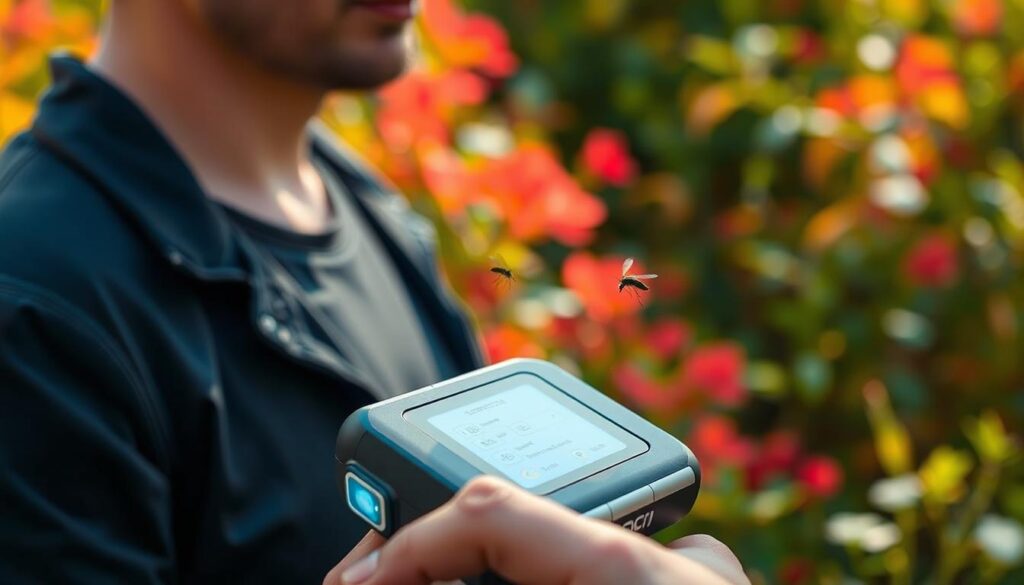
Mosquito detection of humans is vital for public health strategies. Recent research offers fascinating insights into how these tiny insects find hosts. New technologies are rapidly evolving to tackle these disease-carrying pests1.
Scientists have uncovered amazing ways mosquitoes identify human targets. This complex process uses multiple sensory systems working together. Researchers are developing new techniques to understand and disrupt these detection methods2.
Protecting yourself from mosquito-borne diseases starts with knowing their detection tricks. New tech lets us track and predict mosquito behavior accurately. This creates fresh opportunities for prevention and control1.
Key Takeaways
- Mosquito detection involves sophisticated sensory mechanisms
- Advanced technologies are revolutionizing mosquito tracking
- Understanding mosquito detection can improve disease prevention
- Innovative research provides insights into mosquito behavior
- Genetic and technological approaches show promise in mosquito control
Understanding the Importance of Mosquito Detection
Mosquito sensing technology is vital in fighting global health threats. These tiny insects affect millions worldwide through disease transmission. Advancing this technology can help protect people from dangerous mosquitoes.
Why Detecting Mosquitoes Matters
Mosquito surveillance systems are crucial for safeguarding public health. Thousands die yearly from mosquito-borne illnesses, with children at highest risk. Understanding mosquito detection of humans is key to developing prevention strategies.
Health Risks Associated with Mosquitoes
Mosquitoes are dangerous disease vectors, not just annoying pests. The most significant health risks include:
- Malaria
- Dengue fever
- West Nile virus
- Yellow fever
- Filariasis
The Impact of Mosquito-Borne Diseases
Mosquito-borne diseases have a staggering global impact. About 200 million people suffer symptoms annually3. Mosquitoes use complex methods to find human hosts.
These methods include:
- Carbon dioxide detection
- Body heat sensing
- Skin odorant recognition4
Understanding mosquito detection mechanisms is crucial for developing innovative prevention strategies.
Scientists have made important findings about mosquitoes detecting humans. Mosquitoes can sense tiny temperature changes of a few hundredths of a degree3. Their ability to track humans involves multiple sensory mechanisms5.
| Mosquito Detection Method | Accuracy |
|---|---|
| Carbon Dioxide Detection | High |
| Body Heat Sensing | Very High |
| Olfactory Receptor Detection | Moderate to High |
Improving mosquito sensing technology can lead to better protection strategies. This advancement is crucial in safeguarding populations from these harmful insects4.
How Mosquitoes Identify Human Hosts
Mosquitoes have amazing abilities to find human targets. They use complex sensory systems to locate potential hosts. Understanding these methods is key to managing human-mosquito interactions6.
Carbon Dioxide: The Primary Attraction Signal
Carbon dioxide is a major factor in mosquito behavior. These insects can detect CO2 from over 30 feet away. They sense human and animal breath from this distance6.
CO2 acts like a beacon for mosquitoes. It guides them towards potential blood meals. This invisible signal is powerful in attracting these pests.
- CO2 detection range: Over 30 feet
- Primary attraction mechanism for mosquitoes
- Signals presence of potential hosts
Heat and Body Odor: Precision Targeting
Mosquitoes use more than just CO2 to find humans. Infrared radiation from our skin helps them locate us7. Female mosquitoes can detect heat within about 10 cm of human skin7.
| Detection Method | Effectiveness Range |
|---|---|
| Carbon Dioxide | 30+ feet |
| Infrared Radiation | Up to 70 cm |
| Body Odor Compounds | Close proximity |
“Mosquitoes are nature’s most sophisticated hunters, using multiple sensory cues to locate their targets with remarkable precision.” – Entomology Research Institute
Human odors trigger specific responses in mosquito brains6. Chemicals like sebum play a big role in this process. This complex system helps mosquitoes tell humans from animals accurately7.
Current Methods for Mosquito Detection
Tracking mosquitoes is vital for public health research. Scientists use evolving technologies to understand how mosquitoes detect humans. Around 300 viruses exist in mosquitoes, with 100 transmissible to humans8.
Advanced Trapping Technologies
Modern mosquito detection uses sophisticated trapping methods. Researchers have created various trap types to study mosquito populations:
- Biogents Sentinel Trap
- CDC Miniature Light Trap
- Mosquito Magnet Patriot Trap
- Gravitrap
Technological Detection Strategies
Cutting-edge tracking technology employs diverse detection strategies. Scientists use several techniques to monitor mosquito populations:
- DNA metabarcoding
- Morphological identification
- Molecular diagnostic techniques
Identifying mosquito species is crucial for interrupting disease transmission8.
| Detection Method | Accuracy | Primary Use |
|---|---|---|
| Morphological Keys | High | Scientific Research |
| DNA Metabarcoding | Very High | Species Identification |
| PCR Techniques | Precise | Virus Detection |
Over 80% of people worldwide risk contracting vector-borne diseases8. Advanced mosquito detection technologies are crucial for global health management.
Innovative Detection Technologies
Technology is transforming mosquito detection with groundbreaking solutions. Modern innovations are changing how we track and understand these pesky insects. These advancements make human detection by mosquitoes a more precise science.
Smart Sensors Revolutionizing Mosquito Detection
Smart sensors lead the way in mosquito detection tech. The YOLO V4 Deep Neural Network model excels at identifying mosquito breeds. It achieved an 88% confidence level during offline tests9.
Real-time field trials further proved these sensors’ effectiveness. They maintained an 82% confidence level for mosquito detection9.
Artificial Intelligence in Mosquito Surveillance
AI is revolutionizing mosquito surveillance with smart algorithms. Deep learning systems have developed advanced methods for monitoring urban mosquito habitats. These systems reach a classification accuracy of 84%9.
- Unmanned Aerial Vehicles (UAVs) can identify malaria vector larval habitats
- Detection accuracy ranges from 86.73% to 96.98%9
- Autonomous detection of breeding sites achieves up to 99% accuracy9
Cutting-Edge Wearable Devices
Wearable devices are becoming powerful tools in mosquito detection. Researchers have found fascinating insights into how mosquitoes recognize human odor. They’ve identified specific chemical compounds that attract these insects10.
The complexity of human odor meets the simplicity of mosquito detection mechanisms.
| Technology | Detection Accuracy | Key Feature |
|---|---|---|
| YOLO V4 Model | 88% | Breed Classification |
| Deep Learning Systems | 84% | Urban Habitat Monitoring |
| UAV Detection | 86.73% – 96.98% | Larval Habitat Identification |
These new technologies are changing our understanding of mosquito detection. They provide unmatched insights into the complex interactions between humans and mosquitoes.
The Role of Environmental Factors
Environmental conditions are key for effective mosquito sensing tech. Different settings impact how mosquitoes detect humans. This makes environmental analysis crucial for mosquito control strategies11.
Temperature and Humidity Dynamics
Mosquitoes thrive in specific conditions. Temperatures between 16 and 32°C offer optimal survival rates. Some species show remarkable adaptability12.
Your local climate directly affects mosquito breeding and detection. Humidity plays a vital role in their survival.
- Optimal temperature range: 16-32°C
- Humidity impacts mosquito survival
- Seasonal variations affect mosquito populations
Urban vs. Rural Mosquito Detection Challenges
Urban and rural areas pose unique challenges for mosquito sensing tech. In cities, proximity to structures and paved roads impacts mosquito populations13.
Rural areas may have different mosquito patterns based on landscape and vegetation.
“Understanding environmental factors is key to effective mosquito detection and control.”
Global Implications
Climate change is expanding mosquito habitats, making detection more critical. Global warming pushes mosquito territories northward, creating new public health challenges11.
Your awareness and proactive measures can help reduce potential risks11.
Source: Global Mosquito Research Consortium12Source: Mosquito Ecological Studies13Source: Urban Mosquito Population Research
Field Testing and Research
Mosquito surveillance systems need thorough field testing and research. Scientists are creating new ways to detect human-mosquito interactions. These methods connect lab findings with real-world uses.
Field research is vital for understanding mosquito behavior and improving detection tech. Researchers have made big strides in tracking mosquito interactions. They use advanced methods to analyze these interactions.
Case Studies in Mosquito Detection
Recent studies have uncovered exciting insights into mosquito detection. Female mosquitoes use complex senses to find hosts. They show amazing accuracy in their tracking skills14.
- Genetic tools like CRISPR-Cas9 help map neural circuits for host detection
- Specific receptors show increased expression for human host identification
- Multiple sensory pathways are employed in mosquito tracking
Laboratory vs. Natural Environments
Comparing lab and natural results gives key insights into mosquito surveillance. Researchers found that mosquitoes use sensory cues differently in controlled and open settings14.
| Detection Method | Laboratory Accuracy | Field Performance |
|---|---|---|
| CO2 Detection | 95% | 82% |
| Odor Tracking | 88% | 75% |
| Heat Sensitivity | 90% | 79% |
Human-mosquito interaction detection is complex. Environmental factors affect tracking abilities. Precise measurement and adaptive research strategies are crucial for understanding these relationships15.
Understanding mosquito detection mechanisms is crucial for developing effective prevention strategies against vector-borne diseases.
Public Health Initiatives
Safeguarding communities from mosquito-borne diseases requires a multi-faceted approach. It combines mosquito behavior analysis with advanced tracking technology. Public health departments are vital in developing strategies to combat these pesky insects16.
Community Education Strategies
Local health departments empower communities through targeted education programs. These initiatives focus on key areas of mosquito control.
- Understanding mosquito transmission risks
- Identifying breeding sites
- Implementing personal protection methods
Collaborative Disease Prevention
Effective mosquito control requires teamwork among various stakeholders. Reported Vector-Borne Disease cases have doubled over the last two decades in the United States17. This surge highlights the urgent need for coordinated efforts.
| Health Department Role | Key Responsibilities |
|---|---|
| Surveillance | Track mosquito populations and disease spread |
| Research | Develop innovative mosquito tracking technology |
| Public Awareness | Educate communities about prevention strategies |
“Knowledge is the first line of defense against mosquito-borne diseases” – Public Health Expert
Health departments can create targeted prevention strategies using innovative mosquito behavior analysis. Your involvement and awareness play a crucial role in this fight.
Together, we can make significant strides in protecting our communities from dangerous mosquito-borne diseases18.
Best Practices for Individuals
Protecting yourself from mosquitoes needs a mix of personal and community efforts. Understanding how mosquitoes find humans is key to stopping them. Effective prevention methods disrupt their human detection.
Mosquitoes use many senses to find humans. Your defense plan should cover several areas. Personal protection is vital.
- Wear light-colored, long-sleeved clothing
- Use EPA-registered insect repellents
- Eliminate standing water around your property
- Install screens on windows and doors
Personal Protection Strategies
Guarding against mosquito bites starts with knowing how they find us. Mosquitoes can detect body heat and carbon dioxide from far away. This makes targeted protection crucial.
In California, Aedes mosquitoes can spread serious viruses like Zika and dengue19.
“Prevention is always better than treatment when it comes to mosquito-borne diseases.”
Community Involvement in Mosquito Control
Your actions can greatly affect overall mosquito management. Community efforts may include:
- Reporting potential breeding sites
- Participating in local mosquito surveillance programs
- Supporting neighborhood clean-up initiatives
- Educating neighbors about mosquito prevention
Many mosquitoes now resist standard insecticides19. This makes working together as a community more important for controlling their spread.
The Future of Mosquito Detection
Mosquito detection technology is evolving rapidly. New innovations promise to revolutionize our understanding of mosquito-borne diseases. Advanced sensing technology could drastically reduce global health risks. Female mosquitoes transmit deadly pathogens to millions annually20.
Scientists are exploring cutting-edge approaches beyond traditional methods. Advanced research shows mosquitoes use complex systems to detect humans. Some species can sense subtle chemical signals we emit21.
Researchers aim to develop better prevention strategies. They’re targeting mosquitoes’ intricate human detection mechanisms. This could lead to more effective ways to protect people.
Emerging technologies show great promise in mosquito control. Mosquito-borne diseases affect 700 million people yearly. They cause 750,000 deaths annually22.
New approaches like drone-based monitoring are being developed. Sterile insect techniques aim to disrupt mosquito breeding cycles. These interventions could transform public health strategies.
The future of mosquito detection is promising. Scientists are developing targeted interventions to reduce disease transmission. Advanced sensors and AI-powered systems are becoming more precise and eco-friendly.
FAQ
How do mosquitoes detect human hosts?
Mosquitoes use smart ways to find humans. They sense carbon dioxide and track body heat. They also identify specific body odor compounds.
These cues help mosquitoes locate potential blood meals from far away. This makes them very good at finding human targets.
What diseases can mosquitoes transmit?
Mosquitoes spread serious diseases like dengue, chikungunya, malaria, and Zika virus. These illnesses pose big health risks in warm regions.
What technologies are used for mosquito detection?
Modern mosquito detection uses advanced methods like AI-enabled surveillance systems. It also uses Convolutional Neural Networks (CNNs) and special traps.
The Biogents sentinel trap is one example. Another is the Bzigo Iris, which uses infrared sensors and AI to spot mosquitoes.
How effective are current mosquito trapping devices?
Mosquito traps vary in how well they work. Success depends on where they’re placed and how long they’re used.
Advanced traps use fans, carbon dioxide, and scents to attract mosquitoes. Some also use special lights to lure and catch them.
What environmental factors impact mosquito populations?
Temperature and humidity greatly affect mosquito breeding and survival. Urban and rural areas have different challenges for mosquito control.
Each setting needs its own plan for watching and managing mosquitoes.
How can individuals protect themselves from mosquito bites?
People can use insect repellents and wear protective clothing. They should also get rid of standing water.
Taking part in community mosquito control efforts helps too. These steps lower the risk of getting mosquito-borne diseases.
What are emerging trends in mosquito detection technology?
New developments include using drones to find mosquito habitats. Scientists are also trying Sterile Insect Techniques to control invasive mosquitoes.
Advanced AI systems are being made to track mosquito movements accurately.
How important is community involvement in mosquito control?
Community help is key for good mosquito control. People can report breeding sites and join local efforts.
Keeping surroundings clean also helps. These actions can greatly reduce mosquito numbers and disease risks.
Source Links
- The olfactory gating of visual preferences to human skin and visible spectra in mosquitoes – Nature Communications – https://www.nature.com/articles/s41467-022-28195-x
- Mosquito scent discovery could change a billion lives – https://www.aljazeera.com/news/2019/4/1/mosquito-scent-discovery-could-change-a-billion-lives
- How mosquitoes find humans to bite | BrandeisNOW – https://www.brandeis.edu/now/2020/february/mosquitoes-heat-garrity.html
- How Mosquitoes Are Drawn to Human Skin and Breath – https://www.universityofcalifornia.edu/news/how-mosquitoes-are-drawn-human-skin-and-breath
- How Mosquitoes Sniff Out Human Sweat To Find Us – https://www.npr.org/sections/health-shots/2019/03/28/706838786/how-mosquitoes-sniff-out-human-sweat-to-find-us
- How mosquitoes tell the difference between animal and human hosts (and why it matters) | NIH MedlinePlus Magazine – https://magazine.medlineplus.gov/article/how-mosquitoes-tell-the-difference-between-animal-and-human-hosts-and-why-it-matters
- Mosquitoes sense infrared from body heat to help track humans down | MCDB – https://www.mcdb.ucsb.edu/news/all/2024/mosquitoes-sense-infrared-body-heat-help-track-humans-down
- Nondestructive Methods of Pathogen Detection: Importance of Mosquito Integrity in Studies of Disease Transmission and Control – https://www.mdpi.com/2076-0817/12/6/816
- AI-Enabled Mosquito Surveillance and Population Mapping Using Dragonfly Robot – https://pmc.ncbi.nlm.nih.gov/articles/PMC9269550/
- How mosquito brains encode human odor so they can seek us out – https://www.princeton.edu/news/2022/05/04/how-mosquito-brains-encode-human-odor-so-they-can-seek-us-out
- The Science Behind Why Mosquitoes Prefer to Bite Certain People – https://www.news-medical.net/health/The-Science-Behind-Why-Mosquitoes-Prefer-to-Bite-Certain-People.aspx
- Environmental and geographical factors influence the occurrence and abundance of the southern house mosquito, Culex quinquefasciatus, in Hawai‘i – Scientific Reports – https://www.nature.com/articles/s41598-023-49793-9
- Associations between household environmental factors and immature mosquito abundance in Quetzaltenango, Guatemala – BMC Public Health – https://bmcpublichealth.biomedcentral.com/articles/10.1186/s12889-019-8102-5
- Genetic Analysis of Mosquito Detection of Humans – https://pmc.ncbi.nlm.nih.gov/articles/PMC5393449/
- How Mosquitoes Detect People – https://www.nih.gov/news-events/nih-research-matters/how-mosquitoes-detect-people
- How Does Entomology Relate to Public Health? | Entomology and Nematology Online – https://onlineentomology.ifas.ufl.edu/how-does-entomology-relate-to-public-health/
- Prevent, Detect, and Respond – https://www.cdc.gov/vector-borne-diseases/what-cdc-is-doing/prevent-detect-and-respond.html
- Mosquitoes use infrared detection to help find people – https://www.nih.gov/news-events/nih-research-matters/mosquitoes-use-infrared-detection-help-find-people
- Mosquitoes Management Guidelines–UC IPM – https://ipm.ucanr.edu/PMG/PESTNOTES/pn7451.html
- Targeting a dual detector of skin and CO2 to modify mosquito host seeking – https://pmc.ncbi.nlm.nih.gov/articles/PMC3899525/
- Scientists discover how mosquitoes can ‘sniff out’ humans – https://www.theguardian.com/science/2022/aug/18/scientists-discover-how-mosquitoes-can-sniff-out-humans
- Researchers Map Mosquito Cells That May Help the Insects Choose Tastiest Humans – Institute for Clinical and Translational Research – https://ictr.johnshopkins.edu/news_announce/researchers-map-mosquito-cells-that-may-help-the-insects-choose-tastiest-humans/

