
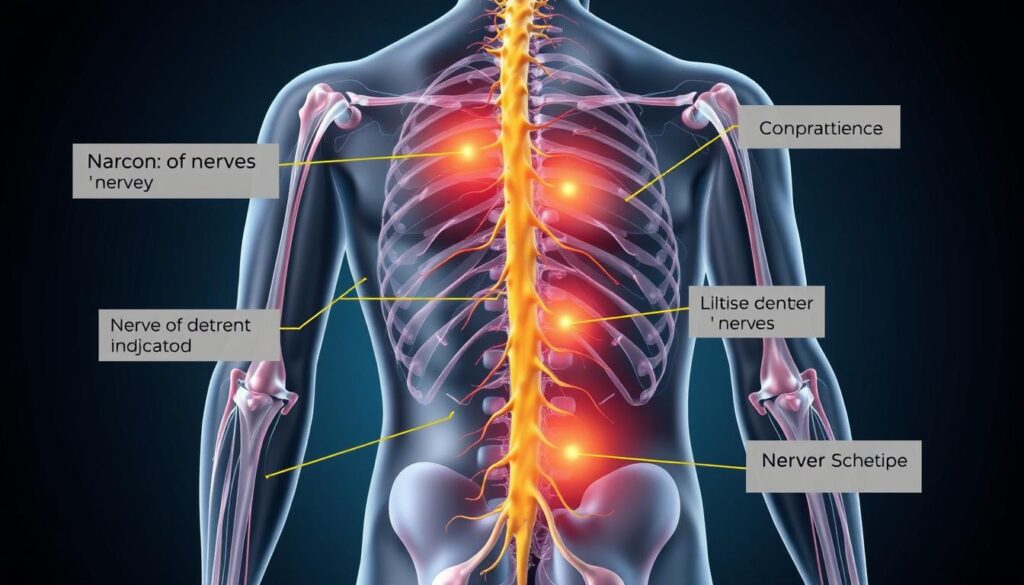
A pinched nerve can disrupt your daily life and cause significant discomfort. It happens when surrounding tissues put too much pressure on a nerve. This can lead to pain and sensory issues1.
Nerve compression often occurs in the back and neck1. Certain lifestyle and health factors can increase your risk. Women are more likely to develop carpal tunnel syndrome, a type of nerve compression2.
Several factors can contribute to nerve compression. These include medical conditions like diabetes and obesity2. Repetitive movements at work or during hobbies can also trigger neuropathy2.
Key Takeaways
- Nerve compression affects multiple body areas
- Women have higher risks for certain nerve conditions
- Lifestyle and health factors influence nerve health
- Early recognition of symptoms is critical
- Professional medical evaluation can prevent complications
Understanding Pinched Nerve and Its Common Symptoms
A pinched nerve can disrupt your daily life, causing pain and limiting movement. It happens when tissues press too hard on a nerve. This pressure interferes with the nerve’s normal function3.
Key Signs of Nerve Compression
Spotting pinched nerve symptoms early is vital for quick treatment. Look out for these common signs:
- Sharp or burning pain that radiates outward4
- Numbness or decreased sensation in the affected area3
- Tingling or pins and needles sensations4
- Muscle weakness5
- Feeling of a foot or hand “falling asleep”
“Understanding your body’s signals can help you address nerve compression early and prevent further complications.”
Most Affected Body Areas
Nerve compression can impact various parts of your body. The most common areas include:
- Lower back – causing sciatica and potential disc herniation3
- Neck – leading to cervical radiculopathy5
- Wrist – potentially resulting in carpal tunnel syndrome4
Spinal conditions like stenosis can lead to nerve compression. It’s important to know the causes and get proper treatment3.
Common Causes and Risk Factors of Nerve Compression
Nerve compression can affect anyone, causing painful neck and back issues. It disrupts daily life and can lead to nerve damage. Knowing the causes helps you protect yourself better6.
Some health conditions and lifestyle factors increase your risk. Diabetes can trigger nerve damage, creating potential compression points7. Obesity puts extra pressure on nerves7.
Rheumatoid arthritis often causes joint inflammation that compresses nerves7.
“Prevention is always better than cure when dealing with nerve compression.” – Spine Health Specialist
Specific activities and conditions raise your nerve compression risk:
Numbness can be an early warning sign of nerve stress. Knowing these risk factors helps you protect your neurological health.
X-rays, ultrasound, CT scans, and MRI can identify potential nerve compression sources7. Early detection and care are vital to prevent long-term nerve damage.
Conclusion
Grasping nerve compression is key to managing your health effectively. Recognizing symptoms, exploring treatments, and taking steps toward recovery are crucial. Most pinched nerve cases can be addressed through medical care and personal strategies.
Diagnosing a pinched nerve involves thorough medical assessments. Your doctor may suggest X-rays, MRIs, or nerve conduction studies. These tests help pinpoint the exact location and severity of nerve compression89.
Treatment options range from conservative approaches to surgery. Rest, physical therapy, and medications often help manage symptoms108. In severe cases, decompression procedures might be needed to relieve nerve pressure89.
Prevention plays a vital role in managing pinched nerves. Good posture, regular exercise, and mindful body mechanics reduce risk. Stay informed and proactive to minimize the impact of nerve compression on your health8.
FAQ
What exactly is a pinched nerve?
A pinched nerve happens when tissues press too hard on a nerve. This can cause pain, tingling, numbness, or weakness in your body. It may occur in your spine, neck, or wrist.
What are the most common symptoms of a pinched nerve?
Common signs include numbness and sharp or burning pain that spreads out. You might feel tingling, muscle weakness, or like a limb is “falling asleep”. These problems often get worse during sleep.
Symptoms typically affect areas like the lower back, neck, and wrist.
What causes a pinched nerve?
Pinched nerves can stem from injury, arthritis, repetitive activities, or obesity. Chronic conditions like diabetes can also lead to nerve compression. Risk factors include being female, having bone spurs, and thyroid disease.
Pregnancy and long periods of inactivity may also increase your risk.
How is a pinched nerve diagnosed?
Diagnosis starts with a physical exam. Your doctor may order tests like blood work, X-rays, or nerve studies. MRI or high-resolution ultrasound might also be used.
The specific tests depend on your symptoms.
What treatment options are available for a pinched nerve?
Treatment ranges from rest to surgery. Conservative options include splints, physical therapy, and medications like NSAIDs. Anti-seizure drugs or corticosteroids may also help.
Surgery might be needed for severe cases that don’t improve with other treatments.
Can a pinched nerve be prevented?
Yes, you can lower your risk of pinched nerves. Maintain good posture and do strength and flexibility exercises. Limit repetitive activities and keep a healthy weight.
Take regular breaks during repetitive tasks. Make ergonomic adjustments at work and during sports.
How long does it take to recover from a pinched nerve?
Recovery time varies based on the severity and location of nerve compression. Mild cases may heal in days or weeks with proper care. More severe cases could take months to improve.
Without treatment, chronic compression might cause permanent nerve damage.
Source Links
- Pinched nerve – https://www.uchealth.org/diseases-conditions/pinched-nerve/
- Pinched nerve – Symptoms and causes – https://www.mayoclinic.org/diseases-conditions/pinched-nerve/symptoms-causes/syc-20354746
- Pinched Nerve (Cervical Radiculopathy) | Ohio State Medical Center – https://wexnermedical.osu.edu/brain-spine-neuro/spine-diseases-conditions/pinched-nerve
- Dignity Health | Pinched Nerve Symptoms, Diagnosis, and Treatment | Dignity Health – https://www.dignityhealth.org/articles/pinched-nerve-symptoms-diagnosis-and-treatment
- Cervical Radiculopathy (Pinched Nerve) – OrthoInfo – AAOS – https://orthoinfo.aaos.org/en/diseases–conditions/cervical-radiculopathy-pinched-nerve/
- Pinched Nerve (Compression) Symptoms and Treatment | UPMC – https://www.upmc.com/services/orthopaedics/conditions/nerve-compression
- Pinched Nerve (Compressed Nerve): Symptoms and Treatment – https://www.webmd.com/pain-management/compressed-nerves
- A Comprehensive Guide to Pinched Nerve Treatment – https://regenorthosport.in/a-comprehensive-guide-to-pinched-nerve-treatment/
- Treatment of Pinched Nerve in the Lower Back — Sobel Spine and Sports – https://www.sobelspineandsports.com/blog/treatment-of-pinched-nerve-in-the-lower-back
- Do You Have a Pinched Nerve? – https://www.aarp.org/health/conditions-treatments/info-2024/what-is-a-pinched-nerve.html

