
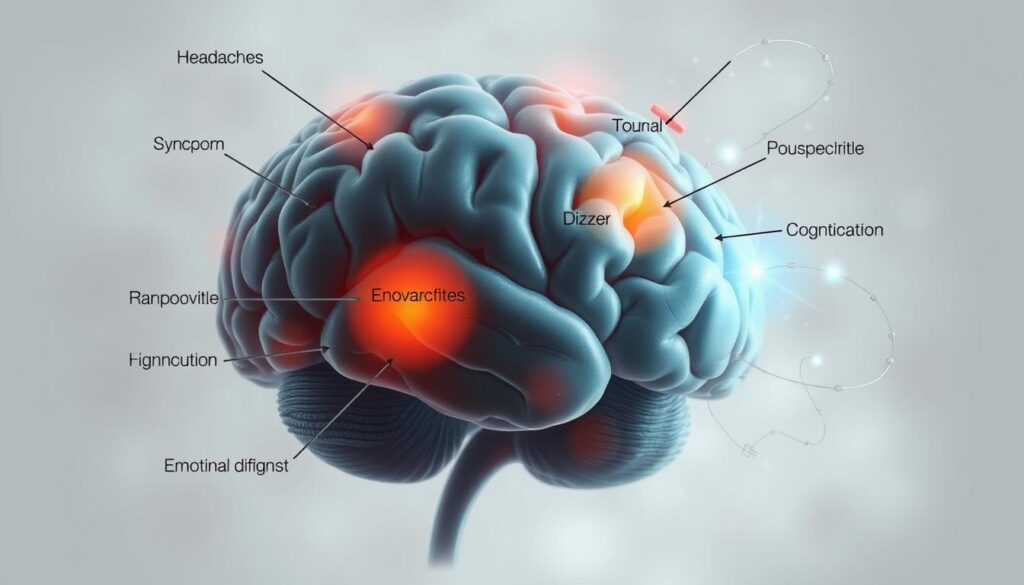
Brain injuries can lead to post-concussive symptoms, affecting your daily life in various ways. These symptoms can impact your physical and mental well-being1. They typically appear within 7 to 10 days after an injury.
Post-concussive symptoms differ from person to person. You might face headaches, dizziness, or trouble concentrating and remembering things1. For some, these issues can last longer than three months.
Certain factors increase the risk of long-lasting symptoms. Women and people aged 20 to 30 are more likely to be diagnosed1. A history of anxiety, headaches, or brain injuries also raises the risk.
Older adults may experience more severe and prolonged symptoms1. Understanding these factors can help you better manage your recovery journey.
Key Takeaways
- Post-concussive symptoms can emerge within 7-10 days after a brain injury
- Symptoms can last from weeks to months, sometimes up to a year
- Women and young adults are more likely to be diagnosed
- Symptoms include headaches, dizziness, and cognitive challenges
- Previous brain injuries increase risk of persistent symptoms
Understanding Post-Concussive Symptoms and Their Impact
A concussion can lead to a variety of symptoms that disrupt daily life. These post-concussive symptoms affect both physical and mental well-being2.
Post-concussion syndrome includes several challenging experiences after a brain injury. Up to 30% of concussion patients develop lasting symptoms. These symptoms can greatly impact their quality of life3.
Common Physical Symptoms
Physical signs of post-concussive syndrome can include:
- Persistent headaches
- Dizziness and vertigo
- Fatigue and drowsiness
- Blurred vision
- Nausea
- Sensitivity to light and noise
These symptoms can make everyday activities much more difficult2.
Cognitive and Emotional Changes
Cognitive issues and memory loss are key parts of post-concussive syndrome. You might have trouble with:
- Difficulty concentrating
- Short-term and long-term memory problems
- Brain fog
- Challenges in learning new information
Emotional changes can be just as tough to handle. These may include:
- Anxiety
- Depression
- Irritability
- Mood swings
Understanding these symptoms is crucial for effective recovery and management.
Some people are more likely to have lasting post-concussive symptoms. Risk factors include being female and having anxiety. Previous brain injuries also increase the risk3.
Treatment Options and Recovery Strategies
Concussion recovery needs a personalized approach to manage symptoms. Your journey depends on your specific symptoms and health profile4. Most people improve within 14-30 days, but some may face longer challenges4.
- Gradual return to physical activities
- Cognitive rehabilitation
- Pain management techniques
- Mental health support
Doctors may suggest specific tests and treatments. Light exercise, like stationary biking or gentle walking, can speed up recovery5. Your doctor might recommend modified work or school schedules to help you heal5.
| Recovery Approach | Key Benefits |
|---|---|
| Physical Therapy | Improves balance and reduces dizziness |
| Cognitive Rehabilitation | Enhances memory and concentration |
| Pain Management | Reduces headache and discomfort |
Pain management often uses acetaminophen, avoiding ibuprofen due to bleeding risks5. About 10-30% of people may have a longer recovery time4.
Patience and professional guidance are key to successful healing. Work with your healthcare team to find the best strategy for you.
Your path to recovery is unique. Work closely with healthcare professionals to develop the most effective symptom management strategy.
Conclusion
Managing post-concussive symptoms requires a thorough approach to concussion awareness. Your recovery journey is unique. Understanding potential risks can help you heal more effectively6. Teens and athletes should be extra careful due to their ongoing brain development6.
Prevention is key to reducing concussion risks. Use safety gear during sports and seatbelts while driving. Make your home safer to avoid falls7. Regular check-ups help spot issues early. Watch for symptoms like dizziness, memory problems, and fatigue7.
Get medical help quickly after a head injury, even without losing consciousness7. Ongoing research improves our grasp of post-concussion syndrome. This offers hope for better treatment strategies. With care and patience, most people can recover and resume normal activities6.
FAQ
What exactly are post-concussive symptoms?
Post-concussive symptoms (PCS) are physical, cognitive, and emotional issues following a brain injury. They can last weeks to months, affecting daily life. Symptoms include headaches, dizziness, fatigue, memory problems, and emotional changes.
How long do post-concussive symptoms typically last?
PCS duration varies for each person. Most experience symptoms for weeks to months. In some cases, they can last up to a year or longer.
Recovery time depends on injury severity, age, health, and treatment speed. Proper care can help manage symptoms effectively.
What are the most common physical symptoms of post-concussive syndrome?
Common physical symptoms include headaches, dizziness, and fatigue. Light and noise sensitivity, nausea, blurred vision, and tinnitus also occur.
These symptoms can make daily activities challenging. Specific management strategies may be needed to cope.
Can post-concussive symptoms affect my mental health?
Yes, post-concussive symptoms can impact mental health. You may experience depression, anxiety, irritability, and sudden mood swings.
These psychological symptoms are normal during recovery. Mental health support, therapy, and medication can help address them.
What treatment options are available for post-concussive symptoms?
Treatment focuses on managing symptoms and improving overall function. Options include pain management for headaches and physical therapy for balance issues.
Cognitive rehabilitation helps with memory and concentration. Mental health support is also crucial. Pacing strategies and gentle exercise aid recovery.
Who is most at risk for developing post-concussive symptoms?
People aged 20-30, older adults, and females are more susceptible to post-concussive symptoms. Those with anxiety, prior headaches, or previous brain injuries are also at risk.
However, anyone who sustains a head injury can potentially develop these symptoms.
How can I prevent post-concussive symptoms?
Take safety precautions like wearing seatbelts and using proper sports equipment. Make your home safer to prevent falls.
Regular eye exams and addressing vision problems help. Seek immediate medical attention after a head injury to reduce risks.
When should I see a healthcare provider about my symptoms?
Seek medical attention right after a head injury, even without losing consciousness. Consult a professional if symptoms persist and interfere with daily life.
A healthcare provider can offer a thorough evaluation and create a personalized treatment plan for you.
Source Links
- Persistent post-concussive symptoms (Post-concussion syndrome) – Symptoms and causes – https://www.mayoclinic.org/diseases-conditions/post-concussion-syndrome/symptoms-causes/syc-20353352
- Concussion – Symptoms and causes – https://www.mayoclinic.org/diseases-conditions/concussion/symptoms-causes/syc-20355594
- Post Concussion Syndrome: Symptoms, Diagnosis, & Treatment | Cognitive FX – https://www.cognitivefxusa.com/blog/post-concussion-syndrome-and-post-concussion-symptoms-pcs
- Concussion Treatment and Recovery | University of Michigan Health – https://www.uofmhealth.org/conditions-treatments/brain-neurological-conditions/concussion-treatment-and-recovery
- Concussion – Diagnosis and treatment – https://www.mayoclinic.org/diseases-conditions/concussion/diagnosis-treatment/drc-20355600
- How Long Does a Concussion Last? – https://my.clevelandclinic.org/health/diseases/15038-concussion
- Mild head injury and concussion – https://www.headway.org.uk/about-brain-injury/individuals/types-of-brain-injury/mild-head-injury-and-concussion/

