
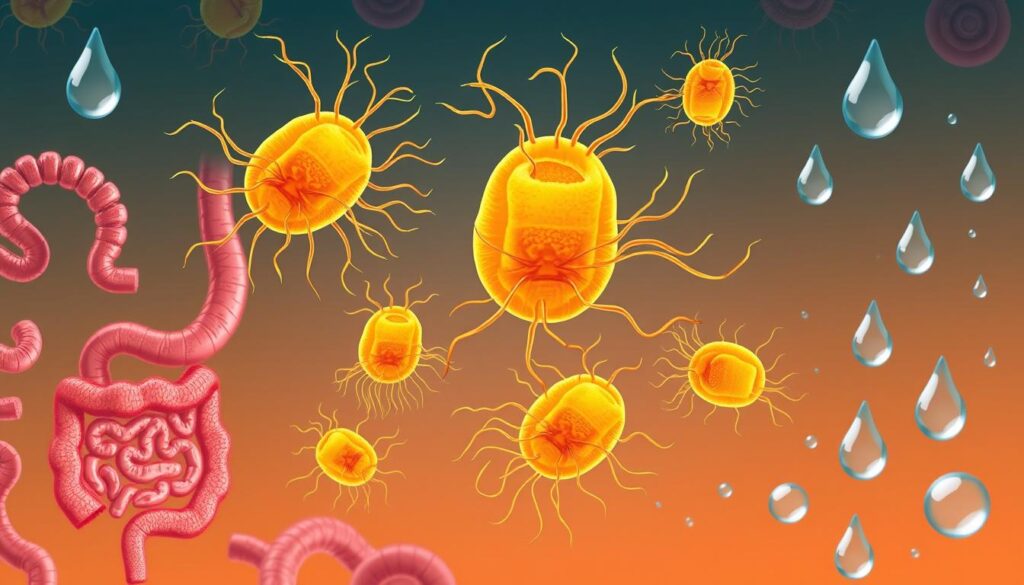
Giardia infection is a common waterborne illness that affects thousands annually. This microscopic intestinal parasite causes uncomfortable digestive symptoms1. Knowing about this parasitic diarrhea can help protect you and your family.
Your risk of Giardia increases with exposure to contaminated water sources. The parasites hide in streams, lakes, public water supplies, and swimming pools2. Swallowing just a few germs can trigger an infection1.
Giardiasis symptoms include watery diarrhea, stomach cramps, bloating, and unexpected weight loss. These signs usually appear one to three weeks after exposure2. They can last for several weeks.
Children are more likely to get this intestinal parasite1. Good hygiene practices can help prevent its spread.
Key Takeaways
- Giardia is a common waterborne parasitic infection
- Symptoms can last 2-6 weeks
- Contaminated water is the primary transmission route
- Children are more susceptible to infection
- Good hygiene practices help prevent transmission
Understanding Giardia Infection and Its Impact
Giardia lamblia is a tiny parasite that causes major gut problems. It’s especially tough on travelers and people with weak immune systems. This microscopic troublemaker creates serious health issues for many.
Giardia spreads through various ways, making it a big public health worry. Surprisingly, about half of infected people don’t know they have it3. The infection is tricky because it can survive in harsh conditions.
What Causes Giardiasis
The Giardia parasite is a unique bug that lives off its host. It only takes a few germs to start an infection4. This tough little parasite can live outside the body for weeks or months.
Risk Factors and Common Sources
- Contaminated water sources
- Poor sanitation conditions
- International travel
- Close contact with infected individuals
- Weakened immune systems
Kids are more likely to get Traveler’s Diarrhea from Giardia4. The infection spreads through water, food, and person-to-person contact.
How Giardia Spreads
| Transmission Method | Risk Level |
|---|---|
| Contaminated Water | High |
| Contaminated Food | Medium |
| Person-to-Person Contact | High |
| Animal Contact | Low |
Symptoms usually last two to six weeks, but can go longer3. Knowing how Giardia spreads helps you protect yourself and others.
Prevention is always better than cure when dealing with Giardia infections.
Recognizing Signs and Prevention Methods of Giardia Infection
Giardia is a tough waterborne illness that can suddenly harm your health. Knowing the signs and prevention methods is vital. It helps protect you and your loved ones from this stubborn infection.
Giardia symptoms can be very uncomfortable. You might have ongoing diarrhea, stomach cramps, and greasy, floating stools. Nausea and fatigue are also common signs.
- Persistent diarrhea
- Stomach cramps
- Greasy, floating stools
- Nausea and fatigue
Catching these symptoms early is crucial. Over 300 million Giardia infections happen worldwide each year. Kids under five are at higher risk5.
Symptoms usually show up one to two weeks after exposure. They can last for two to four weeks5.
Prevention is your best shield against this waterborne illness. Here are key strategies to keep you safe:
- Wash hands thoroughly, especially after bathroom use
- Use bottled water when traveling
- Avoid swallowing water while swimming
- Boil or filter water in wilderness areas
Antiprotozoal drugs are the main treatment for Giardia. Doctors often prescribe metronidazole, tinidazole, or nitazoxanide6. How long you need treatment depends on how bad the infection is5.
“Prevention and early detection are your strongest weapons against Giardia infections.”
| Prevention Method | Effectiveness |
|---|---|
| Hand Washing | High |
| Boiling Water | Very High |
| Avoiding Contaminated Sources | Essential |
Stay alert and put your health first when dealing with these potential intestinal parasites.
Conclusion
Giardia infection is a serious waterborne illness that can severely impact your health. Its long-term effects can be significant, as research shows complex health implications. Children are most at risk for this intestinal parasite7.
Your knowledge and prevention efforts are key in managing this parasitic diarrhea. In the U.S., giardiasis rates have stayed steady at 7.3 to 7.6 cases per 100,000 people7. The infection peaks in children aged 1-9 and adults aged 35-497.
Understanding Giardia infection is crucial for effective management. Ongoing symptoms can lead to irritable bowel syndrome in up to 80.5% of patients8. Spotting early signs and getting medical help can reduce risks and prevent long-term health issues.
FAQ
What is Giardia infection?
Giardia infection, or giardiasis, is a common intestinal parasitic disease. It’s caused by the Giardia lamblia parasite. This waterborne illness often leads to stomach problems like diarrhea and cramps.
How do you get infected with Giardia?
Giardia spreads through ingesting its cysts from contaminated sources. These include unsafe water, food, or contact with infected people. Lakes, rivers, and pools can also harbor the parasite.
What are the main symptoms of Giardia infection?
Key signs include watery diarrhea, gas, and greasy stools that float. Stomach cramps, nausea, bloating, and tiredness are also common. Symptoms usually appear 1-3 weeks after exposure.
They can last 2-6 weeks or longer in some cases.
How can I prevent Giardia infection?
Practice good hygiene and wash hands often to prevent Giardia. Use bottled water when traveling and avoid swallowing water while swimming. Boil or filter water in wilderness areas.
Take extra care with food and water in places with poor sanitation.
Who is at highest risk for Giardia?
Travelers to areas with poor sanitation face high risk. Children in daycare and people with weak immune systems are also vulnerable. Hikers, campers, and those in close contact with infected individuals are at risk too.
How is Giardia infection diagnosed and treated?
Doctors diagnose Giardia through stool sample tests. Treatment involves antiprotozoal medications prescribed by healthcare providers. Most people fully recover with proper medical care.
Can Giardia infection cause long-term complications?
Giardia can lead to serious issues, especially in children. These include dehydration, poor growth, and temporary lactose intolerance. Quick diagnosis and treatment help prevent potential long-term health problems.
Is Giardia infection contagious?
Yes, Giardia spreads easily through contaminated water, food, or direct contact. Even a few parasitic cysts can cause infection. Proper hygiene and prevention are crucial to stop its spread.
Source Links
- About Giardia infections – https://www.cdc.gov/giardia/about/index.html
- Giardiasis: When it’s not safe to drink the water-Giardia infection (giardiasis) – Symptoms & causes – Mayo Clinic – https://www.mayoclinic.org/diseases-conditions/giardia-infection/symptoms-causes/syc-20372786
- Giardiasis: How To Avoid and Treat a Giardia infection – https://my.clevelandclinic.org/health/diseases/15238-giardiasis
- Giardia Infection: Causes and How It Spreads – https://www.cdc.gov/giardia/causes/index.html
- Patient education: Giardia (Beyond the Basics) – https://www.uptodate.com/contents/giardia-beyond-the-basics/print
- Giardiasis: Causes, Symptoms, and Treatment – https://www.healthline.com/health/giardiasis
- Giardiasis Surveillance — United States, 2009–2010 – https://www.cdc.gov/mmwr/preview/mmwrhtml/ss6105a2.htm
- Development of functional gastrointestinal disorders after Giardia lambliainfection – BMC Gastroenterology – https://bmcgastroenterol.biomedcentral.com/articles/10.1186/1471-230X-9-27

