
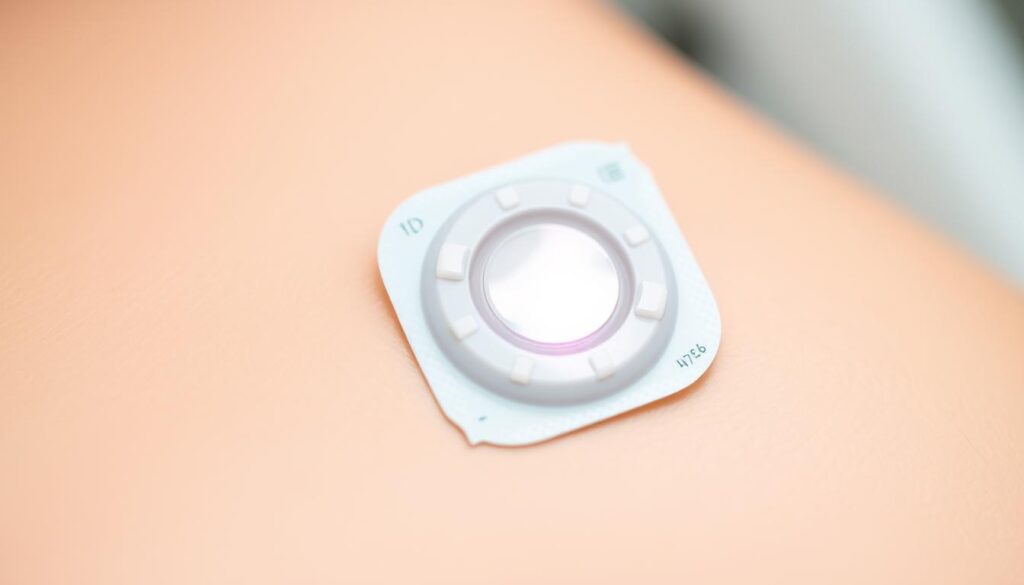
Looking for easy hormonal birth control? The contraceptive patch offers a weekly option to prevent pregnancy. It’s a simple way to manage your reproductive health1.
This thin, flexible patch delivers hormones through your skin. You apply it once a week for three weeks. Then, you have a patch-free week for menstruation1.
Each monthly pack usually has three weekly patches1. When used perfectly, the patch is highly effective. Less than 1 in 100 women get pregnant in the first year2.
With typical use, about 7 to 9 in 100 women might have an unplanned pregnancy2. Starting the patch in your cycle’s first five days gives instant protection1.
Key Takeaways
- Weekly application of the contraceptive patch
- Hormonal birth control with convenient usage
- High effectiveness when used correctly
- Simple three-week on, one-week off cycle
- Immediate pregnancy protection when started correctly
What is the Birth Control Patch?
The weekly birth control patch is a handy contraceptive system. It’s a small, adhesive patch that prevents pregnancy. This method offers an easy-to-use alternative to traditional birth control3.
Brands like Ortho Evra and Xulane offer this innovative contraceptive solution. The patch releases hormones through your skin. It contains estrogen and progestin, which work together to prevent pregnancy4.
Understanding How It Works
The birth control patch stops ovulation and creates barriers to fertilization. When applied, it releases hormones that:
- Prevent eggs from being released from your ovaries
- Thicken cervical mucus to block sperm
- Potentially alter the uterine lining
Key Ingredients in the Patch
Xulane and Ortho Evra patches contain synthetic hormones. These hormonal components work seamlessly to provide contraceptive protection. They mimic your body’s natural reproductive cycle.
Effectiveness Compared to Other Methods
The weekly birth control patch is highly effective. With typical use, it prevents pregnancy 91-93% of the time35. Perfect use can increase effectiveness to 99.7%5.
Some important things to consider:
- Effectiveness may decrease for individuals weighing over 198 lbs4
- You need a prescription from a healthcare provider3
Remember, the patch doesn’t protect against sexually transmitted infections. Consider using condoms for added protection4.
How to Use the Birth Control Patch
The skin patch birth control offers a convenient alternative to daily pills. It provides effective pregnancy prevention through weekly application. With proper guidance, you’ll become confident in using this contraceptive method.
Using your estrogen patch correctly is crucial for maximum effectiveness. The patch is more than 99% effective when used perfectly6. Let’s explore the essential steps to ensure your protection.
Applying the Patch for the First Time
When starting your birth control patch, follow these key steps:
- Apply the patch on the first day of your menstrual period or the first Sunday after your period begins
- Choose a clean, dry skin area like your buttock, upper arm, or lower abdomen
- Avoid placing the patch on breast tissue or areas with frequent clothing friction
Tips for Successful Patch Use
Maximize your patch’s effectiveness with these strategies:
- Change the patch weekly on the same day7
- Ensure the patch stays firmly attached during activities like swimming or bathing
- Use additional protection like condoms to prevent sexually transmitted infections8
Pro tip: Set a weekly reminder to change your patch consistently!
What to Do if You Forget to Change It
Missed patch changes can reduce contraceptive protection. If your patch falls off, take action quickly.
For less than 24 hours, reapply the original patch or use a new one. If it’s been more than 24 hours, apply a new patch.
Use backup contraception for a week if the patch has been off for over 24 hours7.
About 9 out of 100 couples might experience an unintended pregnancy during the first year of patch use8. Always consult your healthcare provider for personalized guidance.
Benefits and Considerations of the Birth Control Patch
The hormonal birth control patch offers unique advantages for effective contraception. Its simple design protects you with minimal daily effort. When used correctly, the patch provides nearly perfect protection with a 99% effectiveness rate910.
This method eliminates daily pill-taking while maintaining steady hormone delivery. However, it’s important to understand potential side effects. These may include headaches, breast tenderness, and skin irritation at the patch site9.
Some women might face temporary challenges like delayed fertility return after stopping use10. Serious risks, though rare, include blood clots and increased cardiovascular complications for certain groups9.
Your health history affects the patch’s suitability for you. Conditions like severe obesity, smoking, or long-term diabetes might make it less appropriate10. Women with a history of stroke, heart attack, or high blood pressure should consult their doctor first9.
Remember, the patch doesn’t protect against sexually transmitted infections. Additional protection is still recommended for complete sexual health safety.
FAQ
How does the birth control patch work?
The patch releases hormones through your skin into your bloodstream. These hormones stop ovulation and thicken cervical mucus. They may also change the uterine lining, making pregnancy less likely.
Where can I apply the birth control patch?
Apply the patch to clean, dry skin on your buttock or upper arm. You can also use your lower abdomen or upper body. Avoid breasts and areas where clothes might rub.
How often do I need to change the birth control patch?
Change the patch weekly for three weeks in a row. Then, have one patch-free week. Always change it on the same day to keep hormone levels steady.
What should I do if my patch falls off?
If off less than 24 hours, reapply it or use a new one. For more than 24 hours, apply a new patch. Use backup birth control for a week to stay protected.
Is the birth control patch effective?
When used correctly, the patch is 91% effective. This is similar to birth control pills. About 9 out of 100 couples might have an unplanned pregnancy in the first year.
Are there any side effects?
Possible side effects include skin irritation and breast tenderness. You might also experience headaches, nausea, and mood changes. There’s a slightly higher risk of blood clots compared to pills.
Who should not use the birth control patch?
Women with blood clot history or severe high blood pressure should avoid the patch. Those with certain cancers or weighing over 198 pounds shouldn’t use it. Always talk to your doctor first.
Does the birth control patch protect against STIs?
No, the patch doesn’t protect against sexually transmitted infections (STIs). Use condoms along with the patch to prevent STIs.
How quickly can I get pregnant after stopping the patch?
The patch allows for a quick return to fertility. Your body can usually start ovulating soon after you stop using it. This means you could get pregnant quickly.
What brands of birth control patch are available?
Birth control patches are sold under brands like Xulane and Twirla. You’ll need a doctor’s prescription to get them.
Source Links
- How to Use the Birth Control Patch | Follow Easy Instruction – https://www.plannedparenthood.org/learn/birth-control/birth-control-patch/how-do-i-use-birth-control-patch
- Birth control patch – Mayo Clinic – https://www.mayoclinic.org/tests-procedures/birth-control-patch/about/pac-20384553
- Birth Control Patch | Ortho Evra | Transdermal Patch – https://www.plannedparenthood.org/learn/birth-control/birth-control-patch
- Birth Control: Contraceptive Patch – https://www.nationwidechildrens.org/family-resources-education/health-wellness-and-safety-resources/helping-hands/birth-control-contraceptive-patch
- Birth control patch – https://myhealth.alberta.ca/sexual-reproductive-health/birth-control/hormonal-birth-control/birth-control-patch
- How to use the contraceptive patch – https://www.nhs.uk/contraception/methods-of-contraception/contraceptive-patch/how-to-use-it/
- Birth Control Patch: How It Works, Side Effects & Benefits – https://my.clevelandclinic.org/health/articles/24490-birth-control-patch
- Birth Control Patch (for Teens) – https://kidshealth.org/en/teens/contraception-patch.html
- Birth Control Patch – https://www.webmd.com/sex/birth-control/birth-control-transdermal-patches
- Advantages and Disadvantages of the Contraceptive Patch – https://www.news-medical.net/health/Advantages-and-Disadvantages-of-the-Contraceptive-Patch.aspx

