
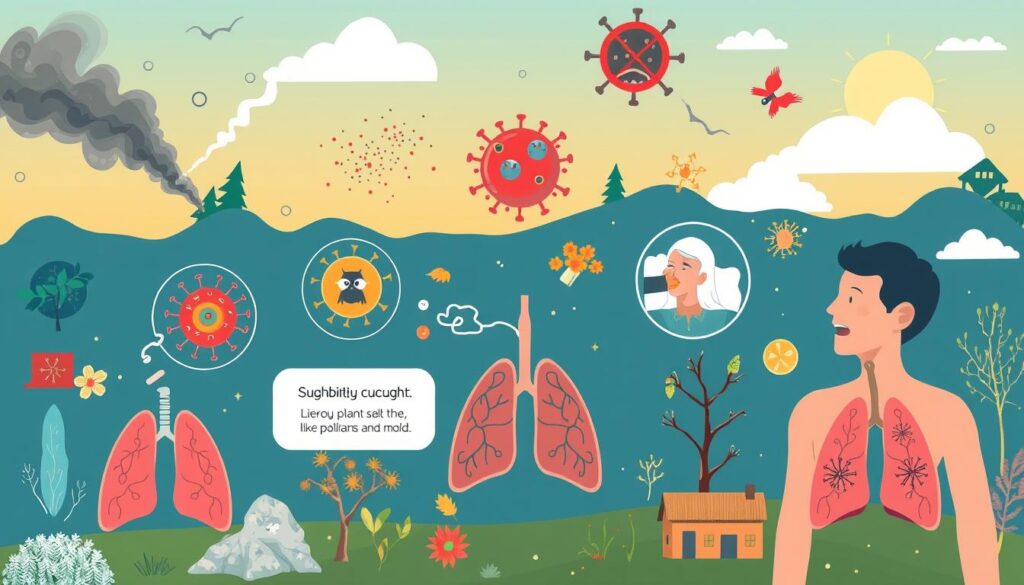
Coughs are vital for your health. They can be simple reactions or signs of bigger issues. Respiratory infections and allergies often spark coughing, your body’s natural defense1.
Acute coughs typically last under three weeks. They usually clear up without much medical help1. Chronic coughs, however, can stick around longer.
In adults, chronic coughs last over eight weeks. For kids, it’s four weeks2. Some respiratory infections can cause long-lasting coughs2.
Your cough might come from asthma, allergies, or environmental irritants. For kids, asthma is the top lung-related cause of chronic cough2. Knowing the root cause helps find the best treatment.
Key Takeaways
- Coughs can be acute or chronic, with different underlying causes
- Respiratory infections are primary triggers for coughing
- Chronic coughs lasting over eight weeks require medical attention
- Asthma and allergies frequently contribute to persistent coughing
- Environmental factors can significantly impact cough development
Understanding Different Types of Coughs
Coughs come in various forms, each telling a unique story about your health. Knowing the difference between acute and chronic coughs can help you understand your body better. Acute coughs resolve within three weeks, while chronic ones persist longer.
- Dry Cough: A non-productive cough that doesn’t bring up mucus. It can linger for weeks after a cold or flu3.
- Productive Cough: This type brings up mucus. It can be caused by infections like flu, bronchitis, or pneumonia4.
- Chronic Cough: Lasting more than eight weeks, this might indicate underlying conditions. These could include asthma or lung issues4.
Some unique cough types include:
| Cough Type | Characteristics |
|---|---|
| Croup Cough | A barking cough typically affecting children under 5, lasting 5-6 days43 |
| Paroxysmal Cough | Intense, painful coughing fits often seen in whooping cough43 |
Not all coughs are created equal. Understanding your cough can be the first step to finding the right treatment.
A cough lasting more than a couple of weeks might require medical attention. For infants or severe symptoms, seek immediate healthcare4.
Common Cough Causes and Triggers
Persistent coughing can stem from various sources. These range from temporary infections to chronic conditions. Understanding these causes helps manage respiratory health better.
Respiratory Infections
Respiratory infections often trigger coughs. The common cold, bronchitis, and flu can cause acute coughing episodes. These typically last 1-2 weeks5.
Viral infections are the main cause of short-term coughs. Most of these coughs resolve within 2-3 weeks6.
- Common viral infections causing coughs
- Bacterial respiratory challenges
- Potential long-term respiratory complications
Chronic Conditions
Chronic conditions can lead to persistent coughing. Asthma, COPD, and GERD often cause ongoing coughs5. These conditions may need long-term management.
Patients with these issues face respiratory challenges beyond typical infection-related coughs.
| Condition | Cough Characteristics |
|---|---|
| Asthma | Triggered by airway inflammation |
| COPD | Chronic airflow blockage |
| GERD | Acid reflux-induced coughing |
Environmental Factors
Your environment greatly affects respiratory health. Smoking is a major cause of chronic coughs. Secondhand smoke exposure is equally harmful6.
Air pollution, job hazards, and chemical irritants can also trigger persistent coughing.
“Your respiratory system is sensitive to environmental changes and requires proactive protection.”
Seek medical help if your cough lasts over two weeks. Also, consult a doctor if you have chest pain with your cough5.
Conclusion
Chronic cough is a common issue for adults. It’s often linked to postnasal drip, asthma, or gastroesophageal reflux disease7. Knowing when to see a doctor is key for good respiratory health8.
Your cough diagnosis and treatment plan should be tailored to you. Most chronic coughs can be addressed with a mix of medical approaches7. Some coughs are caused by viruses, while others may signal serious conditions8.
If your cough lasts over two weeks or comes with worrying symptoms, see a doctor. The right diagnosis can lead to effective treatment. This can help you breathe better and boost your life quality.
Listen to your body and get medical advice when needed. While most coughs are treatable, some may need special care. Your respiratory health is worth the attention.
FAQ
What are the main causes of a cough?
Coughs can stem from various sources. Respiratory infections, allergies, and asthma are common culprits. Environmental irritants, smoking, and acid reflux can also trigger coughing.
How long is a cough considered normal?
Acute coughs usually last less than three weeks. Chronic coughs persist longer: over eight weeks for adults, four for children. Consult a doctor if your cough exceeds these timeframes.
What’s the difference between a dry and productive cough?
Dry coughs don’t produce mucus, while productive ones do. Each type may indicate different conditions. They often require distinct treatment approaches.
Can environmental factors cause a cough?
Environmental factors often trigger coughs. Smoking, air pollution, and dust can irritate airways. Chemical exposures may also lead to coughing.
When should I see a doctor about my cough?
Seek medical help if your cough lasts over a few weeks. Coughing up blood or breathing difficulties are red flags. A doctor can diagnose the cause and suggest proper treatment.
Can medications cause a chronic cough?
Some medications can cause chronic coughs. ACE inhibitors for high blood pressure are known culprits. Discuss potential side effects with your healthcare provider.
Are coughs always a sign of illness?
Coughing is a natural reflex to clear airways. It’s not always a sign of illness. However, persistent or severe coughs may indicate underlying health issues.
How do chronic conditions affect coughing?
Chronic conditions like COPD, asthma, and GERD can cause persistent coughing. Postnasal drip may also lead to ongoing cough symptoms. These conditions often need long-term management to control coughing.
Source Links
- Learn About Cough – https://www.lung.org/lung-health-diseases/warning-signs-of-lung-disease/cough/learn-about-cough
- The body’s response to throat or airway irritation – https://www.mayoclinic.org/symptoms/cough/basics/causes/sym-20050846
- For types of coughs and how to treat them – https://www.allinahealth.org/healthysetgo/heal/4-types-of-coughs-and-when-to-seek-treatment
- Types of coughs: Causes and how to treat them – https://www.medicalnewstoday.com/articles/327142
- Why Am I Coughing, and How Can I Treat the Cough? – https://www.healthline.com/health/cough
- Cough – https://www.healthdirect.gov.au/cough
- Chronic cough. Three most common causes – https://pmc.ncbi.nlm.nih.gov/articles/PMC2214091/
- Coughs: Causes, symptoms, and treatments – https://www.medicalnewstoday.com/articles/220349

