
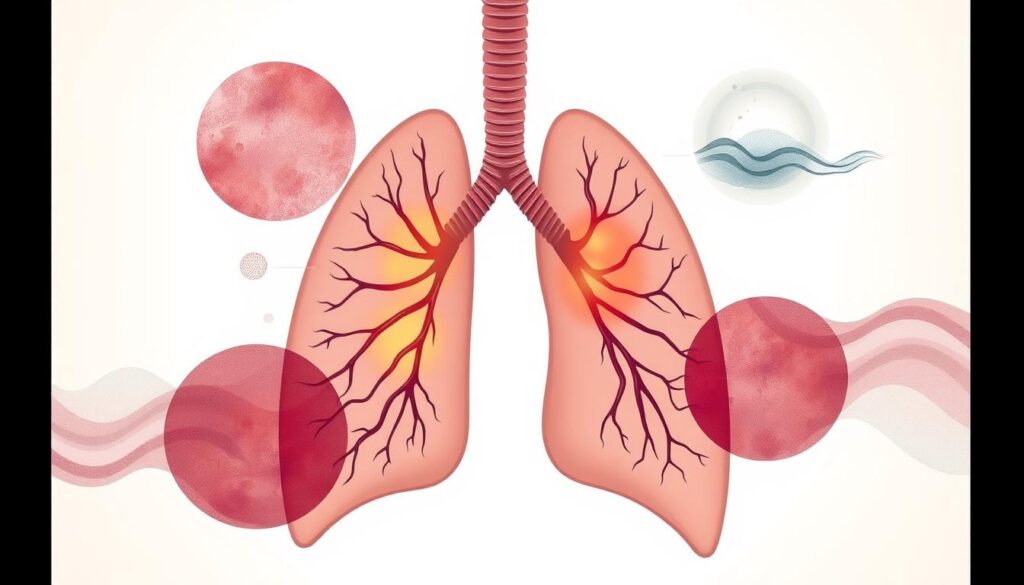
Sarcoidosis is a complex inflammatory disease that challenges your immune system. It causes unusual clusters of inflamed tissue called granulomas to develop in different organs. These granulomas can disrupt your body’s delicate balance1.
While sarcoidosis can affect any part of your body, it mainly impacts the lungs2. The disease affects about 150,000 to 200,000 people in the United States1. African Americans, especially women, have higher rates of diagnosis2.
Sarcoidosis is unpredictable. Your symptoms might range from mild to severe. Some cases resolve on their own, while others need medical treatment3.
Key Takeaways
- Sarcoidosis is an inflammatory disease affecting multiple organs
- Lungs are most commonly impacted by the condition
- Diagnosis can be challenging due to varied symptoms
- The immune system plays a critical role in disease development
- Treatment approaches depend on individual manifestations
What is Sarcoidosis and Why Does It Occur?
Sarcoidosis is a rare, complex disease that baffles doctors. It forms small inflammatory clusters called noncaseating granulomas throughout the body. These granulomas mainly affect the lungs and lymph nodes4.
Sarcoidosis affects about 27,000 new patients yearly in the United States. Some groups face higher risks of developing this condition4.
Defining the Disease
Sarcoidosis causes inflammatory cells to create small lumps called granulomas in various organs. These tiny clusters can disrupt normal tissue function. They also lead to widespread inflammation5.
Common Causes and Risk Factors
- Genetic predisposition
- Environmental exposures4:
- Insecticide proximity
- Dusty work environments
- Moldy living spaces
- Demographic influences6:
- More common in Black individuals
- Slightly higher in females
- Peak age range: 30-50 years
The Role of the Immune System
Your immune system is key in sarcoidosis development. An abnormal immune response triggers inflammation. This causes noncaseating granulomas to form, potentially impacting organ function5.
“Sarcoidosis represents a complex interplay between genetic susceptibility and environmental triggers” – Medical Research Journal
The exact cause of sarcoidosis remains a mystery. Scientists are still studying the complex processes behind this intriguing disease6.
Recognizing the Symptoms of Sarcoidosis
Sarcoidosis is a complex condition that affects people differently. Early detection and management are crucial. In the US, over 200,000 adults, mostly aged 20-30, live with this condition7.
General Symptoms to Watch For
Sarcoidosis can cause various symptoms. Common signs include:
- Persistent fatigue that doesn’t improve with rest
- Unexplained weight loss
- Low-grade fever
- Swollen lymph nodes
Specific Organ-Related Symptoms
This condition can affect multiple organs, leading to diverse symptoms:
| Affected Organ | Potential Symptoms |
|---|---|
| Lungs | Persistent cough, shortness of breath, chest pain |
| Eyes | Uveitis, vision changes, eye irritation |
| Skin | Raised bumps, rashes |
How Symptoms May Vary by Individual
Your sarcoidosis experience can be unique. Some people develop Löfgren’s syndrome, an acute form that usually resolves within two years8.
African Americans and those of Northern European descent are most commonly affected7.
“Every patient’s journey with sarcoidosis is different, making personalized medical guidance essential.”
If you have ongoing symptoms, see your doctor. They can provide a thorough medical evaluation.
Treatment Options for Sarcoidosis
Sarcoidosis treatment is tailored to your specific symptoms and affected organs. It starts with a careful medical assessment and strategic medication planning9. Corticosteroids like prednisone are the main tools to reduce inflammation and control immune response9.
Your treatment may include various immunosuppressants based on your case. Methotrexate can help suppress immune system activity9. TNF inhibitors might be given intravenously to manage inflammation9.
For lung complications, pulmonary rehabilitation could be crucial in your treatment strategy9. Regular monitoring is key in managing sarcoidosis effectively. About 30% of patients develop severe chronic conditions needing ongoing systemic treatment10.
Up to 70% might experience disease relapse during corticosteroid tapering10. Working closely with healthcare pros ensures your treatment plan stays adaptive. It responds to your changing health needs over time.
In severe cases where standard treatments fail, advanced options like lung transplantation might be considered9. Your active involvement with doctors can greatly improve your life quality while managing this complex condition.
Learn more about sarcoidosis management to better understand your treatment options. Stay informed and work closely with your healthcare team for the best outcomes.
FAQ
What exactly is sarcoidosis?
Sarcoidosis is a rare inflammatory disease affecting various organs. It causes clusters of inflamed tissue called granulomas to form. This condition commonly impacts lungs and lymph nodes, but can affect other organs too.
Who is most likely to develop sarcoidosis?
Black women aged 30-50 and those with African or Scandinavian ancestry face higher risks. Family history and certain environmental factors also increase susceptibility.
Working in dusty places, exposure to insecticides, or being near burn pits during military service are risk factors.
What are the most common symptoms of sarcoidosis?
Symptoms vary widely but often include fatigue, swollen lymph nodes, fever, and weight loss. Respiratory issues like dry cough and shortness of breath are common.
Other symptoms may include skin rashes, joint pain, and eye irritation. Depression can also occur in some cases.
How is sarcoidosis diagnosed?
Diagnosis involves multiple tests, including breathing assessments, chest X-rays, and CT scans. Blood and urine tests, along with organ biopsies, may be necessary.
Your doctor will evaluate your symptoms and medical history to determine the best diagnostic approach.
What treatment options are available for sarcoidosis?
Treatment depends on severity and affected organs. Common approaches include corticosteroids and immunosuppressants to manage inflammation and immune response.
Experimental treatments may be considered in some cases. Lifestyle changes like stress management and regular exercise can support healing.
Can sarcoidosis go away on its own?
Some cases, like Löfgren’s syndrome, can resolve within six months to two years without extensive treatment. However, the disease’s course varies significantly between individuals.
Some patients may require ongoing medical management to control symptoms and prevent complications.
Are there long-term complications of sarcoidosis?
Long-term complications depend on which organs are affected. Prolonged inflammation can lead to organ damage, especially in lungs, heart, and eyes.
Regular medical check-ups are crucial to monitor disease progression and prevent potential complications.
Is sarcoidosis a genetic condition?
Sarcoidosis likely involves both genetic and environmental factors. Family history can increase your risk, suggesting a genetic component.
However, environmental triggers also play a significant role in the development of this condition.
Source Links
- What is Sarcoidosis? – https://www.stopsarcoidosis.org/what-is-sarcoidosis/
- Clinical Manifestations, Diagnosis, and Treatment of Sarcoidosis – https://pmc.ncbi.nlm.nih.gov/articles/PMC6713839/
- Sarcoidosis Symptoms, Causes and Risk Factors – https://www.lung.org/lung-health-diseases/lung-disease-lookup/sarcoidosis/symptoms-diagnosis
- Learn About Sarcoidosis – https://www.lung.org/lung-health-diseases/lung-disease-lookup/sarcoidosis/learn-about-sarcoidosis
- Pulmonary Sarcoidosis – https://www.hopkinsmedicine.org/health/conditions-and-diseases/pulmonary-sarcoidosis
- Patient education: Sarcoidosis (Beyond the Basics) – https://www.uptodate.com/contents/sarcoidosis-beyond-the-basics/print
- Sarcoidosis Awareness Month – https://www.chestnet.org/sarcoidosis-awareness-month
- Diagnosis and Management of Sarcoidosis – https://www.aafp.org/pubs/afp/issues/2016/0515/p840.html
- Diagnosing and Treating Sarcoidosis – https://www.lung.org/lung-health-diseases/lung-disease-lookup/sarcoidosis/treating-and-managing
- State-of-the-Art Treatments for Sarcoidosis – PMC – https://pmc.ncbi.nlm.nih.gov/articles/PMC9237819/

