
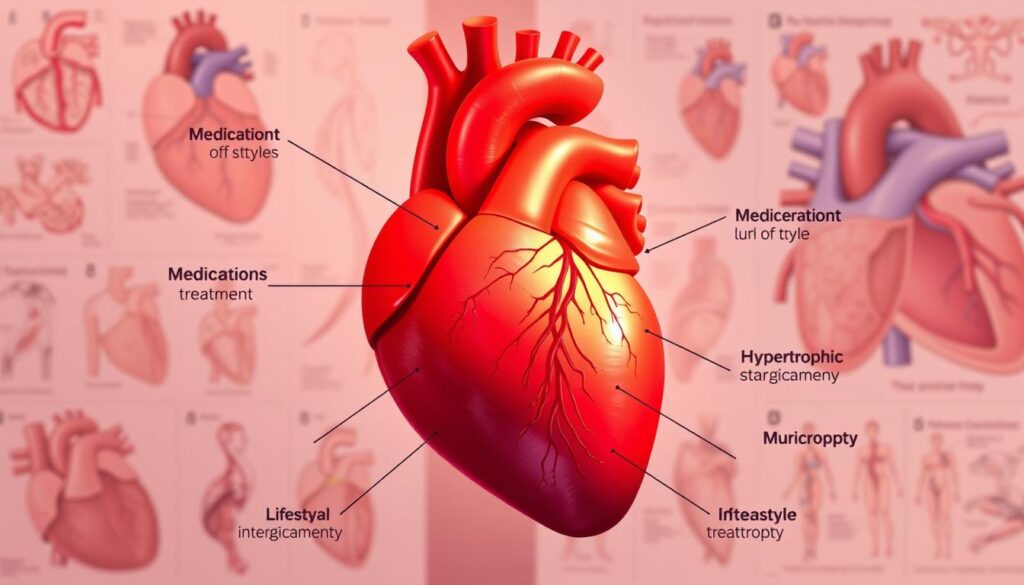
Hypertrophic cardiomyopathy (HCM) is a complex heart condition affecting many young Americans. It’s a genetic heart muscle disease that impacts 1 in 500 young people. Two-thirds of patients have the obstructive form of HCM1.
Your HCM treatment plan depends on symptom severity and heart muscle characteristics. Modern medical advances offer promising options to improve your quality of life. Mavacamten is the only disease-specific medication for symptomatic obstructive HCM1.
Most people with HCM can expect a positive long-term outlook. Many patients maintain a normal life expectancy1. Managing HCM requires a comprehensive approach including medications, lifestyle changes, and possible surgical interventions2.
Key Takeaways
- HCM affects 1 in 500 young people in the United States
- Two-thirds of patients have the obstructive form of HCM
- Mavacamten is the primary disease-specific medication
- Most patients maintain a normal life expectancy
- Comprehensive treatment approach is essential
Understanding Hypertrophic Cardiomyopathy (HCM) and Its Impact
Hypertrophic cardiomyopathy is a complex heart muscle disease affecting many people worldwide. It requires a thorough approach to grasp its unique features. Managing HCM involves understanding its potential challenges3.
Types of Heart Muscle Disease
Heart muscle disease has two main forms of HCM: obstructive and non-obstructive. Obstructive HCM occurs when thickened heart muscle blocks blood flow from the left ventricle3.
This form creates significant cardiovascular challenges. It affects about two-thirds of patients4. Non-obstructive HCM involves heart muscle stiffening without complete blockage3.
- Obstructive HCM affects approximately two-thirds of patients4
- Non-obstructive HCM involves heart muscle stiffening without complete blockage3
Critical Symptoms and Risk Factors
Spotting Heart Muscle Disease Treatment symptoms is vital for early action. Common signs include:
- Shortness of breath
- Chest pain
- Fatigue
- Dizziness and fainting spells4
| Risk Factor | Impact |
|---|---|
| Genetic Predisposition | 50% chance of inheritance5 |
| Family History | Increased likelihood of developing HCM |
Importance of Early Detection
Proactive screening can dramatically improve outcomes for individuals with Hypertrophic Cardiomyopathy. Experts suggest genetic testing and regular heart checks for close family members4.
“Early detection is the key to managing HCM effectively and preventing potential complications” – Cardiac Specialists
Regular screenings are crucial for managing HCM. Adults should get checked every five years. Teens need more frequent checks every 12-18 months4.
Hypertrophic Cardiomyopathy Treatment Options
Hypertrophic Cardiomyopathy (HCM) needs a complete approach for treating thickened heart muscles. Your doctor will create a custom plan. This plan will fit your specific condition6.
The main goals are to control symptoms and prevent issues. Doctors often suggest using medicines, changing lifestyle, and possibly surgery7.
Key Medication Options
- Beta-blockers to reduce heart rate and improve muscle relaxation
- Calcium channel blockers for symptom management
- Disopyramide to control heart rhythm
- Anticoagulants to prevent blood clot formation7
A big step forward in HCM treatment is cardiac myosin inhibitors. These new drugs target the root cause of obstructive HCM. They may improve heart function and lessen symptoms7.
Advanced Treatment Considerations
| Treatment Type | Purpose | Effectiveness |
|---|---|---|
| Cardiac Myosin Inhibitors | Target Muscle Thickening | High Potential |
| Implantable Cardioverter Defibrillators | Prevent Sudden Cardiac Death | Recommended for High-Risk Patients7 |
*Managing HCM requires a personalized approach that considers individual genetic factors and symptom severity*
Lifestyle changes are key in managing HCM. Eating heart-healthy foods and staying active can help a lot. Avoiding smoking also supports medical treatments6.
Regular check-ups are important for HCM care. Tools like Holter monitors and MRI scans track heart health. These tests help doctors adjust treatments as needed7.
Surgical and Advanced Interventions for HCM
Surgical solutions offer hope for patients with hard-to-manage Hypertrophic Cardiomyopathy (HCM). These advanced interventions can greatly improve your heart health and life quality8.
Septal Myectomy: A Precise Cardiac Approach
Septal myectomy is the top choice for HCM care, especially for severe left ventricular outflow tract blockage9. This complex surgery removes part of the thickened heart muscle to boost blood flow8.
- Recommended for patients with significant obstruction
- Low mortality rate at experienced medical centers9
- Potential to restore normal cardiac function
Alternative Surgical Strategies
Alcohol septal ablation provides an option for those unsuited for traditional myectomy. This less invasive method helps patients with complex medical histories9.
Advanced Cardiac Interventions
Implantable cardioverter defibrillators (ICDs) help manage sudden cardiac death risk. For end-stage HCM, heart transplantation might be the final treatment option9.
“Surgical interventions have transformed the landscape of HCM treatment, offering patients renewed hope and improved cardiac function.”
Your treatment path depends on your heart condition, symptom severity, and overall health. Consult with heart experts to find the best surgical solution for you.
Conclusion
Managing Hypertrophic Cardiomyopathy requires a personalized approach. Recent medical breakthroughs have improved patient outcomes significantly. Most HCM patients can expect a normal lifespan with proper treatment through advanced diagnostic techniques10.
Your HCM journey involves regular check-ups and possible interventions. Early detection is key for a better prognosis. Genetic counseling helps understand HCM’s hereditary aspects10.
New research is expanding treatment options. Cardiac myosin inhibitors show promise for better management. A team of specialists ensures you get complete support10.
Your active role in managing HCM can make a big difference. Stay informed and keep up with your doctor visits. Embrace new cardiac care advances to boost your health and life quality.
FAQ
What is Hypertrophic Cardiomyopathy (HCM)?
Hypertrophic Cardiomyopathy is the most common inherited heart muscle disease. It affects over 500,000 people in the United States. HCM causes thickened heart walls, especially in the left ventricle.
What are the main types of Hypertrophic Cardiomyopathy?
HCM has two main types: obstructive and non-obstructive. Obstructive HCM affects about two-thirds of patients. It involves a thickened septum blocking blood flow from the left ventricle.
Non-obstructive HCM doesn’t have this specific blood flow blockage.
What are the common symptoms of HCM?
Common symptoms include shortness of breath, chest pain, and fatigue. Other signs are arrhythmias, dizziness, and fainting. Some people may have mild or no symptoms at all.
Regular screening is crucial for those with a family history of HCM.
How is HCM inherited?
HCM has a strong genetic link. If one parent has it, their child has a 50% chance of inheriting it.
Genetic counseling and screening of first-degree relatives are recommended.
What are the primary treatment options for HCM?
Treatment focuses on managing symptoms and reducing risks. Options include beta-blockers, calcium channel blockers, and cardiac myosin inhibitors.
Severe cases may require surgical interventions like septal myectomy or alcohol septal ablation.
Are there any new medications for HCM?
Yes, cardiac myosin inhibitors like mavacamten show promise. These drugs target the underlying cause of obstructive HCM. They can improve symptoms and heart function.
How often should people with a family history of HCM be screened?
Adult relatives should be screened every five years. Adolescents or athletes need screening every 12 to 18 months. Early detection is crucial for effective management.
Can people with HCM live a normal life?
With proper care, most HCM patients can lead normal lives with minimal symptoms. Medical and surgical advances continue to improve patient outcomes and quality of life.
What lifestyle modifications are recommended for HCM patients?
HCM patients should maintain a heart-healthy diet and stay physically active under medical guidance. They should avoid smoking and follow a comprehensive treatment plan.
A multidisciplinary healthcare team can help develop an effective management strategy.
When might surgical intervention be necessary?
Doctors may consider septal myectomy for patients with severe, medication-resistant symptoms. This procedure has a low mortality rate at experienced medical centers.
Source Links
- Hypertrophic Cardiomyopathy (HCM) – https://www.heart.org/en/health-topics/cardiomyopathy/what-is-cardiomyopathy-in-adults/hypertrophic-cardiomyopathy
- Hypertrophic Cardiomyopathy: Causes, Symptoms & Treatments – https://my.clevelandclinic.org/health/diseases/17116-hypertrophic-cardiomyopathy
- Hypertrophic cardiomyopathy – Symptoms and causes – https://www.mayoclinic.org/diseases-conditions/hypertrophic-cardiomyopathy/symptoms-causes/syc-20350198
- Patient education: Hypertrophic cardiomyopathy (Beyond the Basics) – https://www.uptodate.com/contents/hypertrophic-cardiomyopathy-beyond-the-basics/print
- Understanding Hypertrophic Cardiomyopathy (HCM) – https://stmarysphysicianassociates.com/blog/understanding-hypertrophic-cardiomyopathy/
- The Diagnosis and Treatment of Hypertrophic Cardiomyopathy – https://pmc.ncbi.nlm.nih.gov/articles/PMC3078548/
- Diagnosing and Treating HCM | OHSU – https://www.ohsu.edu/knight-cardiovascular-institute/hypertrophic-cardiomyopathy-treatment-options
- Surgical treatment for hypertrophic cardiomyopathy: a historical perspective – https://pmc.ncbi.nlm.nih.gov/articles/PMC5602209/
- Surgery for hypertrophic cardiomyopathy – PMC – https://pmc.ncbi.nlm.nih.gov/articles/PMC5418425/
- Patient education: Hypertrophic cardiomyopathy (Beyond the Basics) – https://www.uptodate.com/contents/hypertrophic-cardiomyopathy-beyond-the-basics

