
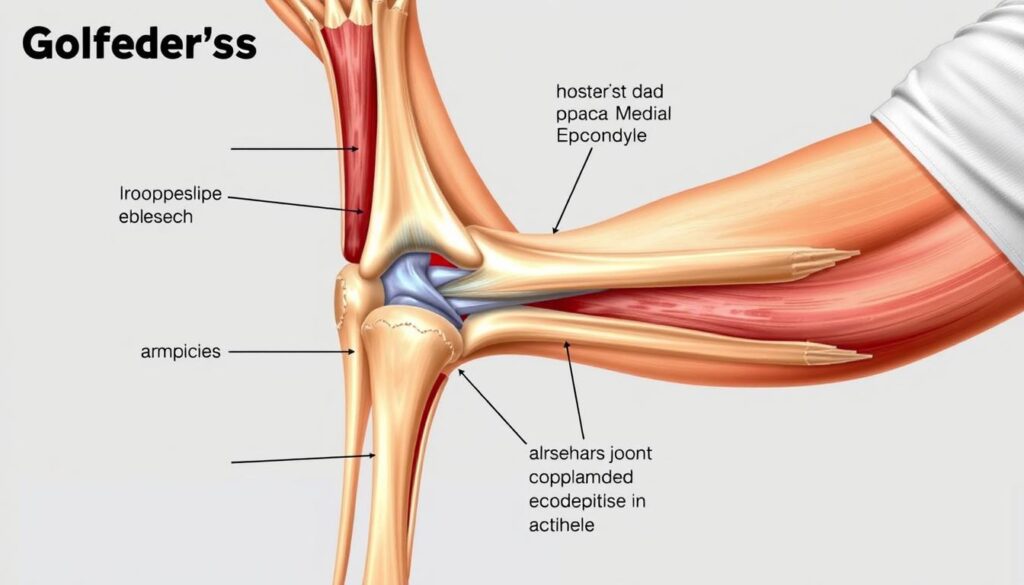
Golfer’s elbow is a tendonitis condition causing persistent forearm pain. It affects more than just athletes, impacting anyone who repeatedly stresses their inner elbow muscles. Medial epicondylitis can strike workers and sports enthusiasts across various disciplines1.
This overuse injury occurs when tiny tears form in your forearm tendons. Pain can emerge suddenly or develop gradually over time. You might experience tingling or numbness in your ring and little fingers1.
Various activities can trigger golfer’s elbow, from sports to professional tasks. Baseball, tennis, and jobs involving repetitive hand movements are common culprits. Carpenters, painters, and construction workers are particularly at risk1.
Key Takeaways
- Golfer’s elbow is an overuse injury affecting inner elbow tendons
- Symptoms include forearm pain, numbness, and finger tingling
- Both athletes and workers can develop this condition
- Rest and proper treatment are crucial for recovery
- Early intervention prevents long-term complications
Understanding Golfer’s Elbow and Its Impact
Golfer’s elbow, or medial epicondylitis, is a painful injury affecting the inner elbow. It occurs when tendons connecting forearm muscles to the elbow become damaged. This damage results from continuous stress and overuse2.
Medial epicondylitis often develops due to specific activities and lifestyle factors. People over 40 are more likely to experience this painful condition3.
What is Medial Epicondylitis?
Medial epicondylitis happens when repeated wrist and finger movements cause tiny tears in tendons. These movements can occur during various activities.
- Golfing swing motions
- Throwing sports activities
- Racket sports
- Weight training
- Occupational tasks requiring repetitive hand movements
Common Risk Factors
| Risk Category | Description |
|---|---|
| Age | Higher risk for individuals over 403 |
| Occupational Risks | Carpentry, plumbing, butchery with repetitive motions3 |
| Physical Conditions | Reduced muscle and tendon elasticity |
Who is Most Affected
Athletes and workers doing repetitive arm movements are most at risk. Tennis elbow or golfer’s elbow can develop without proper care. Physical therapy and elbow braces can help prevent worsening of the condition23.
“Prevention is always better than cure when it comes to repetitive strain injuries.”
If you have ongoing elbow pain, see a doctor. They can provide a proper diagnosis and treatment plan.
Identifying Symptoms and Prevention Methods
Golfer’s elbow can cause unexpected forearm pain, disrupting daily activities. Spotting early signs of tendonitis is key to preventing long-term damage4. Watch out for these specific symptoms.
Common symptoms include:
- Pain and tenderness on the inner side of the elbow
- Stiffness in the elbow joint
- Weakness in hands and wrists
- Numbness or tingling sensations in fingers4
Protect your elbow and forearm muscles to prevent injury. Try these key approaches:
- Strengthen forearm muscles through targeted exercises
- Use proper form during sports and physical activities
- Stretch before engaging in repetitive motions4
An elbow brace can help manage and prevent further strain. Medical experts suggest using supportive gear to reduce tendon stress.
“Prevention is always better than cure when it comes to repetitive strain injuries.”
This condition mostly affects adults between 40-60 years old5. Both men and women can develop this painful condition5.
| Prevention Strategy | Key Benefits |
|---|---|
| Regular stretching | Increases muscle flexibility |
| Proper equipment use | Reduces strain on tendons |
| Rest and recovery | Prevents overuse injuries |
Pay attention to your body’s signals. Act quickly if you feel discomfort. Early treatment can help avoid long recovery and chronic issues4.
Conclusion
Golfer’s elbow can be tough, but the right treatment can help you manage it. Physical therapy is key to your recovery6. Non-invasive methods are often used to help you regain strength and mobility7.
Recovery time varies based on how severe your condition is. Home care methods typically take about six weeks for full recovery8. Listen to your body and work with healthcare pros.
For more info on treatment, check out Trifecta Therapeutics’ golfer’s elbow guide. Surgery is rarely needed, but stubborn symptoms might require advanced care8.
Prevent golfer’s elbow by making ergonomic changes and using proper technique. Take regular breaks during repetitive activities7. Early diagnosis and quick treatment are crucial for elbow health7.
Your dedication to treatment and prevention is vital. Be patient and follow expert advice. Focus on gradual, steady rehab for the best results.
FAQ
What is Golfer’s Elbow?
Golfer’s elbow causes pain where forearm muscles attach to the inner elbow. It’s not just for golfers; anyone can get it. This condition affects those who often use their wrists or clench their fingers.
It’s like tennis elbow but on the inside of the elbow. The pain can make everyday tasks hard to do.
What Causes Golfer’s Elbow?
Damage to muscles and tendons that control wrist and finger movements causes this condition. Too much stress or repeated motions can lead to golfer’s elbow. Sports, weight training, and some jobs can strain the inner elbow.
What Are the Main Symptoms?
Pain and tenderness on the inner elbow are common signs. You might also feel stiff or weak in your hands and wrists. Some people have numb or tingly fingers.
The pain can start fast or build up slowly. It often gets worse when you lift or grip things.
Who is Most at Risk?
People over 40 who do repetitive tasks for hours each day are at risk. Being overweight or smoking can also increase your chances. Athletes and manual workers often get golfer’s elbow.
How Can I Prevent Golfer’s Elbow?
Strengthen your forearm muscles and stretch before activities. Use proper form and the right equipment when playing sports. Take breaks and rest when your arm feels tired.
An elbow brace can help reduce strain. Changing how you do things can also protect your elbow.
What Are the Treatment Options?
Rest your arm and apply ice to ease the pain. Over-the-counter pain pills can help you feel better. Physical therapy with special exercises is very helpful.
Most people get better without surgery. If pain lasts for many months, a doctor might suggest surgery.
How Long Does Recovery Take?
Getting better can take months or even years. It depends on how bad your golfer’s elbow is. Most people can return to normal activities with proper care.
Spotting the problem early and getting treatment right away helps you heal faster.
When Should I See a Doctor?
See a doctor if your elbow pain doesn’t go away. Get help if your arm feels very weak. A doctor can figure out what’s wrong and make a plan to help you.
Source Links
- The Basics of Golfer’s Elbow – https://www.webmd.com/fitness-exercise/golfers-elbow-basics
- Golfer’s Elbow: Treatment and Prevention | HSS Sports Medicine – https://www.hss.edu/condition-list_golfers-elbow.asp
- Understanding Golfer’s Elbow: Causes, Symptoms, and Treatment – The Centers for Advanced Orthopaedics Associates of Central Maryland Division – https://www.mdbonedocs.com/understanding-golfers-elbow-causes-symptoms-and-treatment/
- Understanding Golfer’s Elbow: Causes, Treatment, and the Role of Physical Therapy – https://www.ewmotiontherapy.com/blog/golfers-elbow-causes-treatment-physical-therapy
- Golfer’s Elbow | NHS Lanarkshire – https://www.nhslanarkshire.scot.nhs.uk/services/physiotherapy-msk/golfers-elbow/
- Tennis Elbow vs. Golfer’s Elbow – What’s the Difference? – https://handsurgical.com/tennis-elbow-vs-golfers-elbow/
- Long-Term Effects of Untreated Golfer’s Elbow | MSMC Musculoskeletal & Sports Medicine Clinic. – https://msmc-clinic.com/exploring-the-long-term-effects-of-untreated-golfers-elbow/
- What is Golfer’s Elbow – Peter Howard – https://peterhowardmd.com/golfers-elbow/

