
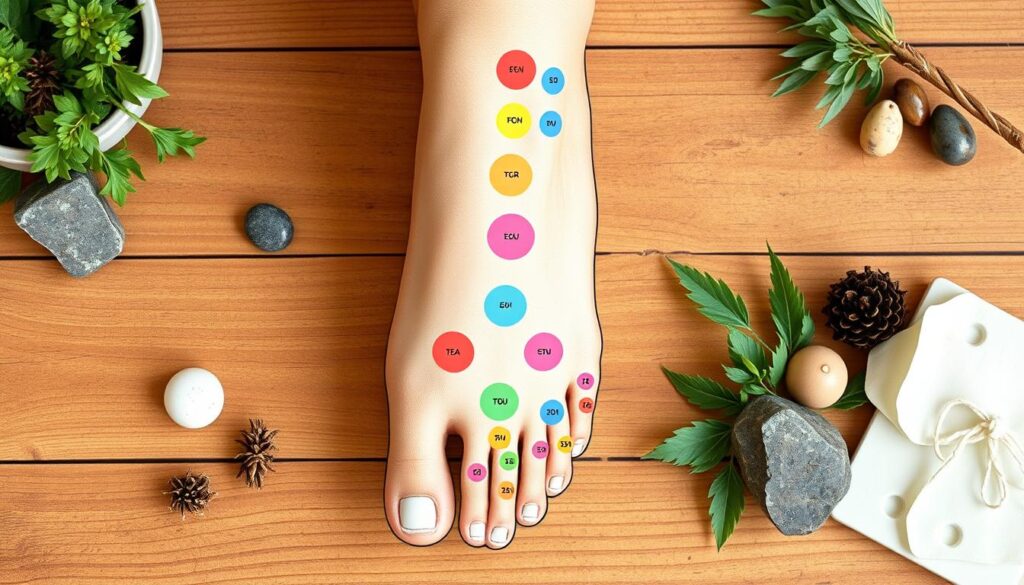
Unlock your body’s healing power with foot reflexology. This ancient practice uses foot pressure points to boost wellness1. By learning reflexology zones, you can connect your feet to various body systems1.
Foot reflexology has deep roots in traditional healing. It’s a gentle way to support your health1. Experts believe foot points link to different organs and energy channels1.
This method may help with health issues like anxiety and back pain1. Professional sessions usually last 30 to 60 minutes. They focus on key areas such as the head, heart, and lungs1.
Key Takeaways
- Foot reflexology is an ancient healing practice with modern applications
- Specific foot pressure points connect to different body systems
- Potential benefits include stress reduction and pain management
- Sessions typically last 30-60 minutes
- Consult a healthcare professional before starting reflexology
Understanding Foot Reflexology Fundamentals
Foot reflexology is a holistic healing technique. It explores connections between feet and overall body wellness. This ancient practice applies pressure to specific foot areas to promote healing2.
A reflexology foot map links foot points to organs and body systems. Practitioners use this diagram to navigate critical pressure points precisely2.
What is Foot Reflexology?
Foot reflexology is a specialized massage technique. It applies sustained pressure to specific reflex points. Each point links to different body functions2.
- Restore energy flow
- Promote healing
- Reduce stress
- Improve overall wellness
Connection to Body Systems
Your foot massage chart shows links between foot zones and body systems. Targeting specific points may address various health concerns3:
- Reducing heart rate
- Lowering blood pressure
- Improving sleep quality
- Addressing anxiety and depression
Scientific Evidence and Practice
Scientific research continues to explore foot reflexology benefits3. Clinical studies show promising results in stress reduction and pain management2.
Reflexology is not just a massage, but a targeted approach to holistic healing.
A typical reflexology session lasts 30-60 minutes. Practitioners apply precise pressure techniques2. Stay hydrated before and after treatment to support natural healing processes4.
Foot Reflexology Chart and Pressure Point Mapping
Foot reflexology is a fascinating wellness approach. It uses a map of reflexology zones on your feet. These zones link to different body systems5.
Your foot acts as a health diagram. Pressure points on it can reveal insights about your body’s function6.
- Toe Tips: Represent head and brain regions
- Base of Toes: Connected to teeth, gums, and jaw
- Inner Foot: Links to spine, neck, and internal organs
- Outer Foot: Relates to arms, legs, and limb connections
Gentle thumb pressure activates these specific zones. Skilled reflexologists can spot potential health issues through foot points5.
After sessions, it’s wise to stay hydrated. Consider your personal health profile too6.
“Your feet are a mirror to your body’s internal landscape” – Reflexology Wisdom
Reflexology aims to promote relaxation and potential healing6. Before starting any new wellness practice, talk to your healthcare provider5.
Conclusion
Foot reflexology offers a fascinating approach to holistic health. Studies suggest potential benefits for various health conditions7. A comprehensive review highlights promising results in stress reduction and symptom management8.
A reflexology foot diagram shows links between foot points and body systems. Benefits may include improved mental well-being, circulation, and natural stress relief8. Professionals use targeted acupressure to stimulate specific reflex points8.
Consult healthcare professionals before trying foot reflexology, especially with pre-existing conditions. Keep in mind that effectiveness varies among individuals. Approach this practice with an open mind and realistic expectations7.
Understanding foot reflexology’s potential helps make informed decisions about its use. It offers an intriguing path for stress relief, pain management, and overall wellness8.
FAQ
What exactly is foot reflexology?
Foot reflexology is an ancient healing practice from traditional Chinese medicine. It involves applying pressure to specific points on your feet. These points correspond to different organs and body systems.
The goal is to promote healing and reduce stress. It’s a non-invasive technique that may stimulate your body’s natural healing processes.
How old is foot reflexology as a healing practice?
Foot reflexology dates back to 2330 B.C., originating from ancient Chinese medical practices. It gained popularity in the United States in the early 1900s.
Today, it’s practiced worldwide as a holistic approach to health. Many use it alongside conventional medical treatments.
How does a foot reflexology chart work?
A foot reflexology chart maps out pressure points on your feet. These points correspond to different body parts. For example, your toes represent your head and brain.
The sole of your foot connects to internal organs. Practitioners use this chart to apply pressure to specific areas.
What are the potential benefits of foot reflexology?
Many report reduced stress and improved sleep quality. Some find it helps with pain management and enhances relaxation. It may also alleviate anxiety and support digestive health.
However, scientific evidence is still limited. It’s a gentle technique used alongside traditional medical treatments.
Is foot reflexology safe for everyone?
Foot reflexology is generally safe. However, consult your doctor before starting, especially if you have medical conditions. This includes pregnancy or foot injuries.
Some may experience temporary discomfort during treatment. Always communicate with your reflexologist and listen to your body.
How long does a typical reflexology session last?
A standard foot reflexology session lasts 30 to 60 minutes. The practitioner applies pressure to specific points on your feet.
Some people feel immediate effects. Others might need multiple sessions to notice significant benefits.
Can I practice foot reflexology on myself?
Yes, you can learn self-reflexology techniques. Start by studying a foot reflexology chart and understanding different zones. Apply gentle pressure to specific points.
For advanced techniques or specific health concerns, consult a professional reflexology practitioner.
Source Links
- Get to the Point: Your Guide to the Foot Reflexology Chart – https://greatist.com/live/foot-reflexology-chart
- What is Reflexology? It’s more than just a foot massage! – Spafinder – https://www.spafinder.com/blog/healing/reflexology-101-treatment-benefits/
- Foot Reflexology Chart & Example | Free PDF Download – https://www.carepatron.com/templates/foot-reflexology-charts
- Foot Reflexology 101 | Houston Texas Thai Massage – https://www.derestmassage.com/blog/foot-reflexology-101.html
- How To Tap Reflexology To Give Yourself a Foot Massage That’s Worthy of Being in a Spa – https://www.wellandgood.com/foot-reflexology-chart/
- What Is a Reflexology Chart and How Do I Use It to Ease Pain? Here’s What 2 Experts Say – https://www.purewow.com/wellness/reflexology-chart
- Traditional Chinese medicine foot reflexology: Benefits and more – https://www.medicalnewstoday.com/articles/traditional-chinese-medicine-foot-reflexology
- Foot Reflexology Chart: How It Works, Benefits, Risks – Foot Treat – https://foottreat.in/foot-reflexology-chart-how-it-works-benefits-risks

