
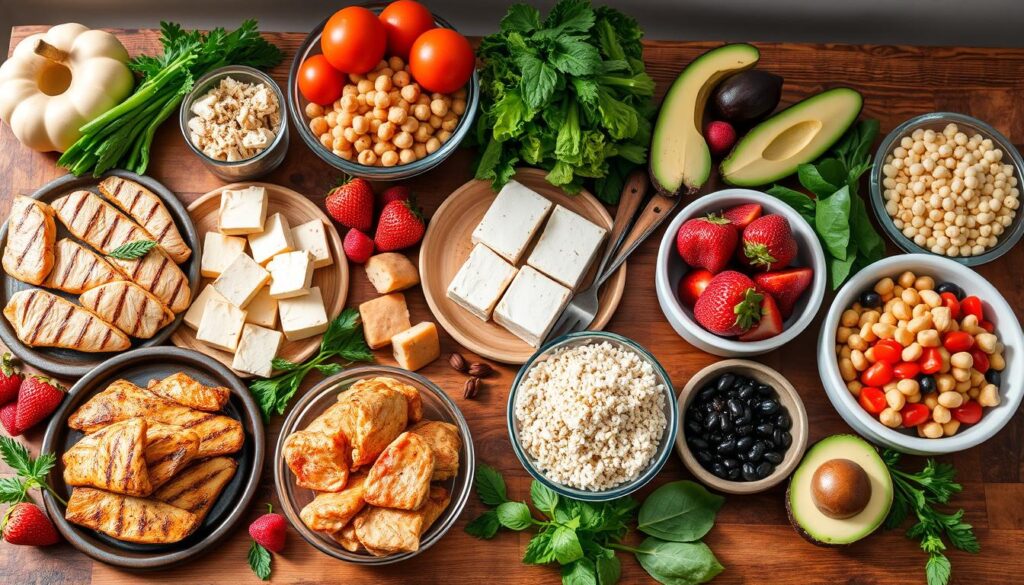
Discover the power of a High-Protein Diet Plan to reach your fitness goals. This clean eating approach boosts metabolism and energy levels. It’s your key to muscle building and weight loss.
Protein is your body’s ultimate performance enhancer. A protein-rich diet can help you feel fuller longer. This supports your weight loss efforts effectively.
Adults can aim for 10-35% of daily calories from protein sources. This optimizes nutrition and fuels your body for peak performance.
The USDA provides specific protein intake guidelines. Females need 46 grams per day, while males need 56 grams. This equals about 0.8 grams per kilogram of body weight1.
Key Takeaways
- Optimize your diet with a structured High-Protein Diet Plan
- Target 10-35% of daily calories from protein sources
- Support weight loss through increased meal satiety
- Follow USDA recommended protein intake guidelines
- Enhance muscle building and clean eating strategies
Understanding the Science Behind High-Protein Diet Plan
Nutrition’s power lies in how macronutrients affect your body’s metabolism and weight. A high-protein diet offers benefits beyond calorie counting. It works well with Low-Carb and Keto Diet strategies.
The Thermogenic Effect of Protein
Protein boosts calorie burning more than other nutrients. Adult males need at least 56 grams of protein daily. Females require about 46 grams2.
The body uses more energy digesting protein than carbs or fats. This creates a natural metabolic advantage3.
- Protein burns 20-30% of consumed calories during digestion
- Carbohydrates burn only 5-10% of consumed calories
- Fats burn minimal calories during metabolic processes
Hormonal Benefits for Weight Management
Protein-rich meals trigger hunger-fighting hormones in your body. A high-protein diet for weight loss should provide 1.2–2 grams per kilogram of body weight3.
This approach helps control appetite and supports long-term weight management.
Muscle Preservation During Weight Loss
Protecting lean muscle is crucial when losing weight. Eating up to 1.6 grams of protein per kilogram of body weight helps reduce fat.
It also maintains muscle integrity2. Combining Healthy Fats with strategic protein intake preserves muscle while burning excess fat.
“Protein is not just a nutrient, it’s a powerful tool for body transformation.”
| Protein Intake Level | Body Composition Impact |
|---|---|
| 1.2-1.6 g/kg/bw | Moderate muscle preservation |
| 1.6-2.0 g/kg/bw | Enhanced muscle maintenance |
| 2.0+ g/kg/bw | No additional significant benefits |
Remember, individual protein needs vary based on age, activity level, and fitness goals.
Essential Protein Sources for Maximum Results
Finding the right lean protein sources is vital for clean eating. Your body needs various protein-rich foods for muscle growth and overall health4. Both animal and plant-based options can fit your nutritional goals perfectly.
- Animal Protein Sources:
- Plant-Based Protein Options:
“Variety is key in selecting protein sources to ensure comprehensive nutrition.” – Nutrition Experts
Diversifying protein intake is crucial for clean eating. Vegetarians and vegans can meet protein needs through beans, nuts, and soy products4. Aim for 5-7 ounce-equivalents of protein daily, based on your age and gender4.
| Protein Source | Protein Content | Additional Benefits |
|---|---|---|
| Greek Yogurt | 19.9g per 7 oz | Probiotic-rich |
| Cottage Cheese | 28g per cup | Low-fat option |
| Almonds | 6g per ounce | Healthy fats |
Clean eating focuses on protein quality, not just quantity. Opt for wild-caught fish, grass-fed meats, and organic plant proteins for better nutrition6.
Creating Your Weekly High-Protein Meal Plan
A well-designed meal strategy can boost your nutrition. It fuels your body and supports fitness goals. Strategic planning with carefully selected protein sources is key7.
Protein intake recommendations vary for adults. Most need 90 to 150 grams daily. This depends on body weight and activity level7.
Protein-Packed Breakfast Options
Start your day with protein-rich breakfast choices. These options will energize and satisfy you:
- Scrambled egg whites with spinach
- Protein smoothie with almond milk
- Cottage cheese with fresh peaches
- Avocado and egg on whole-grain toast
- Oatmeal with whey protein powder
Balanced Lunch and Dinner Combinations
Boost your protein intake with tasty meal combinations. Try these diverse and delicious options:
| Meal Type | Protein Options | Nutritional Benefits |
|---|---|---|
| Lunch | Grilled chicken salad | Lean protein, vegetables |
| Dinner | Baked cod with asparagus | Omega-3, low-calorie |
| Alternative | Stir-fried shrimp with vegetables | Seafood protein, fiber |
Smart Snacking Strategies
Stay satisfied between meals with protein-rich snacks. Here are some great options:
- Low-fat Greek yogurt
- Hard-boiled eggs
- Low-sugar protein bars
- Edamame
- Almonds
“Successful meal planning is about consistency and variety.” – Nutrition Expert
Aim for 1,500 to 1,800 daily calories. About 30% should come from protein sources7.
Don’t forget to stay hydrated. Drink 9-13 cups of water daily7.
Conclusion
A high-protein diet plan is more than a short-term fix. It’s a lasting approach to health and fitness. Research shows that a well-designed high-protein diet can lead to impressive results8.
A diet with 10-35% protein can help you lose weight and fat. It also helps keep your lean muscle intact8. Choose quality protein sources for the best results.
Studies suggest that proteins from animals are the most digestible9. These include meat, milk, and eggs. Protein-rich meals support weight loss and keep you feeling full longer8.
Balance and personalization are key to success. Talk to a nutrition expert to tailor your high-protein plan. Understanding protein’s role in your body is crucial for reaching your fitness goals.
FAQ
How much protein should I consume daily?
Your protein needs vary based on weight, activity, and goals. Aim for 0.8-1.2 grams per pound of body weight. Choose lean proteins like chicken, fish, and eggs.
Spread your protein intake across 4-5 smaller meals. This helps optimize metabolism and maintain steady energy levels throughout the day.
Can a high-protein diet help me lose weight?
Yes! High-protein diets boost weight loss by increasing metabolism and reducing appetite. Your body burns more calories digesting protein than carbs or fats.
Protein releases hormones that help you feel fuller longer. This can reduce your overall calorie intake and support your weight loss goals.
Are plant-based proteins as effective as animal proteins?
Plant-based proteins can be just as effective when combined properly. Quinoa, edamame, tofu, lentils, beans, and nuts are excellent options.
These sources offer complete amino acid profiles. They also provide fiber, vitamins, and minerals. Vary your protein sources for optimal nutrition.
Is a high-protein diet safe for everyone?
Most healthy people can benefit from a high-protein diet. However, consult your doctor first, especially if you have kidney or liver issues.
Increase your protein intake gradually. Balance it with smart carbs and healthy fats. Stay hydrated and exercise regularly for best results.
How can I prepare high-protein meals quickly?
Meal prep is key for a high-protein diet. Batch cook lean proteins and keep protein-rich snacks handy.
Try quick meals like scrambled egg whites with spinach or protein smoothies. Grilled chicken salads and turkey wraps with avocado work well too.
Plan and prepare meals in advance to stay consistent with your nutrition goals.
Can I follow a high-protein diet if I’m vegetarian or vegan?
Absolutely! Incorporate diverse plant-based protein sources. Focus on tofu, tempeh, seitan, legumes, quinoa, nuts, and seeds.
Combine different proteins to get all essential amino acids. Add nutritional yeast, chia seeds, and plant-based protein shakes to meet your needs.
How does protein help with muscle building?
Protein is crucial for muscle repair and growth. It provides amino acids to rebuild muscles after exercise.
Eat protein within 30 minutes after your workout. This supports muscle recovery. Choose lean proteins to maximize muscle-building while maintaining a low-fat diet.
Source Links
- A high-protein diet for reducing body fat: mechanisms and possible caveats – https://pmc.ncbi.nlm.nih.gov/articles/PMC4258944/
- A High-Protein Diet Plan to Lose Weight and Improve Health – https://www.healthline.com/nutrition/high-protein-diet-plan
- High-protein diet: Foods and how to do it – https://www.medicalnewstoday.com/articles/324915
- USDA MyPlate Protein Foods Group – One of the Five Food Groups – https://www.myplate.gov/eat-healthy/protein-foods
- High Protein Foods: 16 Foods for High Protein Meals – https://www.healthline.com/nutrition/high-protein-foods
- High-Protein Meal Plan to Help Lose Weight, Created by a Dietitian – https://www.eatingwell.com/article/2053490/high-protein-flat-belly-diet-meal-plan/
- A 7-Day High-Protein Meal Plan That Gives You Energy – https://www.verywellfit.com/7-day-high-protein-meal-plan-ideas-recipes-and-prep-6743636
- Increased Dietary Protein as a Dietary Strategy to Prevent and/or Treat Obesity – https://pmc.ncbi.nlm.nih.gov/articles/PMC6179508/
- A high-protein diet for reducing body fat: mechanisms and possible caveats – Nutrition & Metabolism – https://nutritionandmetabolism.biomedcentral.com/articles/10.1186/1743-7075-11-53

