
Healthy testosterone levels are vital for your well-being. Certain foods can naturally support hormone production and make you feel great. Many men over 45 face low testosterone, making diet choices crucial1.
Your diet greatly affects testosterone production. Some foods can boost your natural levels, supporting hormonal health. Low-fat diets may decrease testosterone, so choosing the right nutrients is important1.
Nutrition can powerfully manage testosterone levels. It’s not about extreme diets, but smart food choices. These support your body’s hormone production1.
From cocoa to specific nutrients, you have many options. These can help optimize your hormonal health naturally.
Key Takeaways
- Diet significantly impacts testosterone production
- Natural foods can help support hormone levels
- Nutrient-rich choices matter more than restrictive diets
- Testosterone health is crucial for overall male wellness
- Strategic eating can naturally support hormone balance
Understanding Testosterone and Its Role in Men’s Health
Testosterone is key to masculine vitality. It affects muscle strength and emotional well-being. Learning about testosterone can help you improve your health and hormone levels.
Testosterone levels change throughout a man’s life. Production starts to drop around age 30. This can affect physical and mental performance2.
Late-onset male hypogonadism affects about 2% of men over 40. It’s often linked to aging, obesity, and metabolic conditions3.
The Science Behind Testosterone Production
The testes make testosterone through a complex hormonal process. Both testosterone and estradiol are important for male health4. Researchers found that hormonal balance is vital for optimal physical function.
Signs of Low Testosterone Levels
- Reduced muscle mass
- Increased body fat
- Decreased libido
- Erectile dysfunction
- Lower energy levels
These symptoms can greatly impact your life quality. Testosterone supplements might help. However, natural approaches are often most effective3.
Why Natural Food Solutions Matter
Natural solutions for boosting testosterone focus on diet and lifestyle changes. Some foods can support hormone production without synthetic intervention side effects.
“Your diet plays a critical role in maintaining healthy testosterone levels”
What you eat can greatly affect your hormones. Foods rich in zinc, vitamin D, and magnesium can help boost testosterone production2.
Essential Testosterone-Boosting Foods
Your diet greatly impacts hormone levels and overall health. Picking the right foods can boost testosterone production. This supports muscle growth and optimizes your muscle-building diet.
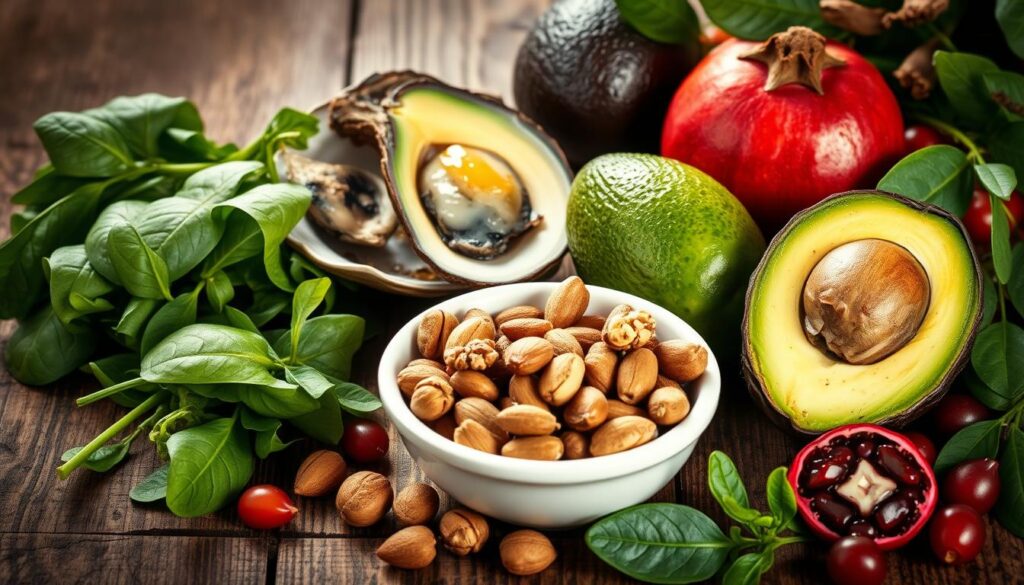
- Fatty Fish: Salmon and sardines packed with omega-3 fatty acids5
- Dark Leafy Greens: Spinach and kale for essential minerals
- Oysters: High in zinc, critical for testosterone synthesis6
- Eggs: Whole eggs support hormone production5
Zinc and vitamin D are crucial for healthy testosterone levels. Research suggests that vitamin D supplements can increase testosterone significantly7.
| Food | Key Nutrient | Testosterone Impact |
|---|---|---|
| Oysters | Zinc | High testosterone support |
| Tuna | Vitamin D | Hormone production |
| Garlic | Allicin | Cortisol reduction |
“Your diet is a powerful tool in managing testosterone levels naturally.” – Nutrition Experts
Pro tip: Mix these foods with regular exercise and good sleep. This will boost your testosterone levels naturally7.
Testosterone levels drop 1-2% yearly as we age7. Eating nutrient-rich foods helps maintain hormone production. This can keep you feeling energetic and youthful.
Conclusion
Boosting testosterone naturally involves more than just eating specific foods. It requires a complete wellness strategy. Regular strength training, balanced nutrition, and smart food choices can greatly affect your hormonal health8.
Foods like spinach, oysters, and egg yolks can help boost testosterone production9. Zinc-rich foods, magnesium-packed veggies, and protein sources also play a key role8. As we age, our bodies make less testosterone, so good nutrition becomes even more crucial8.
Lifestyle factors also impact testosterone levels significantly. Getting enough sleep and managing stress are important for hormonal balance8. Avoiding harmful substances like BPA can also help maintain healthy testosterone levels.
If you have ongoing low testosterone symptoms, talk to a doctor. They can help you understand and address your specific needs.
FAQ
What is testosterone and why is it important?
Testosterone is a key sex hormone in males. It affects sex drive, bone health, muscle mass, and sperm production. This hormone is vital for masculine vitality and overall physical well-being.
What are the signs of low testosterone?
Low testosterone can cause decreased libido and erectile dysfunction. Other signs include fatigue, increased body fat, and reduced muscle mass. Poor concentration may also occur.
Healthy testosterone levels are above 300 nanograms per deciliter. If you have these symptoms, your levels might be low.
Can diet really help boost testosterone levels naturally?
Yes, a nutrient-rich diet can support hormonal health. Fatty fish, leafy greens, eggs, and avocados are great choices. These foods contain vitamin D, zinc, magnesium, and omega-3s.
Which foods are best for boosting testosterone?
Top testosterone-boosting foods include salmon, sardines, and spinach. Kale, Swiss chard, eggs, and oysters are also beneficial. Avocados, cocoa, berries, cherries, and pomegranates can help too.
These foods are rich in nutrients that support testosterone production.
How else can I naturally increase my testosterone levels?
Regular strength training and adequate sleep can boost testosterone. Managing stress and maintaining a healthy weight are important too. Avoid excessive alcohol consumption for better hormone balance.
Are testosterone supplements necessary?
Natural food solutions are often better than synthetic supplements. They provide essential nutrients without potential side effects. If symptoms persist, consult a healthcare professional for personalized advice.
How important is zinc for testosterone production?
Zinc is crucial for reproductive health and testosterone production. Oysters are exceptionally high in zinc, making them an excellent choice. Including zinc-rich foods in your diet helps maintain optimal hormone balance.
Can exercise help improve testosterone levels?
Yes, regular exercise can boost testosterone levels naturally. Strength training and resistance exercises are particularly effective. Combining a balanced diet with consistent physical activity supports healthy testosterone production.
Source Links
- 7 Foods That May Help Boost Testosterone, According to a Dietitian – https://www.healthline.com/nutrition/testosterone-boosting-food
- Want To Boost Your Testosterone? Try Eating This For Dinner – https://www.menshealth.com/uk/nutrition/a747704/boost-testosterone-foods/
- Testosterone: What It Is, Function & Levels – https://my.clevelandclinic.org/health/articles/24101-testosterone
- Understanding How Testosterone Affects Men – https://www.nih.gov/news-events/nih-research-matters/understanding-how-testosterone-affects-men
- These 10 Foods May Boost Testosterone Naturally – https://www.health.com/foods-that-boost-testosterone-naturally-7253553
- 6 Important Testosterone Boosting Foods – Page 35 – Men’s Health Clinics – https://mensvitalitycenter.com/important-testosterone-boosting-foods/page/35/
- The Best Testosterone Boosters for Men Over 50 – https://www.webmd.com/healthy-aging/the-best-testosterone-boosters-for-men-over-50
- 7 Testosterone Boosting Foods Plus Other Natural Methods – https://resources.healthgrades.com/right-care/food-nutrition-and-diet/foods-that-boost-testosterone
- 5 Testosterone Boosting Foods – Somerset Urological Associates – https://somerseturological.com/blog/5-testosterone-boosting-foods/

