
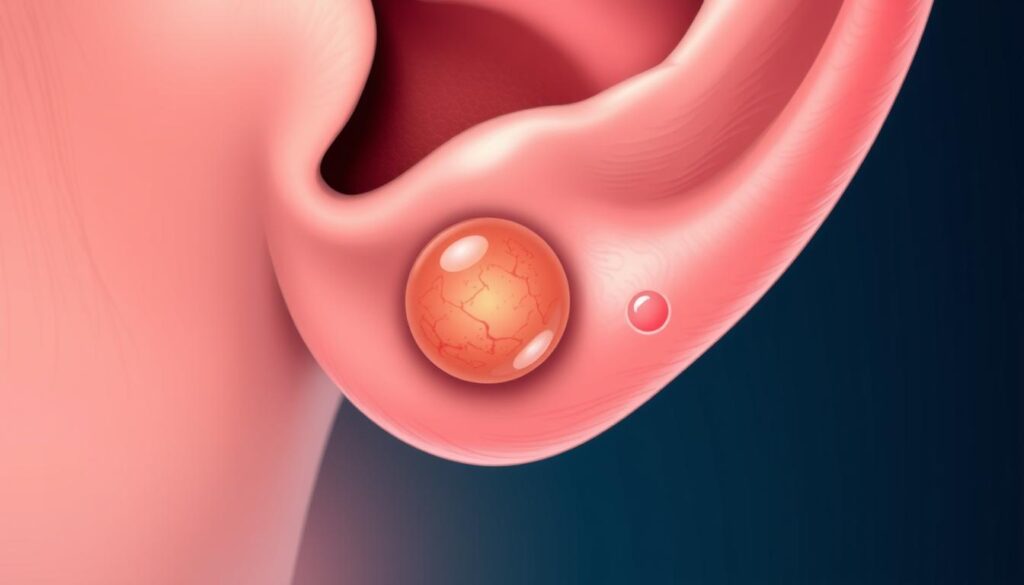
An earlobe cyst is a small, harmless skin growth on or around your ear. These smooth, painless lumps might surprise you. Understanding earlobe cysts can help you manage your ear health better1.
Epidermoid cysts can affect people of all ages. They become more common after puberty. These cysts are sac-like structures filled with keratin1.
Skin cells get trapped beneath the surface instead of shedding naturally. This trapping leads to cyst formation. Your earlobe cyst might look like a tiny, pea-sized bump1.
Most cysts are harmless and mainly a cosmetic concern. Ear lumps can develop due to skin injuries or acne history. Sometimes, genetic factors play a role in their formation1.
Key Takeaways
- Earlobe cysts are typically benign and harmless
- They can develop at any age but are more common after puberty
- Most cysts are small and pose minimal health risks
- Skin injuries or acne can trigger cyst formation
- Professional medical advice is recommended for persistent or changing cysts
Understanding Earlobe Cyst: Causes and Risk Factors
Earlobe cysts are intriguing skin growths that form through complex processes. They involve unusual skin cell behavior. Knowing how they develop helps you manage these common skin conditions better.
What Triggers Cyst Formation
An epidermoid cyst happens when skin cells multiply abnormally. They embed deeper into the skin instead of shedding naturally.
These trapped cells create cyst walls and secrete keratin. Over time, the keratin fills the enclosed space.
- Damaged hair follicles contribute to cyst development
- Blocked oil glands can trigger skin cell growth
- Genetic predispositions play a significant role
Common Risk Factors
Several key factors increase your chances of getting an earlobe cyst2:
- Age: Cysts are more prevalent after puberty3
- Gender: Males have a higher risk of developing these cysts2
- Acne history: Previous skin conditions can increase cyst potential3
Skin injuries can cause cells to react unusually, possibly triggering cyst formation2. Most cysts are harmless. However, knowing their origins helps you make smart choices about skin health.
Remember, not all skin lumps are cause for immediate concern, but professional medical advice is always recommended.
Signs, Symptoms, and Identification
Recognizing earlobe cyst symptoms is crucial for early detection. These small, flesh-colored bumps develop beneath the skin4. They’re usually firm, round, and may have a blackhead-like central plug.
Earlobe cysts can vary in color from skin-toned to reddish. Most are benign and painless5. Cyst identification is vital if you notice changes in size, color, or feel discomfort.
- Firm and round in shape
- Sometimes featuring a central plug similar to a blackhead
- Varying in color from skin-toned to reddish
Warning signs that require medical attention include:
- Redness and inflammation
- Swelling or tenderness
- Unexpected pain
- Leakage of thick, cheese-like substance
Not all earlobe bumps are cause for immediate concern, but persistent symptoms should be evaluated by a healthcare professional.
Infected cysts can develop boil-like features, affecting your comfort and hearing6. Watch for rapid changes or ongoing symptoms. These may indicate a need for medical help.
Conclusion
Earlobe cysts are usually harmless. However, knowing your treatment options is vital for proper care. Most cysts are small and manageable, with low risks of complications78.
Professional medical advice ensures the best approach for your situation. Some cysts may go away on their own. But expert guidance is crucial for effective management.
Surgical removal is the most effective method to prevent cyst recurrence7. Skilled surgeons can safely remove the entire cyst wall. This reduces the chance of future growth.
Recovery is typically quick after surgery. Most patients resume normal activities within a day7. Your doctor will suggest the best treatment based on your specific case.
Prevention is key in earlobe health. Keep your ears clean and avoid unnecessary trauma. Be careful with piercings7. If you notice changes or discomfort, see a doctor promptly.
Remember, early detection and professional care are crucial. They ensure the best outcomes for your ear health8.
FAQ
What exactly is an earlobe cyst?
An earlobe cyst is a small, smooth bump under the skin. It’s a sac filled with dead skin cells and keratin. These cysts can form on, around, or inside the earlobe.
Are earlobe cysts dangerous?
Most earlobe cysts are harmless. However, you should watch for changes. Seek medical help if the cyst becomes painful or grows significantly.
Also, get checked if it affects your hearing or shows signs of infection. These signs include redness, swelling, or tenderness.
What causes earlobe cysts to form?
Earlobe cysts can develop due to various factors. These include damaged hair follicles, blocked oil glands, and skin injuries. Genetic factors and abnormal skin cell growth can also play a role.
They’re more common in people who’ve had acne. These cysts typically appear more often after puberty.
How can I tell if my earlobe cyst is infected?
An infected earlobe cyst may show redness, swelling, and tenderness. You might feel pain or notice a thick, smelly discharge. If you see these signs, talk to a doctor.
Can I remove an earlobe cyst at home?
It’s not safe to remove an earlobe cyst by yourself. Squeezing or popping the cyst can cause infection or scarring. Instead, use warm compresses to help with drainage.
For proper removal, consult a medical professional. They can help if the cyst is causing discomfort.
What treatment options are available for earlobe cysts?
Doctors can surgically remove cysts under local anesthesia or drain them professionally. Surgery is usually better at preventing the cyst from coming back. Your doctor will suggest the best treatment for you.
Are some people more likely to develop earlobe cysts?
Yes, some factors increase the risk of earlobe cysts. These include being male, having a history of acne, and being past puberty. Skin injuries and certain genetic conditions also raise the risk.
However, anyone can get these cysts regardless of age or gender.
How long do earlobe cysts typically last?
Earlobe cysts can last for varying periods. Some may go away on their own. Others might stick around or need medical treatment. See a doctor if the cyst doesn’t heal or causes discomfort.
Source Links
- Earlobe Cyst; How Do I Get Rid of a Lump in My Earlobe? – https://www.cadoganclinic.com/ask-the-expert/facial-treatments/how-do-i-get-rid-of-a-lump-in-my-earlobe
- Earlobe cyst: Causes, symptoms, and treatment – https://www.medicalnewstoday.com/articles/321247
- Earlobe Cyst: Causes, Treatments, and More – https://www.healthline.com/health/earlobe-cyst
- Cyst vs. boil: Identification, symptoms, causes, and treatments – https://www.medicalnewstoday.com/articles/324780
- Everything You Need to Know About 14 Types of Cysts and Pseudocysts – https://www.healthline.com/health/cyst
- Sebaceous cyst – https://www.mountsinai.org/health-library/diseases-conditions/sebaceous-cyst
- Earlobe Cyst – How To Get Rid Of A Lump In Earlobe | CLNQ – https://www.clnq.com/blog/earlobe-cyst-how-to-get-rid-of-a-lump-in-earlobe/
- Earlobe Cyst – How To Get Rid Of A Lump In EarLobe – https://centreforsurgery.com/earlobe-cyst-how-to-get-rid-of-lump-in-earlobe/

