
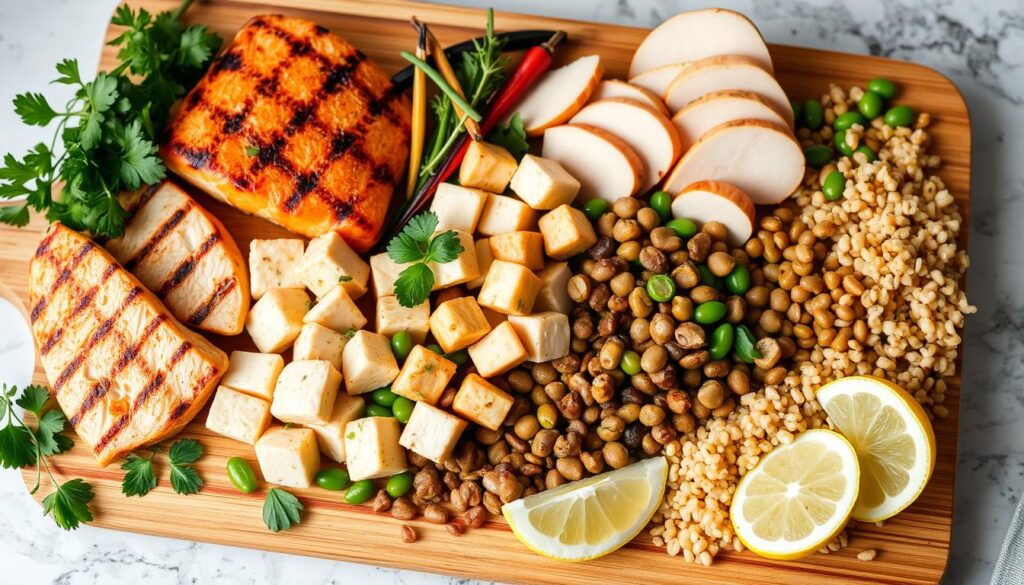
Lean protein foods can transform your nutrition and health. They support your body’s complex systems, not just muscle building. The right protein choices boost energy, muscle growth, and overall wellness1.
Choose lean protein sources for maximum nutrition with minimal fat. Plant foods like beans, peas, and lentils offer protein without saturated fats. They also provide essential fiber and nutrients1.
Fish like salmon and mackerel are excellent protein-rich options. They contain heart-healthy omega-3 fatty acids, adding extra benefits to your diet1.
Portion control is key in a high protein diet. A 3-ounce serving of cooked meat is recommended. This is about the size of a deck of cards1.
Pick lean or extra-lean ground meats with less than 15% fat. This optimizes protein intake while managing overall fat consumption1.
Key Takeaways
- Lean protein supports comprehensive body functions
- Plant-based proteins offer nutritional advantages
- Portion control is critical for balanced nutrition
- Omega-3 rich fish provide additional health benefits
- Selecting low-fat protein sources promotes wellness
What Makes Protein Sources Lean and Why They Matter
Lean protein sources can revolutionize your nutrition and overall health. They provide quality nutrients while managing calorie intake. These healthy choices go beyond muscle building, fueling your body effectively.
Protein is vital for maintaining your body’s functions. The National Academy of Medicine suggests a daily minimum of 0.8 grams per kilogram of body weight. For most adults, this means about 50-70 grams of protein daily2.
Understanding Lean Protein Definition
Lean meat options have low-fat content. They offer essential nutrients with minimal saturated fat. These protein sources are nutritious and easy to digest.
- Minimal fat content
- Lower calorie density
- High nutritional value
- Easy to digest
Health Benefits of Choosing Lean Proteins
Low-fat protein sources offer numerous health advantages. They help with muscle repair and growth for active individuals. Most active people need 1.2-2.0 grams of protein per kilogram of body weight3.
“Protein is not just about muscle – it’s about overall health and wellness.”
Daily Protein Requirements for Muscle Building
Your protein needs depend on age, weight, and activity level. Different sources provide varying amounts of protein.
- Skinless chicken breast: 25.9 grams per 3-ounce serving3
- Lentils: 17.9 grams per cup3
- Greek yogurt: 17.5 grams per 6-ounce serving3
Protein intake between 10% to 35% of daily calories is considered acceptable2. Healthy protein choices support muscle development and maintain a healthy weight. They also optimize your nutritional intake for better overall health.
Best Lean Protein Foods for Your Diet
Lean protein sources can boost your nutrition and fitness goals. They support muscle growth, help maintain a healthy weight, and provide essential nutrients4. Knowing the best protein sources is vital for a better diet.
Let’s look at some top lean protein options for your meals:
- Chicken Breast: A protein powerhouse with little fat4. Boneless skinless chicken breasts are great for many lean protein recipes.
- Fish Varieties: White fish like tilapia is high in protein with no carbs4. Salmon offers healthy omega-3 fatty acids.
- Lean Beef Cuts: Choose USDA-recommended options like sirloin tip and top round roast4. Pick cuts with less than 10 grams of fat per serving.
Plant-based eaters have great options too! Tofu and legumes are packed with protein5. A half-cup of tofu gives you 21.8g of protein.
| Protein Source | Protein Content | Additional Benefits |
|---|---|---|
| Chicken Breast | 26.7g per 3oz | Low fat, versatile |
| Greek Yogurt | 15-20g per serving | Probiotics, calcium-rich |
| Tofu | 21.8g per 1/2 cup | Plant-based, fiber-rich |
“Protein is the building block of muscle, and choosing lean sources can revolutionize your nutrition strategy.” – Nutrition Experts
Women need 46 grams of protein daily, while men need 56 grams5. Choose proteins that meet these needs and offer extra health benefits.
Conclusion
A high protein diet goes beyond muscle building. It’s a sustainable approach to nutrition. Your journey with lean protein foods can transform your health and fitness goals6.
Choosing protein sources wisely supports muscle growth and weight management. It also helps maintain optimal energy levels7. Mix animal and plant-based options for diverse muscle-building foods.
Egg whites provide 3.6 grams of protein8. Tofu offers 9 grams per serving8. Include lean protein sources for nutrition without excess saturated fats7.
Protein needs vary based on activity level. Active people might need 1.2-2.0 grams per kilogram of body weight6. Tailor your protein intake to your fitness goals and health strategy.
Pay attention to your body’s signals. Seek advice from nutrition experts. Create a personal plan that supports your wellness journey.
FAQ
What are lean protein foods?
Lean protein foods have little fat. They include low-fat meats, skinless poultry, and plant proteins. These foods have less than 10 grams of total fat per serving.
They also contain 4.5 grams or less of saturated fat. Lean proteins have under 95 milligrams of cholesterol per 3.5-ounce serving.
How much protein should I consume daily?
Eat 1.4–2 grams of protein per kilogram of body weight daily. This is best when combined with resistance training.
This amount helps build muscle and manage weight. It also supports overall health.
What are the top lean protein sources?
Great lean proteins include chicken breast, turkey breast, and fish like salmon and tilapia. Eggs, Greek yogurt, and cottage cheese are also good choices.
Lean beef cuts, tofu, edamame, and beans are excellent options too. These foods offer high-quality protein with key nutrients.
Are plant-based proteins considered lean protein sources?
Yes, plant-based proteins are lean options. Tofu, edamame, beans, and legumes are great examples. They usually provide 15-18 grams of protein per cup.
These foods are also rich in fiber and vitamins. They’re a healthy choice for your diet.
Why should I choose lean proteins over other protein sources?
Lean proteins have fewer calories and less saturated fat. They help keep muscle mass and support weight control. These proteins provide essential nutrients more effectively.
How can I incorporate more lean proteins into my diet?
Switch high-fat meats for skinless poultry or fish. Pick low-fat dairy options. Add eggs or Greek yogurt to meals.
Include protein-rich legumes in your cooking. These simple changes can boost your lean protein intake.
Are protein powders considered lean protein sources?
Many protein powders can be lean sources. Whey, casein, soy, and pea protein are good options. Choose powders with few added sugars and additives.
This ensures you get a clean, high-quality protein supplement. Always read labels carefully.
What are the health benefits of lean proteins?
Lean proteins help grow and repair muscles. They boost your immune system and aid in weight control. These proteins provide key nutrients with fewer calories.
They also have less saturated fat than other protein sources. This makes them a smart choice for overall health.
Source Links
- Picking Healthy Proteins – https://www.heart.org/en/healthy-living/healthy-eating/eat-smart/nutrition-basics/picking-healthy-proteins
- Protein – https://nutritionsource.hsph.harvard.edu/what-should-you-eat/protein/
- 11 Low-Fat Proteins To Add to Your Diet – https://www.health.com/lean-protein-foods-to-eat-8426344
- 10 Satisfying Lean Protein Foods to Fuel Your Body and Promote Heart Health – https://www.onepeloton.com/blog/lean-protein-foods/
- 15 Lean Protein Sources – https://www.everydayhealth.com/diet-nutrition/best-food-sources-of-lean-protein/
- 10 Essential Lean Protein Foods for a Healthier Diet – https://humberclinic.com/10-essential-lean-protein-foods/
- Understanding Lean Protein Sources and Their Benefits – https://www.geneticnutrition.in/blogs/genetic-life/understanding-lean-protein-sources-and-their-benefits?srsltid=AfmBOoro18dcdk2i6HfLxXnUJibU2cib6jAm2R-0YBLmhsXbl2gzGkg0
- What is Lean Protein and what are the best lean protein food items? – https://www.eggoz.com/blogs/lifestyle/what-is-lean-protein-and-what-are-the-best-lean-protein-food-items?srsltid=AfmBOopuVsmSK_9M_SXIRxhm2USpiSN_TqMKQcVbu4mloYAT2ry_ez-L

