
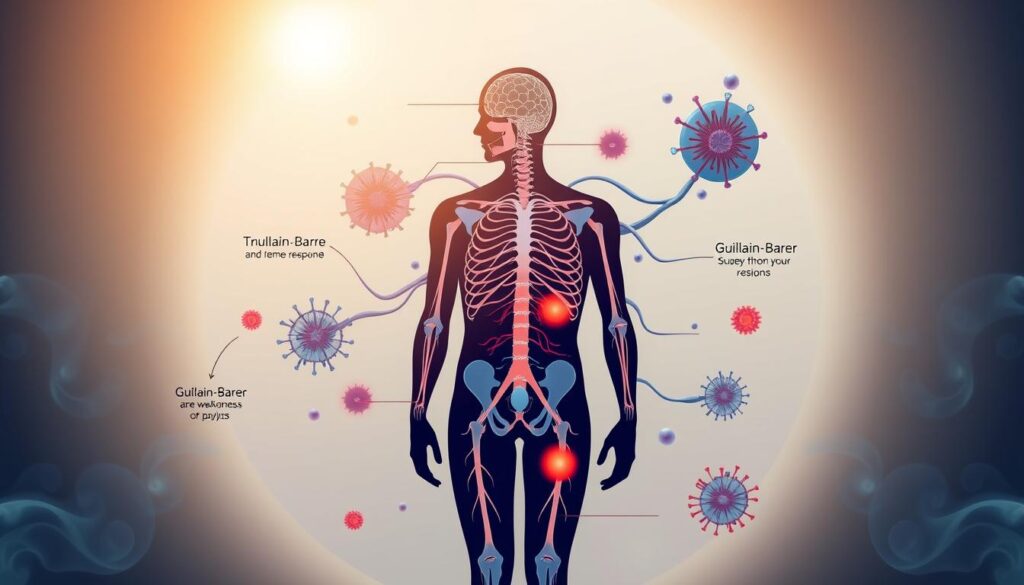
Guillain-Barre Syndrome (GBS) is a rare autoimmune disorder. It affects the peripheral nervous system, causing unexpected challenges. GBS can strike suddenly, creating uncertainty for patients and their families1.
GBS affects about 3,000 people in the United States each year1. It can impact individuals of all ages and genders equally. Most often, GBS develops after a respiratory or gastrointestinal viral infection1.
Understanding GBS is crucial for managing it effectively. Recognizing early symptoms is important. Seeking prompt medical attention can greatly impact your treatment and recovery.
Key Takeaways
- GBS is a rare autoimmune disorder affecting the peripheral nervous system
- Approximately 3,000 people in the U.S. are diagnosed annually
- The condition can affect anyone, regardless of age or gender
- Most cases develop after viral infections
- Early medical intervention is crucial for better outcomes
What is Guillain-Barre Syndrome and Its Causes?
Guillain-Barre syndrome is a rare autoimmune disorder affecting the nervous system. It attacks the peripheral nerves, creating unexpected challenges for those affected2.
Understanding the Syndrome
The immune system mistakenly targets peripheral nerves, causing peripheral neuropathy. This process damages the protective covering of nerve fibers, called demyelination3.
Common Causes and Triggers
Several factors can trigger Guillain-Barre syndrome:
- Bacterial infections (especially Campylobacter jejuni)
- Viral infections like influenza
- Cytomegalovirus
- Epstein-Barr virus
- Zika virus
“Infections are the primary culprits behind this complex autoimmune disorder.”
Risk Factors
Some people are more likely to develop this syndrome. Key risk factors include:
Approximately 3,000 to 6,000 people are affected annually in the United States3. The condition is more common in men and people over 50 years old3.
Knowing these facts can help you spot potential signs early. If you notice symptoms, seek medical help promptly.
Symptoms and Diagnosis of Guillain-Barre Syndrome
Guillain-Barre syndrome (GBS) is a fast-developing neurological condition. It poses challenges for patients and doctors alike. Quick detection and treatment are vital for managing this complex disorder.
Early Warning Signs to Watch For
GBS often starts with subtle signs of weakness and odd sensations. You might feel tingling or numbness in your legs. This weakness can spread to your arms and upper body.
Other signs include trouble walking or keeping your balance. You may also have weak facial muscles or problems moving your eyes.
- Tingling or numbness starting in the legs
- Gradual spread of weakness to arms and upper body
- Unsteady walking or difficulty maintaining balance
- Facial muscle weakness
- Challenges with eye movements
Most patients reach peak weakness within two weeks of first symptoms4. Some may develop paralysis quickly, which can be scary4.
Diagnostic Approach by Medical Professionals
Doctors diagnose GBS through a thorough check-up. They look for key signs like areflexia, which means lost or weak deep-tendon reflexes.
The diagnosis process includes several important steps:
- Detailed neurological examination
- Assessment of muscle strength and sensation
- Evaluation of potential respiratory failure risks
Specialized Tests and Procedures
To confirm GBS, doctors use specific tests:
- Lumbar Puncture (Spinal Tap): Checks cerebrospinal fluid for elevated protein levels
- Electromyography (EMG): Evaluates muscle and motor neuron disorders
- Nerve Conduction Velocity (NCV) Studies: Assesses nerve signal transmission
“Early diagnosis is critical, as Guillain-Barre syndrome can progress quickly and potentially require intensive care.”
Up to 22% of patients may need breathing help within a week of hospital stay5. Most people with GBS recover fully, but it can take several years5.
Treatment Options and Prognosis
Guillain-Barre Syndrome treatment focuses on managing symptoms and supporting recovery. Key approaches include intravenous immunoglobulin and plasma exchange. These methods suppress your immune system’s inflammatory response and speed up healing67.
Rehabilitation is crucial for restoring muscle strength and mobility. Physical therapy helps regain flexibility and muscle function. Most patients recover within a year, with many walking within 6 months6.
Some individuals may face long-term symptoms like nerve pain and muscle weakness. Fatigue can also persist in certain cases6.
Prognosis varies for each person. While full recovery is common, some may experience lingering weakness7. Your medical team will monitor progress and use rehab techniques as needed.
Older individuals or those with severe symptoms may face greater challenges6. Your healthcare providers will create a personalized plan for your specific needs.
Remember, each patient’s journey is unique. Stay optimistic and work closely with your medical team. This approach will help maximize your recovery potential7.
FAQ
What exactly is Guillain-Barre Syndrome (GBS)?
Guillain-Barre Syndrome is a rare autoimmune disorder affecting the peripheral nervous system. It causes inflammation that damages nerve coverings, leading to muscle weakness and numbness. Symptoms often start in the legs and can spread to the upper body.
How common is Guillain-Barre Syndrome?
GBS is rare, affecting about 3,000 people in the United States each year. It can impact all ages and genders, but it’s slightly more common in males. The risk increases with age.
What typically triggers Guillain-Barre Syndrome?
Most cases are triggered by recent viral or bacterial infections. Common triggers include Campylobacter jejuni, influenza, and cytomegalovirus. COVID-19 and Zika virus infections have also been linked to GBS.
Occasionally, surgery, trauma, or rare vaccine reactions can be potential triggers.
What are the early symptoms of GBS?
Early symptoms include weakness or tingling sensations starting in the legs. These can quickly spread to the arms and upper body. You might experience unsteady walking and facial weakness.
Difficulty with eye movements and severe pain are also possible. Symptoms can progress rapidly, sometimes leading to significant muscle weakness.
How is Guillain-Barre Syndrome diagnosed?
Diagnosis involves a comprehensive neurological examination, checking for diminished or lost deep-tendon reflexes. Doctors may perform a lumbar puncture to check cerebrospinal fluid protein levels.
Electrodiagnostic tests like electromyography (EMG) and nerve conduction velocity (NCV) studies help evaluate nerve function.
What are the primary treatment options?
Main treatments include plasmapheresis and intravenous immunoglobulin therapy. These help suppress the immune system’s response and reduce inflammation. Supportive care is crucial, including monitoring breathing and heart rate.
Physical therapy plays a significant role in recovery. Temporary mechanical ventilation may be necessary in some cases.
What is the typical recovery process for GBS?
Recovery varies widely between individuals. Some people recover within weeks, while others might take years. Most individuals make a full recovery, though some may experience residual symptoms.
The mortality rate is low. With proper medical care, most people significantly improve over time.
Can Guillain-Barre Syndrome be prevented?
There’s no definitive way to prevent GBS. Maintaining good health, managing infections promptly, and staying up-to-date with vaccinations can help reduce risk. Consult a doctor if you notice unusual muscle weakness or tingling.
Source Links
- Guillain-Barré Syndrome – https://www.hopkinsmedicine.org/health/conditions-and-diseases/guillainbarr-syndrome
- Guillain–Barré syndrome – https://www.who.int/news-room/fact-sheets/detail/guillain-barré-syndrome
- Guillain-Barré Syndrome – https://www.cdc.gov/campylobacter/signs-symptoms/guillain-barre-syndrome.html
- Guillain-Barré Syndrome – https://www.ninds.nih.gov/health-information/disorders/guillain-barre-syndrome
- Guillain-Barre syndrome – Symptoms and causes – https://www.mayoclinic.org/diseases-conditions/guillain-barre-syndrome/symptoms-causes/syc-20362793
- Guillain-Barré syndrome – https://www.nhs.uk/conditions/guillain-barre-syndrome/
- Guillain-Barre Syndrome: Practice Essentials, Background, Pathophysiology – https://emedicine.medscape.com/article/315632-overview

