
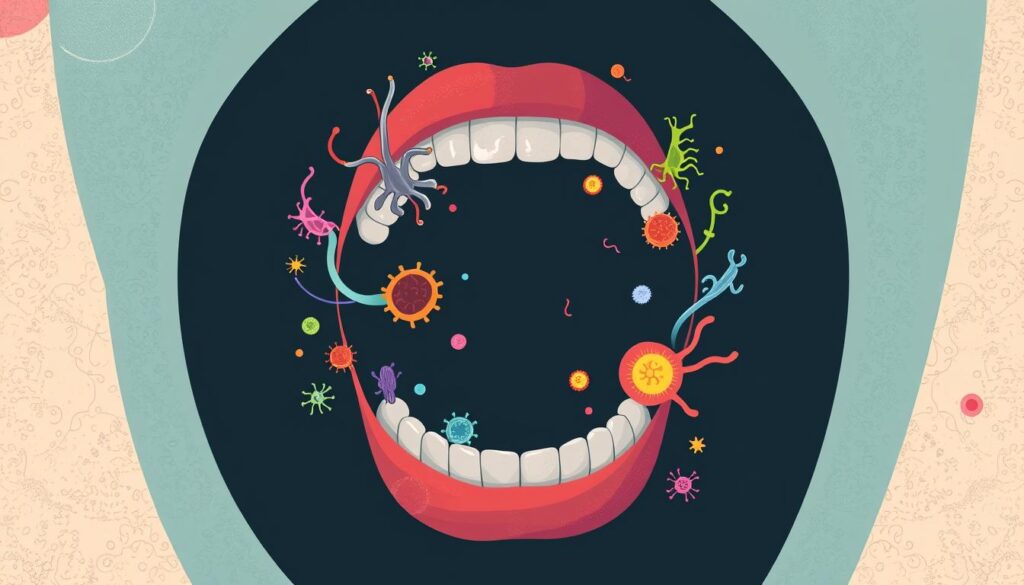
Oral sexually transmitted diseases (STDs) pose a hidden threat to many. Over 85% of sexually active adults engage in oral sex. This practice can expose them to various infections1.
Oral sex can spread several serious infections. These include chlamydia, gonorrhea, syphilis, herpes, HPV, and HIV1. Many infected people show no symptoms, making undetected transmission more likely1.
HIV transmission risk through oral sex is lower than other activities. However, other STDs can still cause significant harm. Infections can spread throughout the body, leading to serious health issues1.
Regular testing and protection are vital for sexually active individuals. These practices help maintain overall sexual health and prevent complications.
Key Takeaways
- Oral sex can transmit multiple serious sexually transmitted infections
- Over 85% of sexually active adults engage in oral sex
- Many STDs can be asymptomatic, increasing transmission risks
- Barrier methods can significantly reduce STD transmission
- Regular STD testing is crucial for sexual health
Understanding Oral STD Transmission and Common Infections
Sexual health depends on knowing how infections spread through intimate contact. Oral sex can transmit sexually transmitted infections (STIs) in various ways. Understanding these risks is crucial for protection.
Types of Oral Sex and Transmission Routes
Oral sexual activities include:
- Fellatio (mouth-penis contact)
- Cunnilingus (mouth-vagina contact)
- Anilingus (mouth-anus contact)
These acts can spread STDs through contact with sexual fluids and mucous membranes2. Unprotected oral sex and multiple partners increase the risk.
Most Common Oral STDs and Their Symptoms
Different germs cause oral sexually transmitted infections:
| Infection Type | Causative Agent | Potential Symptoms |
|---|---|---|
| Chlamydia | Bacteria | Often asymptomatic |
| Gonorrhea | Bacteria | Sore throat |
| Herpes | Virus | Oral sores |
| HPV | Virus | Throat warts |
Some infections may show few or no symptoms3. Regular testing is important to catch these hidden problems.
Risk Factors for Oral STD Transmission
Key risk factors include:
- Poor oral health
- Presence of mouth sores
- Multiple sexual partners
- Unprotected sexual activities
Protect your sexual health by knowing transmission methods. Use condoms and dental dams during oral sex. Get tested regularly to stay safe4.
Oral STDs: Prevention Methods and Protective Measures
Protecting yourself from oral STDs requires a proactive approach. Preventive strategies are crucial for maintaining sexual health. Effective protection methods can greatly reduce transmission risk.
- Using condoms during oral sex
- Utilizing dental dams for additional protection
- Getting regular STD testing
- Considering HPV vaccine
- Exploring PrEP for HIV prevention
Condoms provide an essential barrier against many STDs. External latex condoms can cut HIV transmission by 71%-80% when used properly5.
For those with latex allergies, polyurethane condoms offer similar protection5. The HPV vaccine is another key prevention tool.
It’s recommended for ages 9-45 and protects against cancer-causing strains5. Early vaccination can significantly reduce long-term health risks.
| Prevention Method | Effectiveness |
|---|---|
| Condoms | 71-80% HIV transmission reduction |
| HPV Vaccine | Protects against cancer-causing strains |
| PrEP | Up to 99% HIV infection reduction |
Regular testing is your best defense against potential infections.
PrEP offers impressive protection, lowering HIV infection risk by about 99%6. For best results, combine multiple prevention methods.
Keep open communication with sexual partners. Early detection and prevention are vital for sexual health.
Seek advice from healthcare professionals for personalized guidance tailored to your needs.
Conclusion
Oral STD awareness is vital for sexual health. The U.S. reports 20 million new STD cases yearly, with HPV being most common7. Safe sex practices can greatly reduce oral sex risks, according to comprehensive sexual health research.
Regular testing is crucial in preventing STD spread. Gonorrhea, chlamydia, and herpes can spread through oral contact, often without symptoms8. Testing and using protection like condoms or dental dams can minimize infection risks9.
Your sexual health is in your hands. Consider the HPV vaccine for protection against high-risk strains. Open talks with healthcare providers about your sexual practices aid early detection.
Most STDs are treatable when caught early. Proactive management is your best defense against long-term health issues. Stay informed and take action to protect yourself.
FAQ
What types of oral sex can transmit STDs?
Oral sex includes fellatio, cunnilingus, and anilingus. STDs can spread through mouth-to-genital or mouth-to-anus contact. This happens via sexual fluids and skin-to-skin contact.
What are the most common oral STDs?
Common oral STDs include chlamydia, gonorrhea, syphilis, herpes, HPV, and HIV. Many of these infections can be asymptomatic. Regular testing is crucial for early detection.
What symptoms should I watch for with oral STDs?
Possible symptoms include sore throat, oral sores or warts, and difficulty swallowing. Voice changes may also occur. However, many oral STDs have no noticeable symptoms.
How can I prevent oral STD transmission?
Use condoms or dental dams during oral sex. Limit your sexual partners. Get regular STD testing. Consider the HPV vaccine for additional protection.
Are some oral sex acts riskier than others?
Yes, rimming (oral-anal contact) carries higher risks for infections like hepatitis. Activities involving direct contact with sexual fluids increase transmission risks.
Can you get an STD in your mouth from oral sex?
Yes, STDs can spread from genitals to mouth or vice versa. You can have STDs in multiple body areas simultaneously. Transmission occurs through sexual fluids and direct contact.
How effective are protection methods for oral sex?
Latex or plastic condoms and dental dams can significantly reduce STD transmission. PrEP can reduce HIV risk by over 90% if taken daily. No method provides 100% protection.
How often should I get tested for oral STDs?
If you’re sexually active, especially with multiple partners, get tested regularly. Many oral STDs are asymptomatic. Routine testing is the best way to detect infections early.
Do oral STDs always have symptoms?
No, many oral STDs like chlamydia and gonorrhea often have no throat symptoms. Regular testing is crucial, even if you feel healthy.
What increases my risk of getting an oral STD?
Risk factors include poor oral health and mouth sores. Exposure to sexual fluids and multiple partners also increase risk. Not using protection during oral sex is risky.
Source Links
- About STI Risk and Oral Sex – https://www.cdc.gov/sti/about/about-sti-risk-and-oral-sex.html
- Sexually transmitted diseases (STDs) – Symptoms and causes – https://www.mayoclinic.org/diseases-conditions/sexually-transmitted-diseases-stds/symptoms-causes/syc-20351240
- Sexually Transmitted Infections | STIs | Venereal Disease | MedlinePlus – https://medlineplus.gov/sexuallytransmittedinfections.html
- Oral sex STD risk charts: Safety and prevention – https://www.medicalnewstoday.com/articles/oral-sex-std-risk-chart
- Primary Prevention Methods – https://www.cdc.gov/std/treatment-guidelines/clinical-primary.htm
- Learn How To Prevent Sexually Transmitted Infections – https://www.315aw.afrc.af.mil/News/Article-Display/Article/3824511/learn-how-to-prevent-sexually-transmitted-infections/
- Sexually Transmitted Diseases and Your Mouth – https://www.mouthhealthy.org/all-topics-a-z/sexually-transmitted-diseases
- Can I get an STI from oral sex? | Health Promotion – https://www.brown.edu/campus-life/health/services/promotion/content/can-i-get-sti-oral-sex
- Oral sex and mouth care – https://www.healthdirect.gov.au/oral-sex-mouth-care

