
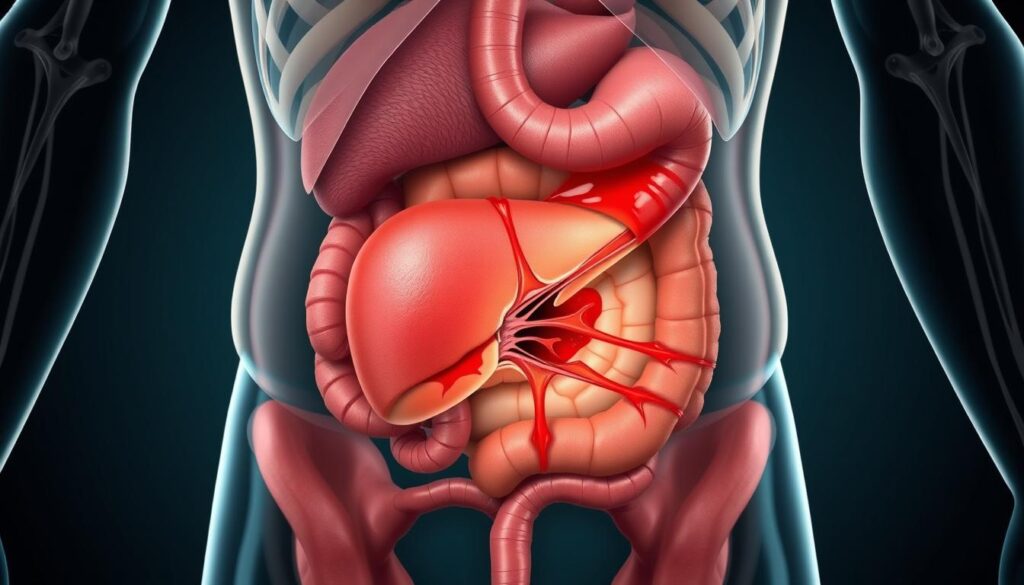
A ruptured spleen is a critical medical emergency. It can turn a simple injury into a life-threatening situation. Abdominal trauma can make your body’s defense system vulnerable1.
Car accidents, sports injuries, and violent encounters often cause splenic injury1. Quick recognition of a ruptured spleen can save lives. The spleen fights infections and filters blood, making it vital for health1.
Some medical conditions increase the risk of splenic rupture1. These include infectious mononucleosis and hemolytic anemia. You can live without a spleen, but the risk of serious infections rises1.
Key Takeaways
- Ruptured spleen is a serious medical emergency
- Blunt trauma is the most common cause of splenic injury
- Quick medical intervention is critical
- Certain diseases increase the risk of spleen rupture
- Living without a spleen requires careful medical management
What is a Ruptured Spleen and Its Warning Signs
Knowing your body’s organs helps spot health risks. The spleen is key to your immune system and overall health2.
Location and Function of the Spleen
The spleen sits in your upper left abdomen. It’s about the size of your fist. This organ fights germs and filters blood2.
The spleen has several important jobs. It cleans blood and controls blood cell levels. It also removes damaged red blood cells and fights infections.
- Blood filtration
- Controlling blood cell levels
- Removing damaged red blood cells
- Fighting infections
Common Symptoms to Watch For
A ruptured spleen is serious. Look out for these ruptured spleen symptoms:
- Pain behind left ribs
- Abdominal tenderness
- Dizziness
- Rapid heart rate
Spleen problems can cause anemia, infection risks, and unusual bleeding or bruising2.
When to Seek Emergency Care
A splenic rupture needs immediate medical care. It makes up 10% of all abdominal injuries3. Get help fast for severe belly pain or bleeding signs.
Some symptoms may show up 40 days after an injury3. Always see a doctor if you suspect a serious problem.
Understanding Causes of a Ruptured Spleen
Blunt force trauma is a main cause of a ruptured spleen. Your risk of splenic injury depends on factors that can harm your spleen’s integrity4.
Sports and physical activities often lead to spleen ruptures. Contact sports raise your chances of blunt force trauma that could damage the spleen4.
The spleen is the most injured abdominal organ. It accounts for 42% of traumatic abdominal injuries4.
- Sporting accidents
- Vehicle crashes
- Physical altercations
- Accidental falls
An enlarged spleen, or splenomegaly, makes you more likely to have a rupture. Some medical conditions can cause spleen enlargement:
- Mononucleosis
- Hepatitis
- Blood disorders
- Liver diseases
Even minor trauma can cause a serious splenic injury when your spleen is already enlarged.
Non-traumatic splenic ruptures have unique traits. About 93% of these cases come from pathological causes5.
Males aged 18-34 are more likely to have these ruptures. The ratio is 2 males for every 1 female5.
You can’t fully prevent a ruptured spleen. But knowing your risks and taking care can help protect this vital organ4.
Conclusion
Spleen health needs careful attention to risks and treatments. Atraumatic splenic rupture is a complex medical issue requiring precise intervention6. Knowing potential symptoms aids early detection and effective trauma management7.
Medical pros may suggest different approaches for spleen injuries. Splenectomy is a crucial option for severe cases7. Some instances allow conservative treatment with monitoring.
However, high-grade splenic injuries often need surgery6. Recovery from spleen procedures requires patience and following doctor’s orders. Living without a spleen is possible but increases infection risks.
A comprehensive medical approach helps manage complications and ensure good health8. Understanding spleen health can save lives. Early detection, proper trauma care, and expert medical help are vital.
FAQ
What exactly is a ruptured spleen?
A ruptured spleen is a serious medical condition. The spleen’s surface breaks, causing internal bleeding. It’s often caused by a forceful blow to the abdomen.
This can happen during sports accidents, car crashes, or fights. A ruptured spleen can be life-threatening without immediate treatment.
What are the main symptoms of a ruptured spleen?
Key symptoms include severe pain in the upper left abdomen. You may also feel tenderness when touching the area. Left shoulder pain, confusion, and dizziness are common.
Other signs are feeling full quickly after eating and fatigue. Frequent infections and easy bleeding can occur too. Seek emergency care if you notice these signs after an injury.
What causes a spleen to rupture?
Blunt force trauma to the left side of your body is the most common cause. This can happen during contact sports, car accidents, or fights.
An enlarged spleen increases your risk of rupture. Some health conditions can make your spleen more vulnerable to injury.
How is a ruptured spleen treated?
Treatment depends on how severe the injury is. Some cases need only hospital observation and rest. Others require emergency surgery to remove the spleen.
If your spleen is removed, other organs can take over many of its functions. You’ll need to take steps to prevent infections after surgery.
What is the recovery process like after a spleen injury?
Recovery usually takes a few weeks. The time depends on how bad the injury was. You’ll need to follow your doctor’s instructions carefully.
This may include limits on physical activities and plenty of rest. If your spleen was removed, you’ll need to be extra careful about infections.
Can you live without a spleen?
Yes, you can live without a spleen. Other organs, especially the liver, can do many of the spleen’s jobs.
However, you’ll be more likely to get certain infections. You’ll need special vaccines and maybe long-term antibiotics to protect your immune system.
How can I prevent a ruptured spleen?
Be careful during contact sports and wear protective gear. Manage health conditions that can enlarge your spleen. Talk to your doctor about specific precautions if needed.
Avoid risky activities if you have an enlarged spleen. Always get medical help after a bad hit to your belly.
Source Links
- Ruptured Spleen – https://www.webmd.com/digestive-disorders/ruptured-spleen
- Spleen problems and spleen removal – https://www.nhs.uk/conditions/spleen-problems-and-spleen-removal/
- Splenic Injury | Korey Stringer Institute – https://koreystringer.institute.uconn.edu/splenic-injury/
- How To Recognize the Main Symptom of a Ruptured Spleen – https://www.health.com/ruptured-spleen-8638583
- Splenic Rupture – StatPearls – NCBI Bookshelf – https://www.ncbi.nlm.nih.gov/books/NBK525951/
- Spontaneous splenic rupture: A rare life-threatening condition; Diagnosed early and managed successfully – https://pmc.ncbi.nlm.nih.gov/articles/PMC3614379/
- Spontaneous splenic rupture: case report and review of literature – https://pmc.ncbi.nlm.nih.gov/articles/PMC7648463/
- Splenic Rupture Following Colonoscopy – https://www.facs.org/for-medical-professionals/news-publications/journals/case-reviews/issues/v4n1/foster-splenic-rupture/

