
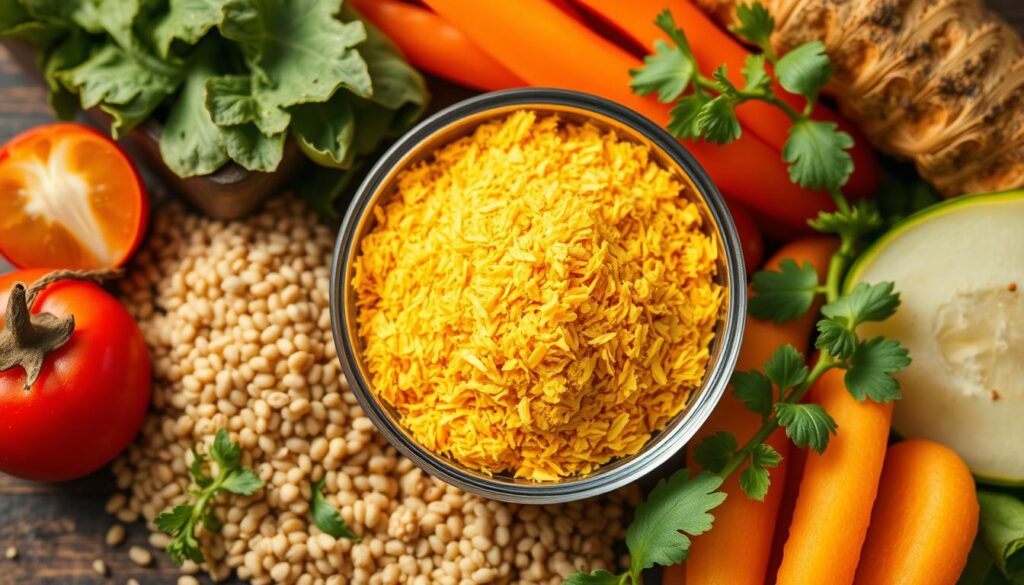
Nutritional yeast is a powerhouse gluten-free superfood. It’s changing plant-based nutrition. This deactivated yeast, called “nooch,” is more than seasoning. It’s a nutrient-dense ingredient for health-conscious people12.
Organic nutritional yeast boasts an impressive nutritional profile. It’s a staple for vegans, vegetarians, and health-focused individuals. This superfood contains all nine essential amino acids12.
It’s a complete protein source with B-vitamins. These nutrients offer many health benefits. They can change how you think about nutrition.
Nutritional yeast stands out for its versatility and nutrient density. Two teaspoons provide 313% of your daily vitamin B12 needs1. Its antioxidants, like glutathione, support overall health.
This superfood may help lower cholesterol. It might also boost immune function1. These benefits make it a valuable addition to any diet.
Key Takeaways
- Complete protein source with all nine essential amino acids
- Exceptionally rich in B-vitamins, especially vitamin B12
- Contains powerful antioxidants supporting overall health
- Naturally gluten-free and vegan-friendly
- Versatile ingredient for various culinary applications
What is Nutritional Yeast and Its Origins
Nutritional yeast is a plant-based protein source that’s gaining popularity. It starts as a single-celled organism grown on nutrient-rich molasses3. Unlike active yeasts, it’s processed to be inactive and packed with nutrients.
Understanding Different Types of Yeast
Not all yeasts serve the same purpose. Nutritional yeast differs from brewer’s and baker’s yeasts. Here’s a quick look at yeast varieties:
- Brewer’s Yeast: Used in beer production
- Baker’s Yeast: Helps bread rise
- Nutritional Yeast: Specifically cultivated as a food product3
How Nutritional Yeast is Manufactured
The production of nutritional yeast is fascinating. It starts with cultivating Saccharomyces cerevisiae in beet or sugarcane molasses. The yeast then undergoes fermentation, washing, pasteurization, and heat-drying4.
This process ensures a rich, cheesy flavor profile. It makes nutritional yeast an excellent vegan cheese substitute.
Fortified vs. Unfortified Varieties
| Characteristic | Unfortified Yeast | Fortified Yeast |
|---|---|---|
| Vitamin Content | Natural nutrients only | Added synthetic vitamins |
| B12 Availability | Limited | High (Often supplemented)4 |
| Nutritional Value | Basic nutrient profile | Enhanced vitamins and minerals5 |
Nutritional yeast offers a remarkable way to boost your diet with essential nutrients and a delightful cheesy flavor.
Fortified varieties are popular, offering 8g of protein per 15g serving. They also provide an impressive array of B-vitamins5.
Nutritional yeast is great for vegans seeking plant-based protein. It’s also perfect for anyone looking to add nutrients to their diet3.
Essential Health Benefits and Nutritional Profile
Nutritional yeast offers incredible health benefits for health-conscious individuals. This gluten-free superfood packs an impressive nutritional punch. It can transform your dietary approach6.
As a plant-based protein source, nutritional yeast delivers remarkable nutrients. Just 1.5 tablespoons contain 8 grams of protein and 5 grams of carbohydrates6.
Key Nutritional Highlights
- Contains all essential amino acids6
- Provides over 600% of most B vitamins per serving6
- Offers 1,000% daily value of Vitamin B126
- Rich in minerals like calcium, iron, and potassium6
Nutritional yeast’s beta-glucan content provides extraordinary health advantages. This soluble fiber supports immune system function. It may also help lower cholesterol levels7.
“Nutritional yeast isn’t just a supplement – it’s a nutritional game-changer for health-conscious eaters.”
Nutritional yeast contributes 3 grams of fiber per serving. This supports digestive health and helps regulate blood sugar6.
Immune and Cardiovascular Benefits
Research suggests yeast-derived beta-glucan can stimulate immune cell activity. It may also reduce cholesterol and blood pressure, contributing to better cardiovascular health6.
Pro Tip: Sprinkle nutritional yeast over meals or blend into smoothies. This preserves its nutritional content, as prolonged heat exposure might reduce it7.
Creative Ways to Use Nutritional Yeast in Your Kitchen
Nutritional yeast can transform your cooking. It’s a versatile ingredient that adds unique flavors to meals. Check out these nutritional yeast recipes for tasty ideas.
Savory Seasoning Magic
Nutritional yeast is a flavor powerhouse. Sprinkle it on popcorn for an umami boost. It’s also great on salads and roasted veggies8.
This ingredient has a cheesy, nutty taste. It’s perfect as a vegan cheese substitute9.
- Create savory popcorn seasoning
- Enhance pasta dishes
- Add depth to soups and stews
Vegan Cheese Substitute Innovations
Organic nutritional yeast is a great cheese alternative. Use it to make creamy sauces or sprinkle on baked potatoes.
Develop rich cheese-like toppings that satisfy any palate10. Try it in cashew cheese or vegan pesto.
Recipe Inspiration and Cooking Tips
Try nutritional yeast in vegan mac and cheese or cheesy kale chips. Start with small amounts and adjust to taste8.
It’s not just tasty, but nutritious too. Each serving packs 8 grams of protein9.
Pro tip: Nutritional yeast adds a delightful umami flavor that can transform ordinary dishes into extraordinary culinary experiences!
Conclusion
Nutritional yeast is a gluten-free superfood that can change your diet. It’s a versatile ingredient with great benefits, especially for those seeking plant-based protein. Its high protein content makes it perfect for fitness fans and vegetarians.
Organic nutritional yeast can transform your cooking, especially as a vegan cheese substitute. It’s packed with essential vitamins like B12, which boosts energy and brain function. This nutrient-rich food offers a tasty way to improve your meals11.
Despite its benefits, some people might have mild digestive reactions to nutritional yeast11. Always talk to a doctor before making big changes to your diet. This ensures you get the most out of this superfood safely.
FAQ
What exactly is nutritional yeast?
Nutritional yeast is a deactivated form of Saccharomyces cerevisiae yeast. It’s a nutrient-dense, gluten-free food with a cheesy flavor. Unlike active yeasts, it’s heat-treated and inactive, making it ideal for cooking.
Is nutritional yeast good for vegans and vegetarians?
Nutritional yeast is a game-changer for plant-based diets. It’s a complete protein source with all nine essential amino acids. It’s rich in B-vitamins, especially B12, which can be hard to get in vegan diets.
How can I use nutritional yeast in my cooking?
Nutritional yeast is super versatile in the kitchen. Sprinkle it on popcorn or use it as a vegan cheese substitute in sauces. Add it to soups or use it as a topping for roasted veggies.
It’s great in vegan mac and cheese and as a “parmesan” replacement. You can even add it to smoothies for a nutrient boost.
What are the main health benefits of nutritional yeast?
Nutritional yeast packs a powerful health punch. It’s loaded with B-vitamins, protein, and minerals like zinc and selenium. It contains antioxidants and may boost immune health.
This superfood can help lower cholesterol. It’s also low in calories and sodium, making it a healthy diet addition.
Are there different types of nutritional yeast?
There are two main types: unfortified and fortified nutritional yeast. Unfortified varieties contain only naturally occurring nutrients. Fortified versions have added synthetic vitamins for extra health benefits.
Is nutritional yeast safe for everyone?
Nutritional yeast is generally safe, but those with yeast allergies should avoid it. Always check with a doctor before making big diet changes. Most people find it a safe and nutritious addition to their meals.
How should I store nutritional yeast?
Keep nutritional yeast in a cool, dark place in an airtight container. When stored right, it can last up to two years. Avoid direct sunlight and moisture to maintain its nutritional value.
Source Links
- Nutritional Yeast: Nutrients, Health Benefits, and Uses – https://www.healthline.com/nutrition/nutritional-yeast
- Nutritional Yeast: Is It Good for You? – https://www.webmd.com/diet/nutritional-yeast-good-for-you
- What the Heck is Nutritional Yeast? – https://blog.fatfreevegan.com/2011/10/what-the-heck-is-nutritional-yeast.html
- Nutritional yeast | Food, Condiment, & Facts | Britannica – https://www.britannica.com/topic/nutritional-yeast
- Nutritional yeast – https://en.wikipedia.org/wiki/Nutritional_yeast
- Should You Use Nutritional Yeast Instead of Cheese? – https://www.verywellfit.com/nutritional-yeast-nutrition-4691163
- Nutritional Yeast: Health Benefits, Nutrition Facts & Usage Tips – https://nourishcookingco.com/blogs/blog/nutritional-yeast-health-benefits-nutrition-facts-how-to-select-store-prepare?srsltid=AfmBOopVq4WRDnaSJ3cavPsa2zjaAS0hGw9JgkZBcsEDrNbGfwHVoZJi
- 23 Tasty Recipes Featuring Nutritional Yeast – https://www.forksoverknives.com/recipes/vegan-menus-collections/23-tasty-recipes-featuring-nutritional-yeast/
- Surprising Ways to Use Nutritional Yeast – https://www.bobsredmill.com/blog/healthy-living/surprising-ways-to-use-nutritional-yeast/
- 16 Delicious Ways to Use Nutritional Yeast – https://vegnews.com/how-to-nutritional-yeast-recipes
- Nutritional Yeast: Health Benefits, Uses, And Side Effects Of This Flavourful Superfood – https://www.netmeds.com/health-library/post/nutritional-yeast-health-benefits-uses-and-side-effects-of-this-flavourful-superfood?srsltid=AfmBOop42ZKSPY94IMgW1Iv3DYn7xVmcHgaXXD6qRh8ANWAgjxT8tN-K

